Japanese
English
- 有料閲覧
PPV購入案内
1,320円 (1,200円+税10%) こちらは、183ページから188ページの文献です。購入には医書.jp本会員登録が必要です。
会員登録完了後に改めて上記「購入サイトへ」を選択してください。
または「購入サイトへ」選択後に「購入ログイン」、「新規会員登録」の順に進んでください。
会員登録について詳しくはをご確認ください。
- Abstract 文献概要
- 1ページ目 Look Inside
- 参考文献 Reference
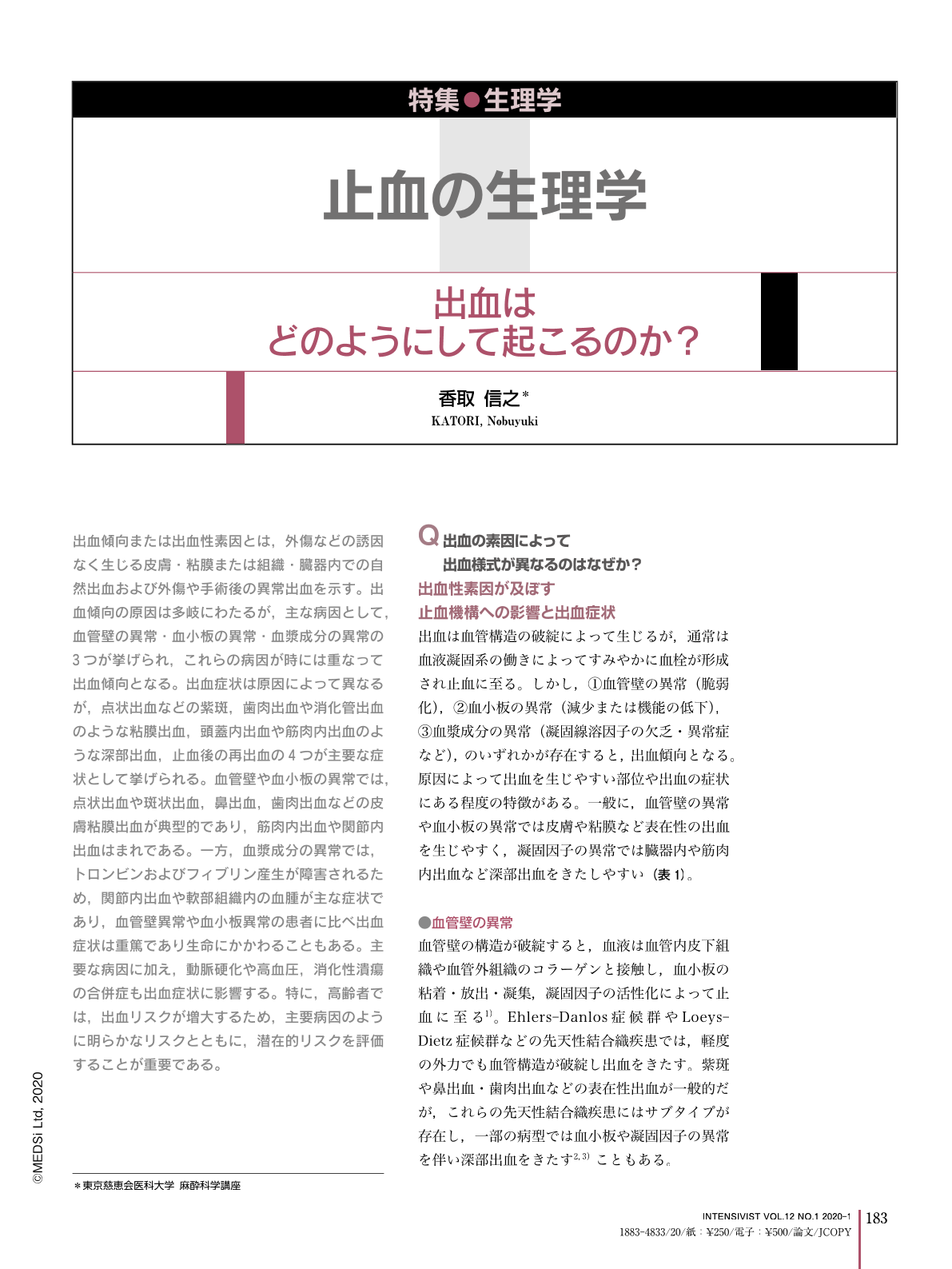
出血傾向または出血性素因とは,外傷などの誘因なく生じる皮膚・粘膜または組織・臓器内での自然出血および外傷や手術後の異常出血を示す。出血傾向の原因は多岐にわたるが,主な病因として,血管壁の異常・血小板の異常・血漿成分の異常の3つが挙げられ,これらの病因が時には重なって出血傾向となる。出血症状は原因によって異なるが,点状出血などの紫斑,歯肉出血や消化管出血のような粘膜出血,頭蓋内出血や筋肉内出血のような深部出血,止血後の再出血の4つが主要な症状として挙げられる。血管壁や血小板の異常では,点状出血や斑状出血,鼻出血,歯肉出血などの皮膚粘膜出血が典型的であり,筋肉内出血や関節内出血はまれである。一方,血漿成分の異常では,トロンビンおよびフィブリン産生が障害されるため,関節内出血や軟部組織内の血腫が主な症状であり,血管壁異常や血小板異常の患者に比べ出血症状は重篤であり生命にかかわることもある。主要な病因に加え,動脈硬化や高血圧,消化性潰瘍の合併症も出血症状に影響する。特に,高齢者では,出血リスクが増大するため,主要病因のように明らかなリスクとともに,潜在的リスクを評価することが重要である。
Bleeding tendencies or bleeding diatheses present as spontaneous internal or mucocutaneous bleeding without a specific cause such as trauma or surgery. Although the causes of bleeding tendencies are multifactorial, three factors play a major role in the pathogenesis of bleeding tendencies, alone or in combination:abnormalities in vessel walls, thrombocytopenia and/or platelet dysfunction, and deficiencies or dysfunction of coagulation factors or fibrinolytic factors. Although the clinical manifestations of bleeding tendencies depend on the underlying cause in each patient, there are four major symptoms of bleeding tendencies including purpura such as petechia, mucosal bleeding such as gingival or gastrointestinal bleeding, bleeding in soft tissues or organs such as intracranial or intramuscular hemorrhage, and recurrent bleeding after hemostasis. Typical symptoms in patients with vessel wall abnormalities or thrombocytopenia/platelet dysfunction are mucocutaneous bleeding such as petechiae, ecchymoses and nose or gingival bleeding, although bleeding into muscles or joints is rare. Hemarthroses or hematomas in soft tissues are typical symptoms in patients with coagulation factor deficiencies because thrombin production and subsequent fibrin formation are impaired, which is usually more severe than in patients with vessel wall abnormalities or thrombocytopenia/platelet dysfunction. In addition to these major causes, comorbidities such as atherosclerosis, hypertension, or gastric ulcers may increase bleeding risks especially in the elderly. It is important to evaluate both overt and concomitant bleeding risks.
Copyright © 2020, MEDICAL SCIENCES INTERNATIONAL, LTD. All rights reserved.