Japanese
English
- 有料閲覧
PPV購入案内
1,320円 (1,200円+税10%) こちらは、374ページから377ページの文献です。購入には医書.jp本会員登録が必要です。
会員登録完了後に改めて上記「購入サイトへ」を選択してください。
または「購入サイトへ」選択後に「購入ログイン」、「新規会員登録」の順に進んでください。
会員登録について詳しくはをご確認ください。
- Abstract 文献概要
- 1ページ目 Look Inside
- 参考文献 Reference
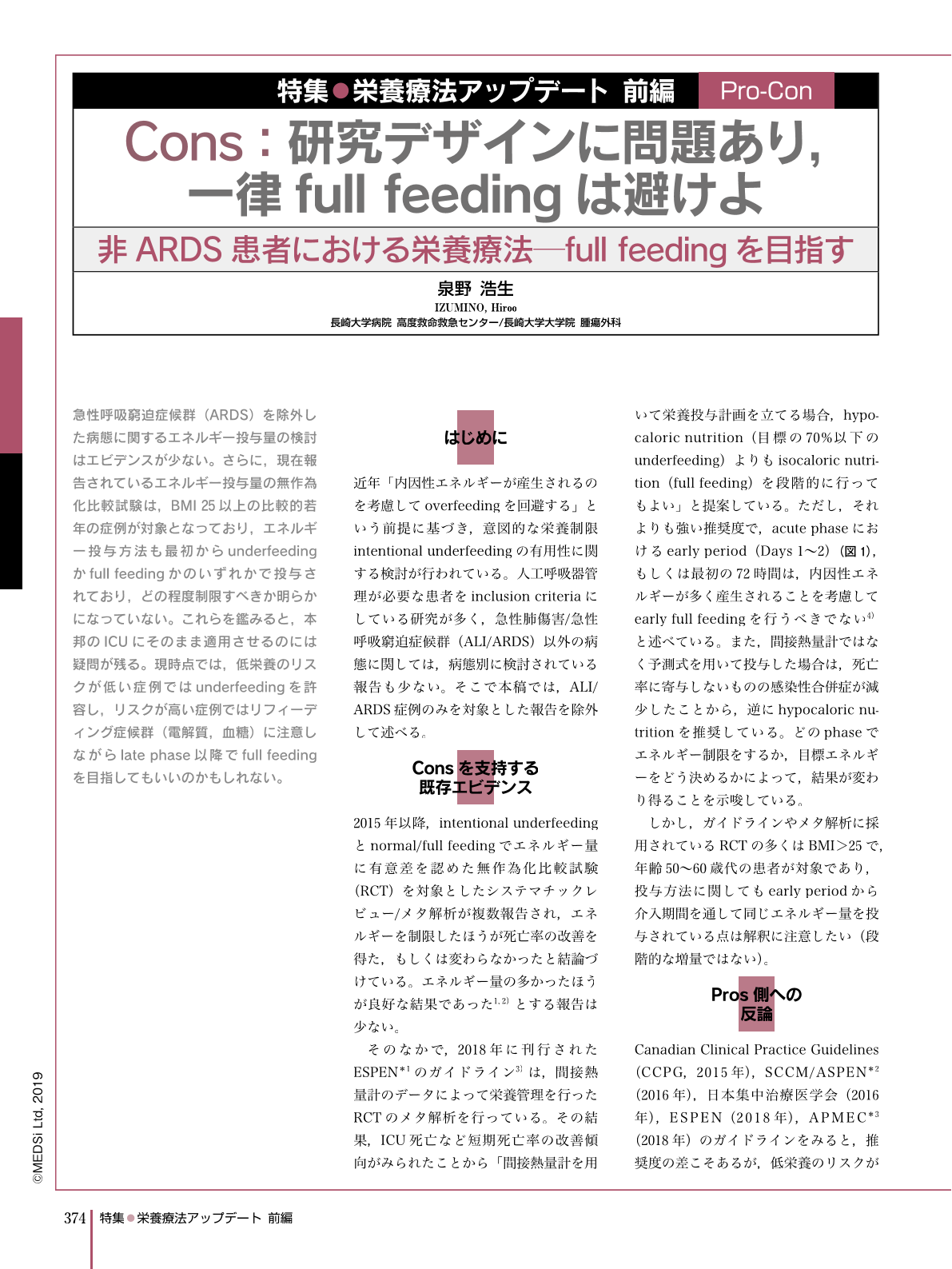
急性呼吸窮迫症候群(ARDS)を除外した病態に関するエネルギー投与量の検討はエビデンスが少ない。さらに,現在報告されているエネルギー投与量の無作為化比較試験は,BMI 25以上の比較的若年の症例が対象となっており,エネルギー投与方法も最初からunderfeedingかfull feedingかのいずれかで投与されており,どの程度制限すべきか明らかになっていない。これらを鑑みると,本邦のICUにそのまま適用させるのには疑問が残る。現時点では,低栄養のリスクが低い症例ではunderfeedingを許容し,リスクが高い症例ではリフィーディング症候群(電解質,血糖)に注意しながらlate phase以降でfull feedingを目指してもいいのかもしれない。
There is little evidence regarding energy administration for critically ill patients without ARDS. Patients in recent randomized controlled trials of energy administration are relatively young and obese (BMI >25). Optimal strategies for energy administration and restriction are undetermined. The question of whether we adopt the same methods in Japanese ICUs still remains. Currently, we permit underfeeding of patients at low risk of malnutrition. For patients at a high risk of malnutrition, we choose normocaloric management after the initial period, taking care not to allow patients to develop refeeding syndrome.
Copyright © 2019, MEDICAL SCIENCES INTERNATIONAL, LTD. All rights reserved.