Japanese
English
- 有料閲覧
PPV購入案内
1,320円 (1,200円+税10%) こちらは、1011ページから1015ページの文献です。購入には医書.jp本会員登録が必要です。
会員登録完了後に改めて上記「購入サイトへ」を選択してください。
または「購入サイトへ」選択後に「購入ログイン」、「新規会員登録」の順に進んでください。
会員登録について詳しくはをご確認ください。
- Abstract 文献概要
- 1ページ目 Look Inside
- 参考文献 Reference
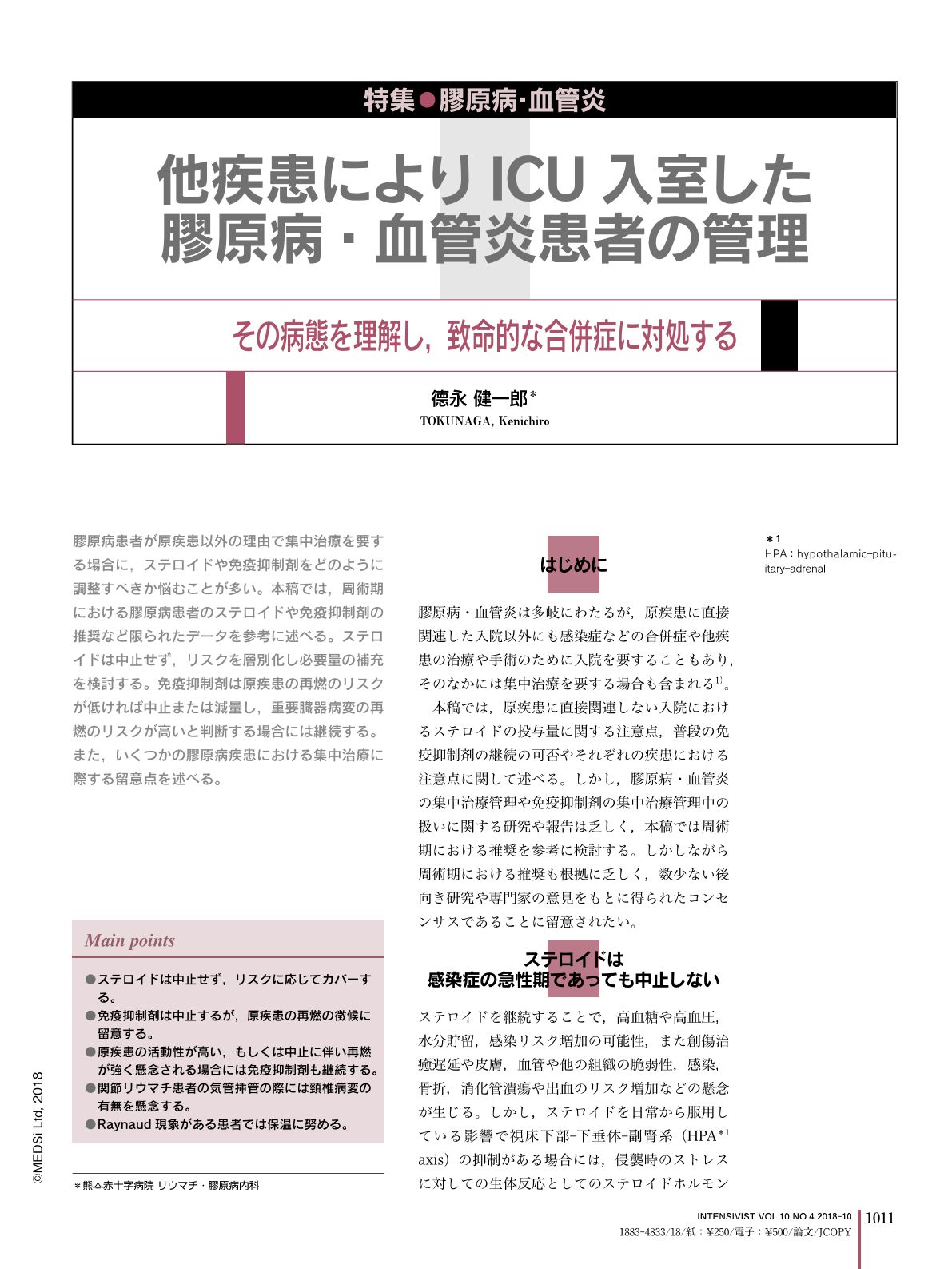
膠原病患者が原疾患以外の理由で集中治療を要する場合に,ステロイドや免疫抑制剤をどのように調整すべきか悩むことが多い。本稿では,周術期における膠原病患者のステロイドや免疫抑制剤の推奨など限られたデータを参考に述べる。ステロイドは中止せず,リスクを層別化し必要量の補充を検討する。免疫抑制剤は原疾患の再燃のリスクが低ければ中止または減量し,重要臓器病変の再燃のリスクが高いと判断する場合には継続する。また,いくつかの膠原病疾患における集中治療に際する留意点を述べる。
Main points
●ステロイドは中止せず,リスクに応じてカバーする。
●免疫抑制剤は中止するが,原疾患の再燃の徴候に留意する。
●原疾患の活動性が高い,もしくは中止に伴い再燃が強く懸念される場合には免疫抑制剤も継続する。
●関節リウマチ患者の気管挿管の際には頸椎病変の有無を懸念する。
●Raynaud現象がある患者では保温に努める。
There is always concern about adjusting the doses of glucocorticoids and immunosuppressants when treating patients with rheumatic diseases who are in the intensive care unit for reasons other than their primary disease. There is a lack of evidence for the use of such drugs other than recommendations based on limited perioperative data. The use of stress doses of glucocorticoids has become a common practice in patients receiving glucocorticoid therapy. The approach is to determine the glucocorticoid dosage based upon the patient's history of glucocorticoid intake and likelihood of hypothalamic-pituitary-adrenal (HPA) axis suppression, as well as the type and severity of illness. Given the clinical spectrum of disease severity and organ involvement, the decision to withhold immunosuppressants in the ICU should be made on an individual basis. Attention should be given to the approaches needed to address the particular disease-related risks associated with these rheumatic diseases.
Copyright © 2018, MEDICAL SCIENCES INTERNATIONAL, LTD. All rights reserved.