Japanese
English
- 有料閲覧
PPV購入案内
1,320円 (1,200円+税10%) こちらは、1053ページから1057ページの文献です。購入には医書.jp本会員登録が必要です。
会員登録完了後に改めて上記「購入サイトへ」を選択してください。
または「購入サイトへ」選択後に「購入ログイン」、「新規会員登録」の順に進んでください。
会員登録について詳しくはをご確認ください。
- Abstract 文献概要
- 1ページ目 Look Inside
- 参考文献 Reference
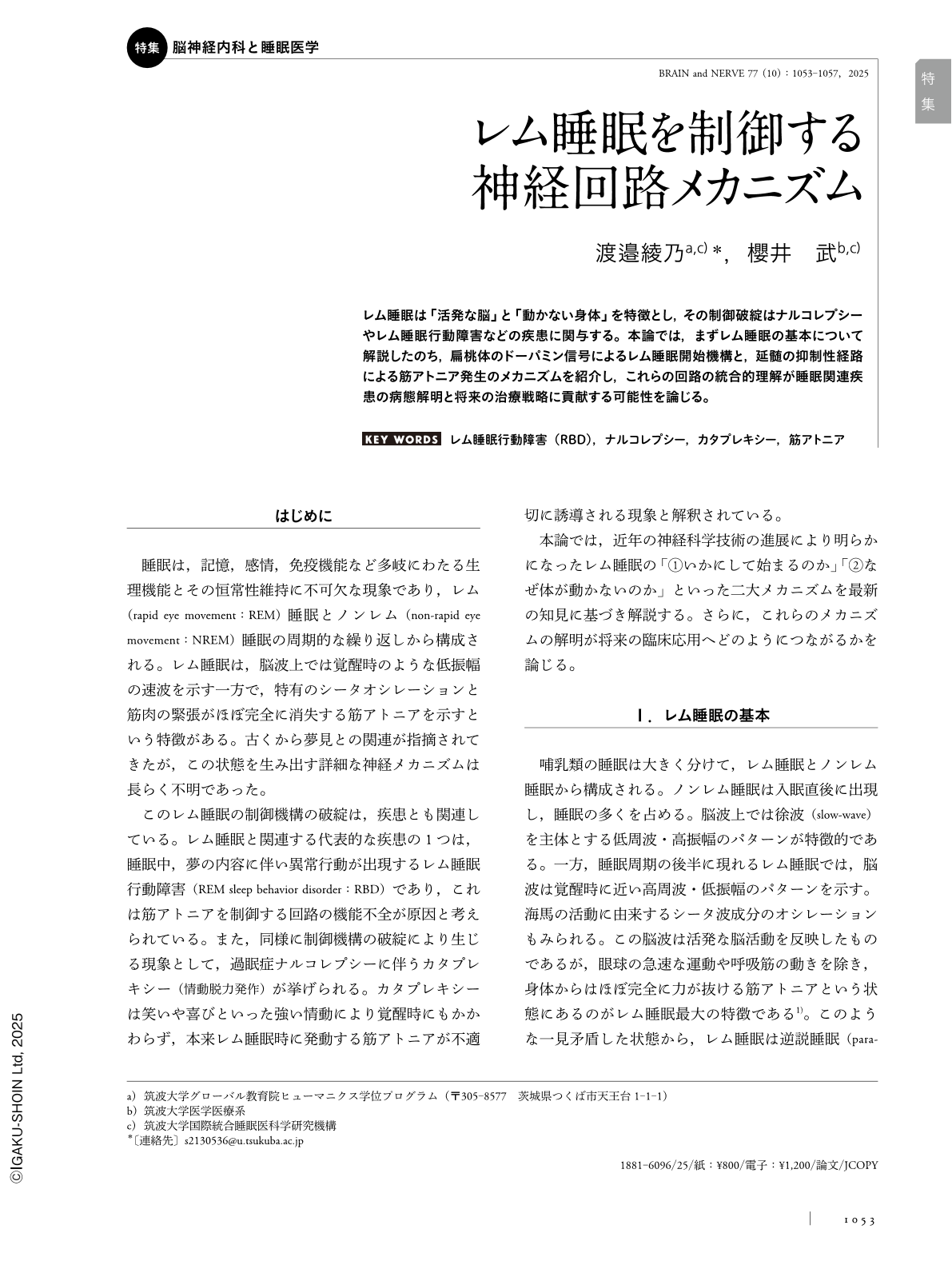
レム睡眠は「活発な脳」と「動かない身体」を特徴とし,その制御破綻はナルコレプシーやレム睡眠行動障害などの疾患に関与する。本論では,まずレム睡眠の基本について解説したのち,扁桃体のドーパミン信号によるレム睡眠開始機構と,延髄の抑制性経路による筋アトニア発生のメカニズムを紹介し,これらの回路の統合的理解が睡眠関連疾患の病態解明と将来の治療戦略に貢献する可能性を論じる。
Abstract
Rapid eye movement (REM) sleep is characterized by an “active brain” and an “immobile body,” and its dysregulation has been implicated in disorders such as narcolepsy and REM sleep behavior disorder. In this review, we first provide an overview of the basic features of REM sleep and then introduce the mechanisms by which dopamine signaling in the amygdala induces REM sleep and the inhibitory pathways in the medulla oblongata that mediate muscle atonia. Finally, we discussed how an integrated understanding of these neural circuits will advance our knowledge of the pathophysiology of sleep-related disorders and inform future therapeutic strategies.
Copyright © 2025, Igaku-Shoin Ltd. All rights reserved.