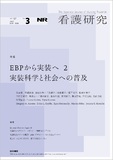
Japanese
English
- 有料閲覧
PPV購入案内
1,320円 (1,200円+税10%) こちらは、268ページから286ページの文献です。購入には医書.jp本会員登録が必要です。
会員登録完了後に改めて上記「購入サイトへ」を選択してください。
または「購入サイトへ」選択後に「購入ログイン」、「新規会員登録」の順に進んでください。
会員登録について詳しくはをご確認ください。
- Abstract 文献概要
- 1ページ目 Look Inside
- 参考文献 Reference
Abstract
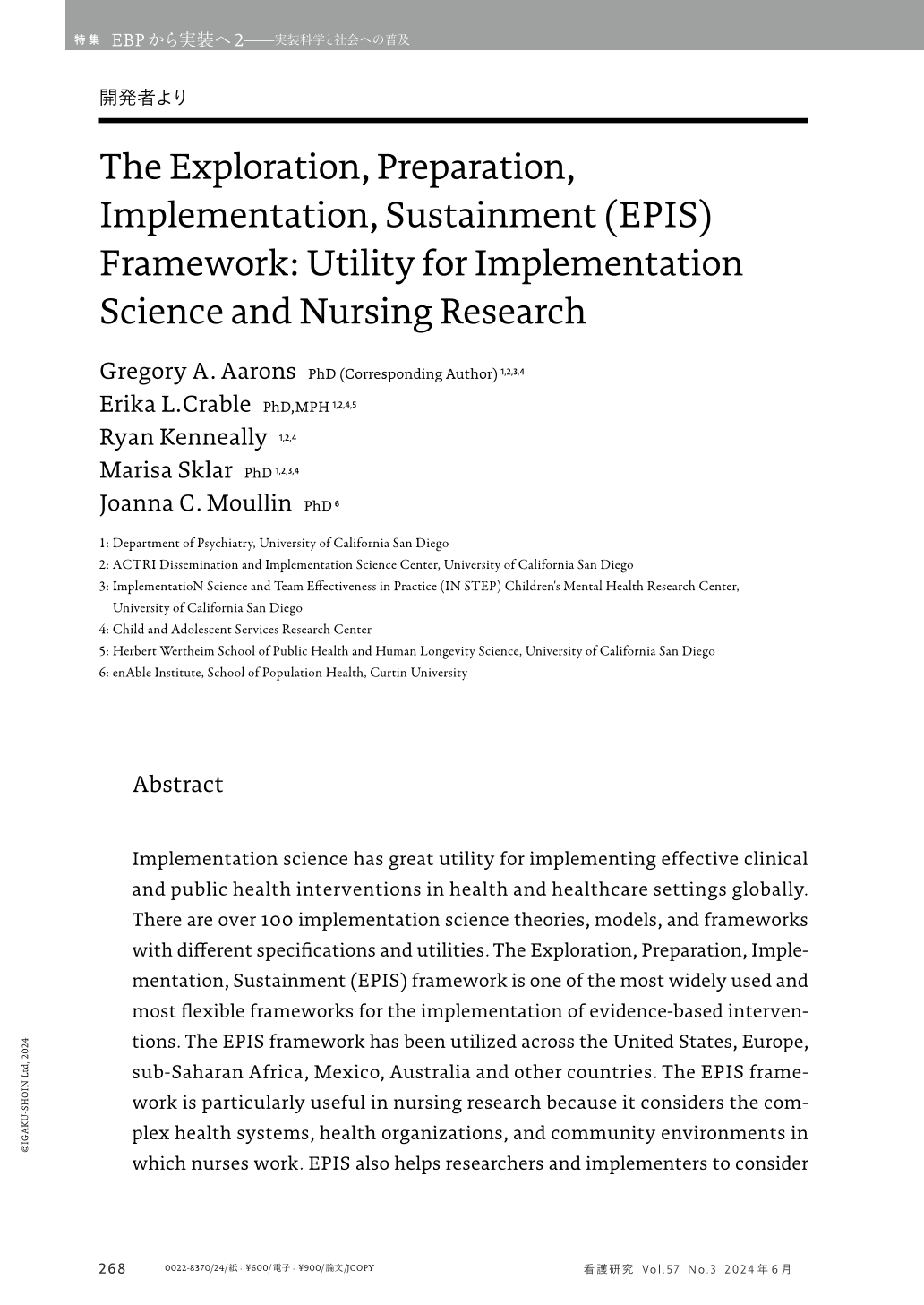
Implementation science has great utility for implementing effective clinical and public health interventions in health and healthcare settings globally. There are over 100 implementation science theories, models, and frameworks with different specifications and utilities. The Exploration, Preparation, Implementation, Sustainment (EPIS) framework is one of the most widely used and most flexible frameworks for the implementation of evidence-based interventions. The EPIS framework has been utilized across the United States, Europe, sub-Saharan Africa, Mexico, Australia and other countries. The EPIS framework is particularly useful in nursing research because it considers the complex health systems, health organizations, and community environments in which nurses work. EPIS also helps researchers and implementers to consider the important determinants and mechanisms to target with well-specified implementation strategies. This paper provides an overview of EPIS including its phases and domains that can help explain and guide implementation processes and outcomes. We provide examples of how EPIS can be applied to policy-focused implementation, team-based implementation, and for issues of power and equity in implementation research. Resources for learning about EPIS and tools for using EPIS in nursing research are also described.
Abstract
Implementation science has great utility for implementing effective clinical and public health interventions in health and healthcare settings globally. There are over 100 implementation science theories, models, and frameworks with different specifications and utilities. The Exploration, Preparation, Implementation, Sustainment (EPIS) framework is one of the most widely used and most flexible frameworks for the implementation of evidence-based interventions. The EPIS framework has been utilized across the United States, Europe, sub-Saharan Africa, Mexico, Australia and other countries. The EPIS framework is particularly useful in nursing research because it considers the complex health systems, health organizations, and community environments in which nurses work. EPIS also helps researchers and implementers to consider the important determinants and mechanisms to target with well-specified implementation strategies. This paper provides an overview of EPIS including its phases and domains that can help explain and guide implementation processes and outcomes. We provide examples of how EPIS can be applied to policy-focused implementation, team-based implementation, and for issues of power and equity in implementation research. Resources for learning about EPIS and tools for using EPIS in nursing research are also described.
Copyright © 2024, Igaku-Shoin Ltd. All rights reserved.