Japanese
English
- 有料閲覧
PPV購入案内
1,320円 (1,200円+税10%) こちらは、397ページから403ページの文献です。購入には医書.jp本会員登録が必要です。
会員登録完了後に改めて上記「購入サイトへ」を選択してください。
または「購入サイトへ」選択後に「購入ログイン」、「新規会員登録」の順に進んでください。
会員登録について詳しくはをご確認ください。
- Abstract 文献概要
- 1ページ目 Look Inside
I.はじめに
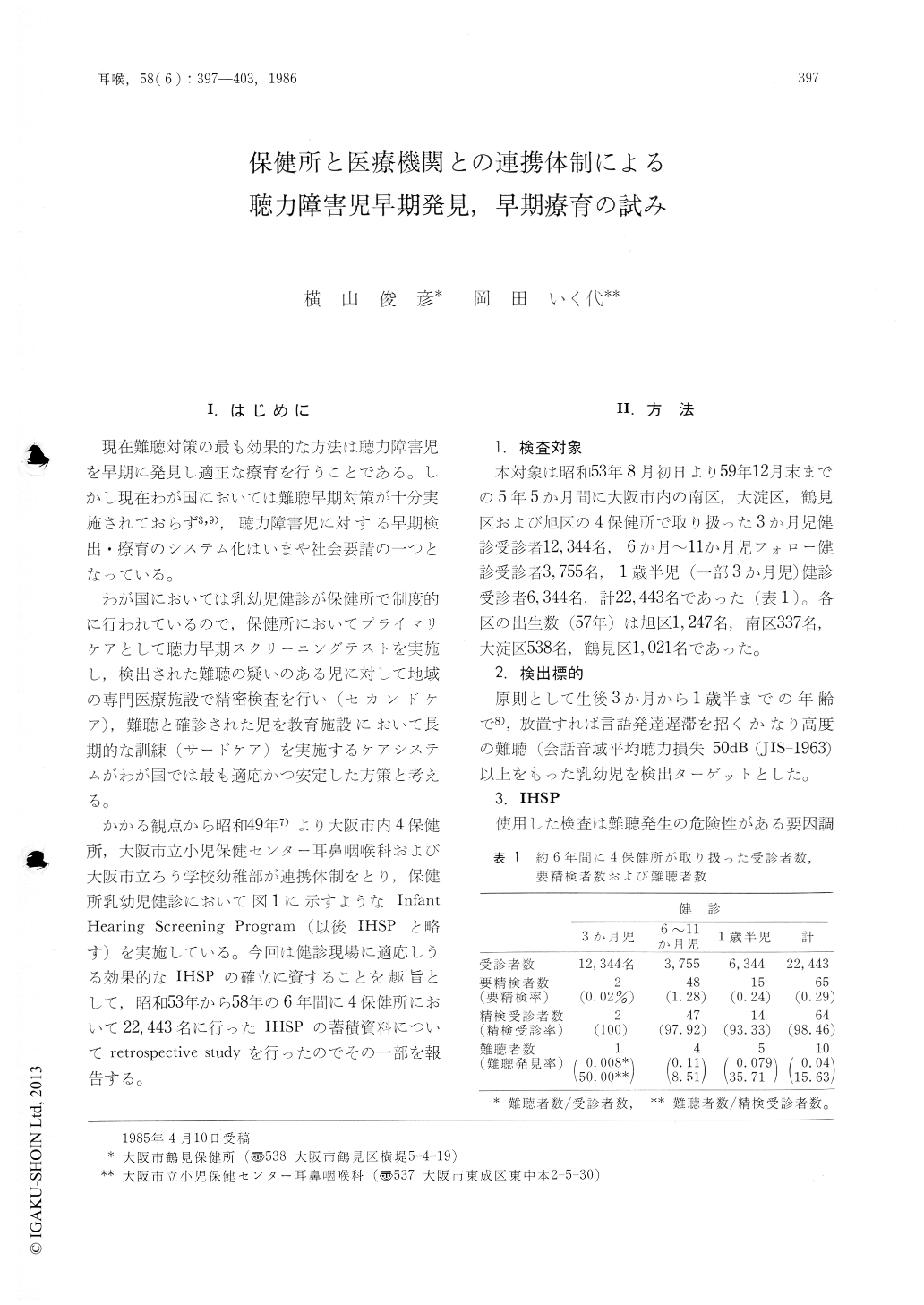
現在難聴対策の最も効果的な方法は聴力障害児を早期に発見し適正な療育を行うことである。しかし現在わが国においては難聴早期対策が十分実施されておらず3,9),聴力障害児に対する早期検出・療育のシステム化はいまや社会要請の一つとなっている。
わが国においては乳幼児健診が保健所で制度的に行われているので,保健所においてプライマリケアとして聴力早期スクリーニングテストを実施し,検出された難聴の疑いのある児に対して地域の専門医療施設で精密検査を行い(セカンドケア),難聴と確診された児を教育施設において長期的な訓練(サードケア)を実施するケアシステムがわが国では最も適応かつ安定した方策と考える。
This study was undertaken to investigate the infant hearing screening program (IHSP), which consisted of test battery of risk factor registers for deafness, developmental test of auditory function and auditory behavioral test, and used in the health examination services for infants at health center in Osaka City.
In 1977 to 1983, of 22, 443 infants tested in four health centers, the audiological testings were performed on 64 children in Children's Medical Center of Osaka. Ten out of them were found to have hearing impairment who needed special education. About half of the deaf children were infants of age of 3 to 11 months.
In the IHSP for the health clinics, some problems such as high over-referral rate were pointed out. However, the IHSP was considered as the useful screening method for the early detection of hearing impairment in the health center.
Copyright © 1986, Igaku-Shoin Ltd. All rights reserved.