Japanese
English
- 有料閲覧
PPV購入案内
1,320円 (1,200円+税10%) こちらは、829ページから837ページの文献です。購入には医書.jp本会員登録が必要です。
会員登録完了後に改めて上記「購入サイトへ」を選択してください。
または「購入サイトへ」選択後に「購入ログイン」、「新規会員登録」の順に進んでください。
会員登録について詳しくはをご確認ください。
- Abstract 文献概要
- 1ページ目 Look Inside
- 参考文献 Reference
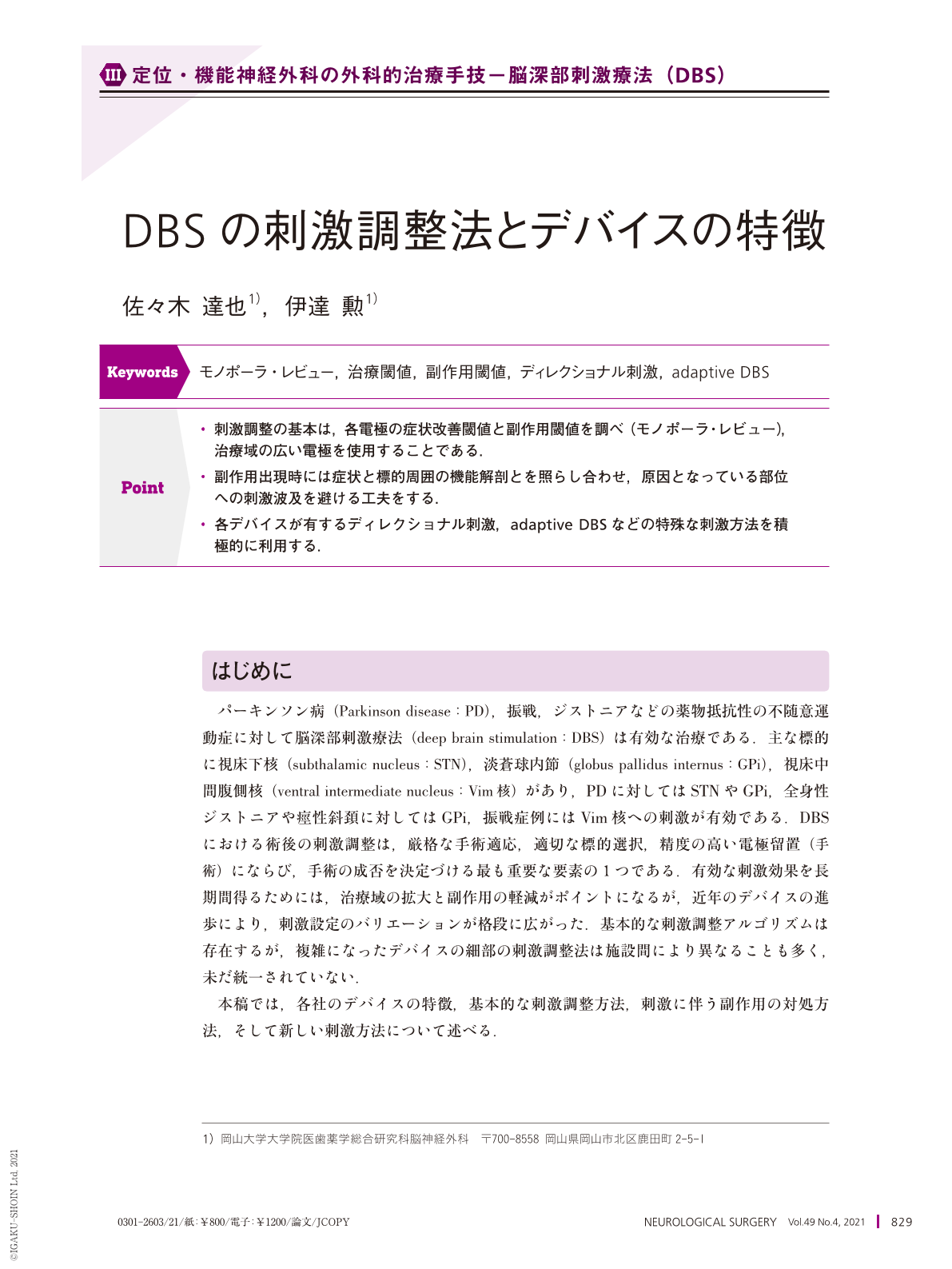
Point
・刺激調整の基本は,各電極の症状改善閾値と副作用閾値を調べ(モノポーラ・レビュー),治療域の広い電極を使用することである.
・副作用出現時には症状と標的周囲の機能解剖とを照らし合わせ,原因となっている部位への刺激波及を避ける工夫をする.
・各デバイスが有するディレクショナル刺激,adaptive DBSなどの特殊な刺激方法を積極的に利用する.
Deep brain stimulation(DBS)is an effective therapy for conditions involving drug-resistant involuntary movements, such as Parkinson's disease, tremor, and dystonia. Programming of DBS, as well as strict surgical indications, appropriate target selection, and accurate electrode placement, is one of the most important factors in the success of DBS. To obtain effective stimulation for a long period, it is important to expand the therapeutic window and reduce side effects. Recent advances in DBS devices have dramatically expanded the variety of stimulus settings. While the indication criteria of DBS and surgical techniques have been established, the details of the programming algorithm are not yet unified. In this paper, we describe the features of each device, basic programming methods, management of DBS-related side effects, and advanced stimulus methods.
Copyright © 2021, Igaku-Shoin Ltd. All rights reserved.