Japanese
English
- 有料閲覧
PPV購入案内
1,320円 (1,200円+税10%) こちらは、1121ページから1128ページの文献です。購入には医書.jp本会員登録が必要です。
会員登録完了後に改めて上記「購入サイトへ」を選択してください。
または「購入サイトへ」選択後に「購入ログイン」、「新規会員登録」の順に進んでください。
会員登録について詳しくはをご確認ください。
- Abstract 文献概要
- 1ページ目 Look Inside
- 参考文献 Reference
Ⅰ.はじめに
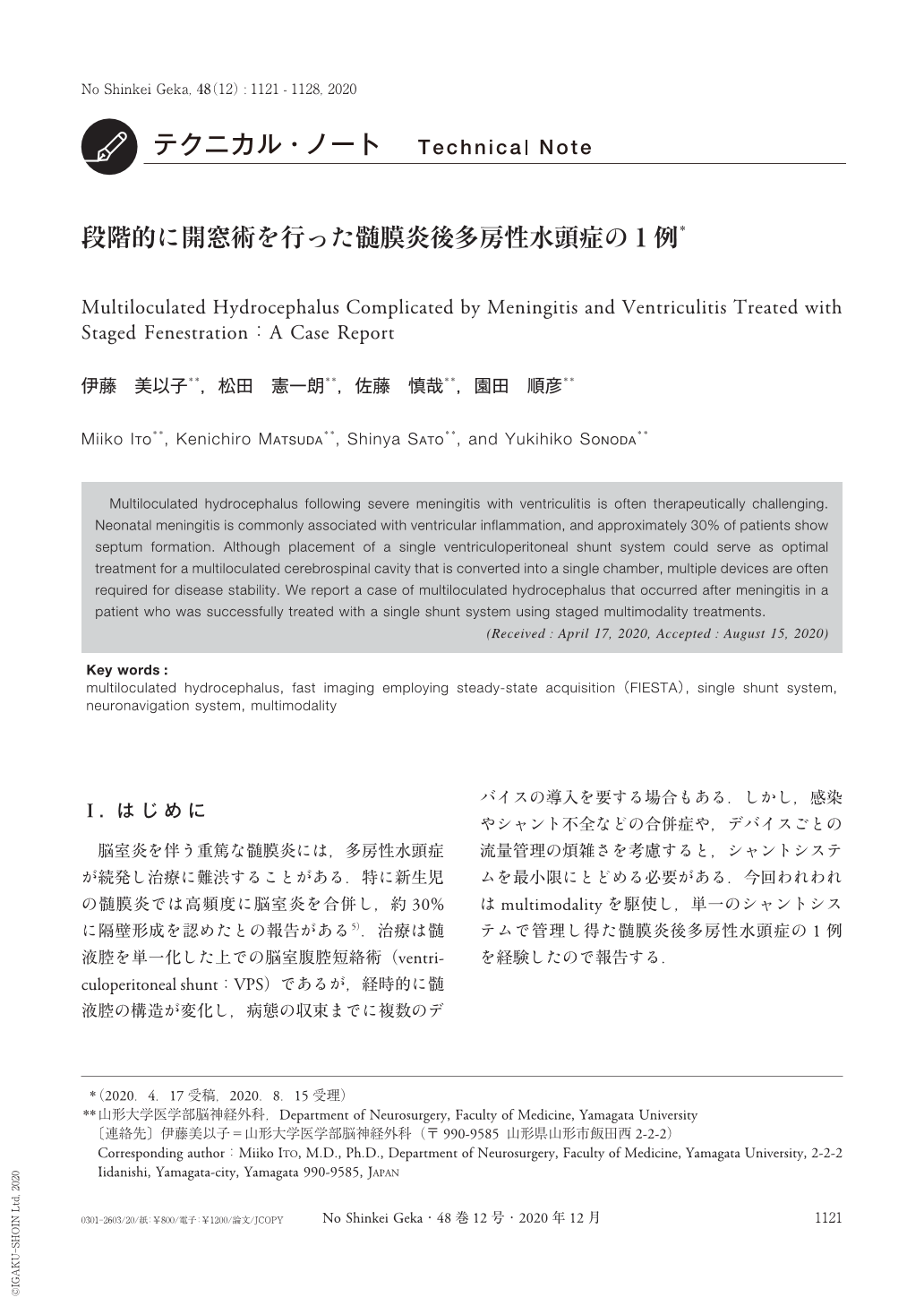
脳室炎を伴う重篤な髄膜炎には,多房性水頭症が続発し治療に難渋することがある.特に新生児の髄膜炎では高頻度に脳室炎を合併し,約30%に隔壁形成を認めたとの報告がある5).治療は髄液腔を単一化した上での脳室腹腔短絡術(ventriculoperitoneal shunt:VPS)であるが,経時的に髄液腔の構造が変化し,病態の収束までに複数のデバイスの導入を要する場合もある.しかし,感染やシャント不全などの合併症や,デバイスごとの流量管理の煩雑さを考慮すると,シャントシステムを最小限にとどめる必要がある.今回われわれはmultimodalityを駆使し,単一のシャントシステムで管理し得た髄膜炎後多房性水頭症の1例を経験したので報告する.
Multiloculated hydrocephalus following severe meningitis with ventriculitis is often therapeutically challenging. Neonatal meningitis is commonly associated with ventricular inflammation, and approximately 30% of patients show septum formation. Although placement of a single ventriculoperitoneal shunt system could serve as optimal treatment for a multiloculated cerebrospinal cavity that is converted into a single chamber, multiple devices are often required for disease stability. We report a case of multiloculated hydrocephalus that occurred after meningitis in a patient who was successfully treated with a single shunt system using staged multimodality treatments.
Copyright © 2020, Igaku-Shoin Ltd. All rights reserved.