Japanese
English
- 有料閲覧
PPV購入案内
1,320円 (1,200円+税10%) こちらは、663ページから672ページの文献です。購入には医書.jp本会員登録が必要です。
会員登録完了後に改めて上記「購入サイトへ」を選択してください。
または「購入サイトへ」選択後に「購入ログイン」、「新規会員登録」の順に進んでください。
会員登録について詳しくはをご確認ください。
- Abstract 文献概要
- 1ページ目 Look Inside
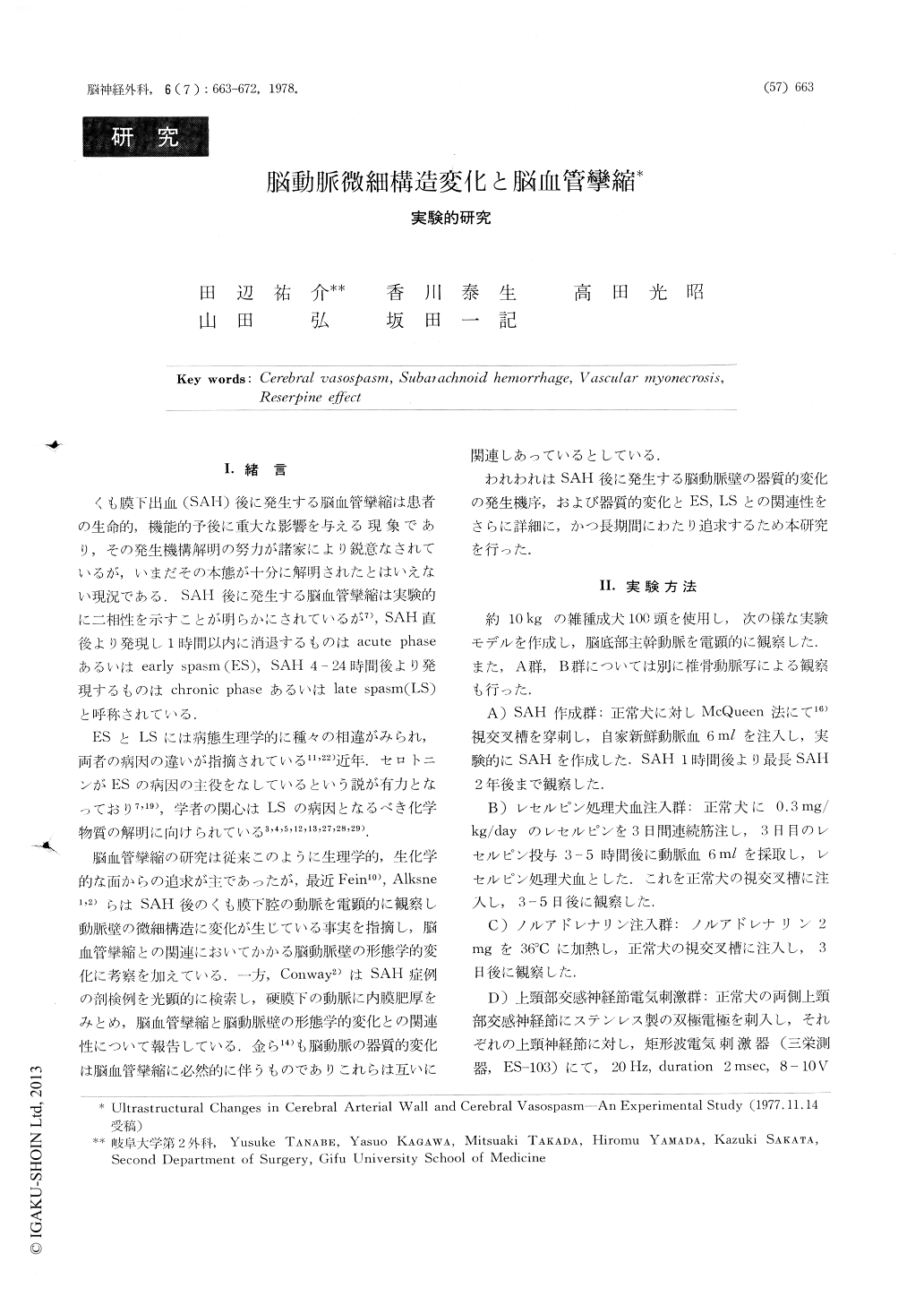
Ⅰ.緒言
くも膜下出血(SAH)後に発生する脳血管攣縮は患者の生命的,機能的予後に重大な影響を与える現象であり,その発生機構解明の努力が諸家により鋭意なされているが,いまだその本態が十分に解明されたとはいえない現況である.SAH後に発生する脳血管攣縮は実験的に二相性を示すことが明らかにされているが7),SAH直後より発現し1時間以内に消退するものはacute phaseあるいはearly spasm(ES),SAH 4-24時間後より発現するものはchronic phaseあるいはlate spasm(LS)と呼称されている.
ESとLSには病態生理学的に種々の相違がみられ,両者の病因の違いが指摘されている11,22)近年.セロトニンがESの病因の主役をなしているという説が有力となっており7,19),学者の関心はLSの病因となるべき化学物質の解明に向けられている3,4,5,12,13,27,28,29)
Ultrastructural changes of the basal truncal arteries of the dog induced by experimental subarachnoid hemorrhage (SAH) and other procedures were studied to elucidate the mechanism of organic changes in the cerebral arterial wall following SAH and to find out relationship between the organic changes and vasospasm. Following results were obtained. 1) After autologous fresh arterial blood was injected into the chiasmal cistern of dogs, pathological ultrastructural changes in the intima and media, especially myonecrosis in the media, began to appear already in 2 hours.
Copyright © 1978, Igaku-Shoin Ltd. All rights reserved.