Japanese
English
- 有料閲覧
PPV購入案内
1,320円 (1,200円+税10%) こちらは、150ページから158ページの文献です。購入には医書.jp本会員登録が必要です。
会員登録完了後に改めて上記「購入サイトへ」を選択してください。
または「購入サイトへ」選択後に「購入ログイン」、「新規会員登録」の順に進んでください。
会員登録について詳しくはをご確認ください。
- Abstract 文献概要
- 1ページ目 Look Inside
はじめに
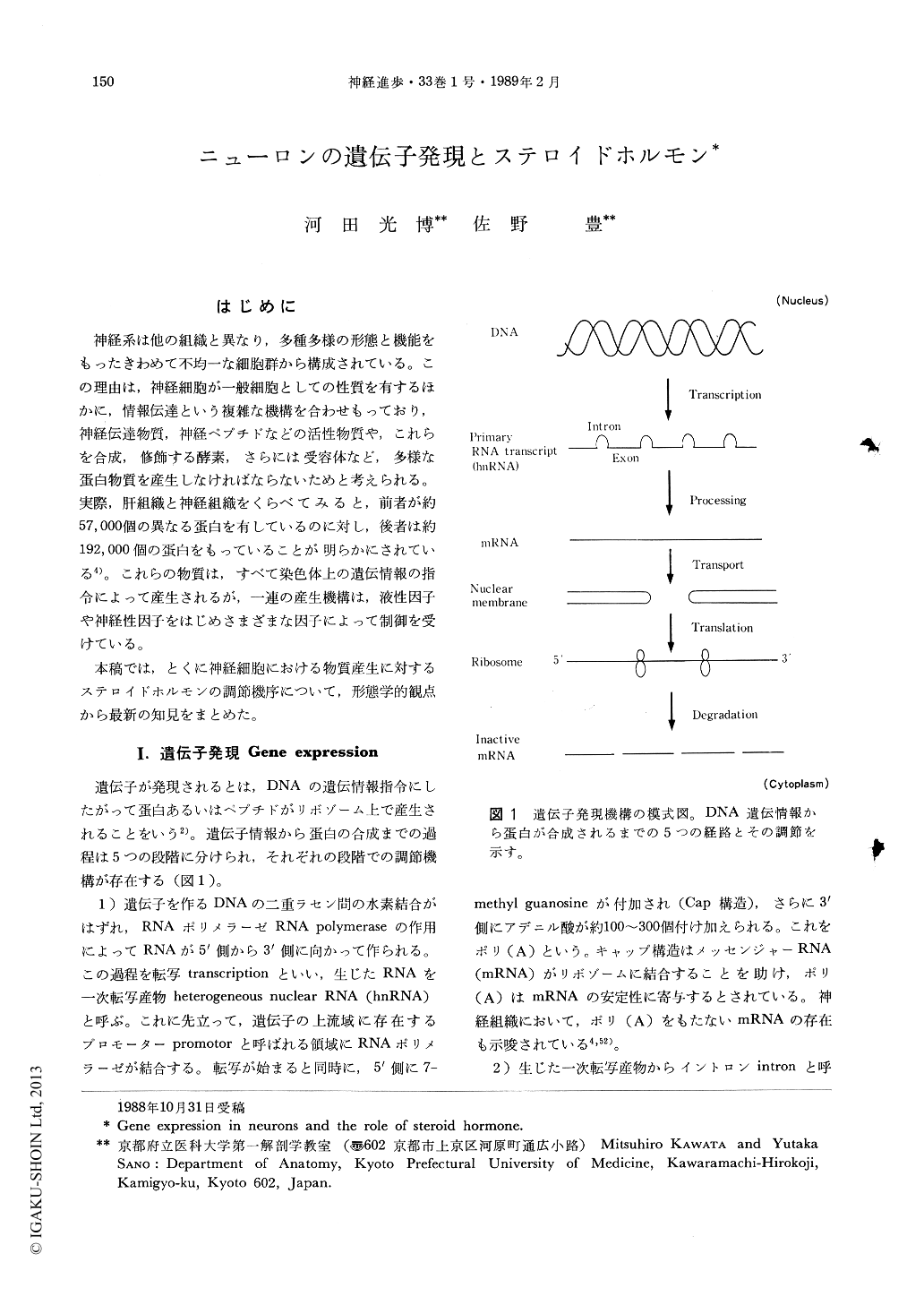
神経系は他の組織と異なり,多種多様の形態と機能をもったきわめて不均一な細胞群から構成されている。この理由は,神経細胞が一般細胞としての性質を有するほかに,情報伝達という複雑な機構を合わせもっており,神経伝達物質,神経ペプチドなどの活性物質や,これらを合成,修飾する酵素,さらには受容体など,多様な蛋白物質を産生しなければならないためと考えられる。実際,肝組織と神経組織をくらべてみると,前者が約57,000個の異なる蛋白を有しているのに対し,後者は約192,000個の蛋白をもっていることが明らかにされている4)。これらの物質は,すべて染色体上の遺伝情報の指令によって産生されるが,一連の産生機構は,液性因子や神経性因子をはじめさまざまな因子によって制御を受けている。
本稿では,とくに神経細胞における物質産生に対するステロイドホルモンの調節機序について,形態学的観点から最新の知見をまとめた。
Mammalian brain expresses many nucleic acids and when these gene transcripts are all translated into proteins or peptides, more than 190,000 different compounds can be synthesized in the brain. Steroid has been known to have a direct effect on the gene in the neurons. Estrogen, progesterone, glucocorticoid, mineralocorticoid, and androgen receptors have been cloned and their amino acid and nucleic acid sequence has been elucidated. This makes us to produce the antibody for these receptors. In situ hybridization technique is very powerful method to visualize the localization of messenger RNAs. Furthermore, this technique in conjunction with the autoradiography enables us to measure the increase or decrease of silver grains within the cells after physiological or pharmacological manipula-tion, reflecting the specific changes of mRNAs to these stimuli. This chapter reviews the localization of steroid receptive cells which have been demonstrated by immunohistochemistry or autoradiography with the uptake of radioisotope labelled steroids and quantitative analysis on the changes of mRNA by in situ hybridization.
Copyright © 1989, Igaku-Shoin Ltd. All rights reserved.