Japanese
English
- 有料閲覧
PPV購入案内
1,320円 (1,200円+税10%) こちらは、1322ページから1334ページの文献です。購入には医書.jp本会員登録が必要です。
会員登録完了後に改めて上記「購入サイトへ」を選択してください。
または「購入サイトへ」選択後に「購入ログイン」、「新規会員登録」の順に進んでください。
会員登録について詳しくはをご確認ください。
- Abstract 文献概要
- 1ページ目 Look Inside
I.はじめに
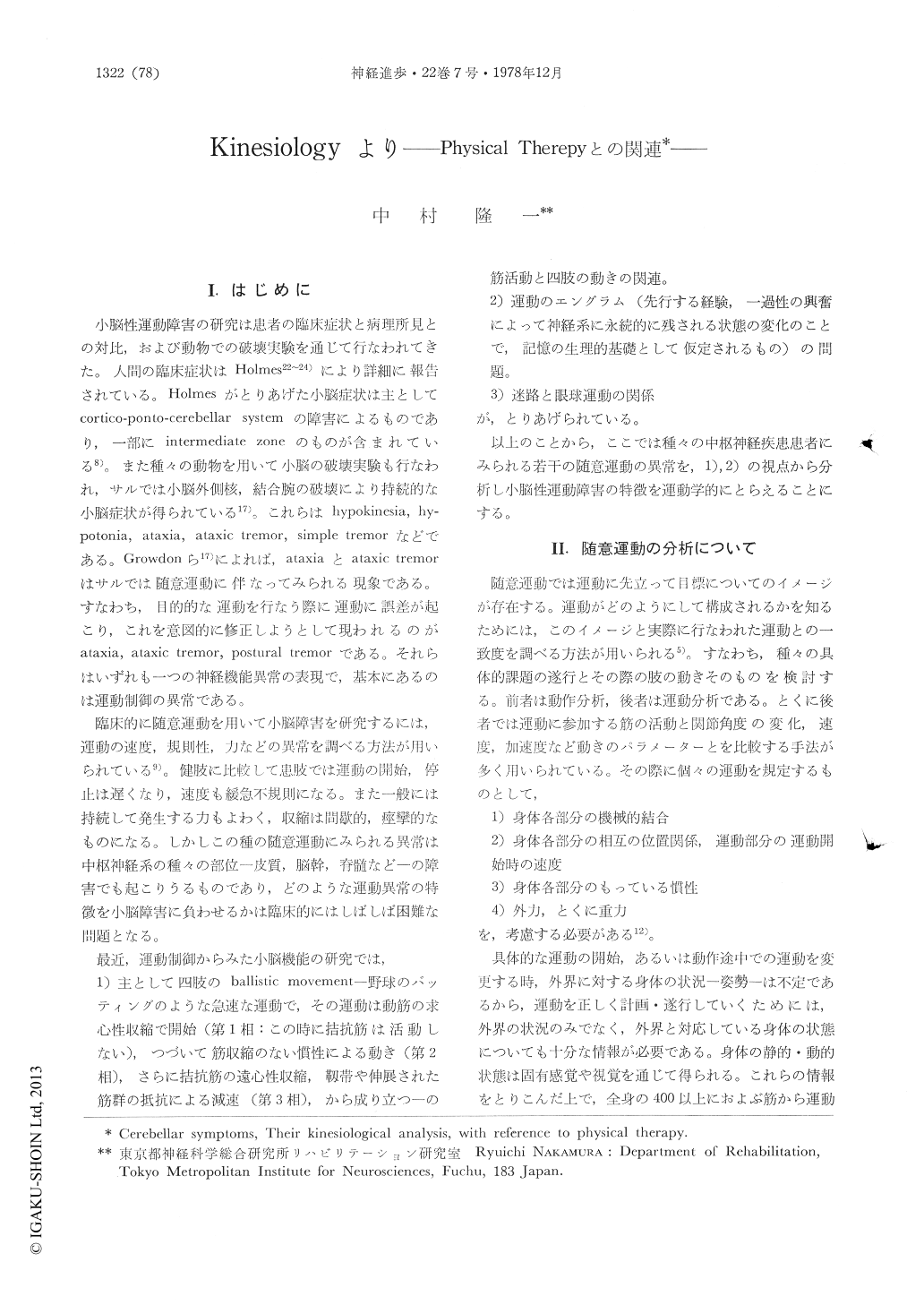
小脳性運動障害の研究は患者の臨床症状と病理所見との対比,および動物での破壊実験を通じて行なわれてきた。人間の臨床症状はHolmes22〜24)により詳細に報告されている。Holmesがとりあげた小脳症状は主としてcortico-ponto-cerebellar systemの障害によるものであり,一部にintermediate zoneのものが含まれている8)。また種々の動物を用いて小脳の破壊実験も行なわれ,サルでは小脳外側核,結合腕の破壊により持続的な小脳症状が得られている17)。これらはhypokinesia,hypotonia,ataxia,ataxic tremor,simple tremorなどである。Growdonら17)によれば,ataxiaとataxic tremorはサルでは随意運動に伴なってみられる現象である。すなわち,目的的な運動を行なう際に運動に誤差が起こり,これを意図的に修正しようとして現われるのがataxia,ataxic tremor,Postural tremorである。それらはいずれも一つの神経機能異常の表現で,基本にあるのは運動制御の異常である。
臨床的に随意運動を用いて小脳障害を研究するには,運動の速度,規則性,力などの異常を調べる方法が用いられている9)。健肢に比較して患肢では運動の開始,停止は遅くなり,速度も緩急不規則になる。
Cerebellar symptoms such as ataxia and ataxic tremor were observed when a patient attempted some voluntary movements and were interpreted as the result of an impaired control of movements. There are two controversial hypothesis about the control of ballistic movements, i.e., centralist or open-loop control and peripheralist or closed-loop control. In the former a motor program is working throughout the movement and in the latter the feedback from the moving limb is controlling the movement process.
Copyright © 1978, Igaku-Shoin Ltd. All rights reserved.