Japanese
English
- 有料閲覧
PPV購入案内
1,320円 (1,200円+税10%) こちらは、884ページから889ページの文献です。購入には医書.jp本会員登録が必要です。
会員登録完了後に改めて上記「購入サイトへ」を選択してください。
または「購入サイトへ」選択後に「購入ログイン」、「新規会員登録」の順に進んでください。
会員登録について詳しくはをご確認ください。
- Abstract 文献概要
- 1ページ目 Look Inside
Ⅰ.序言
重症筋無力症は,成人,とくに思春期の女子に好発するとされ,小児期に発症する例は,従来きわめてまれとされてきた。しかし診断法の進歩とともに,小児例の報告も次第に多くなり,本邦においても小児例が決して稀でないことは,筆者らがすでに指摘したとおりである1)2)。
しかしこれら小児期に発病した症例は,成人例と比べていくつかの特徴を有する。とくにその発病年齢の分布をみると,明らかに1〜3歳というごく若年層にピークがあり,成人例のそれとの間にきわめて大きなギャップがある。この1〜3歳に好発する乳幼児例と,思春期を好発時期とする成人例とは,いかなる関係にあるのかについては,まだほとんど明らかにされていないし,またかかる問題をテーマにした研究もあまり行なわれていない。
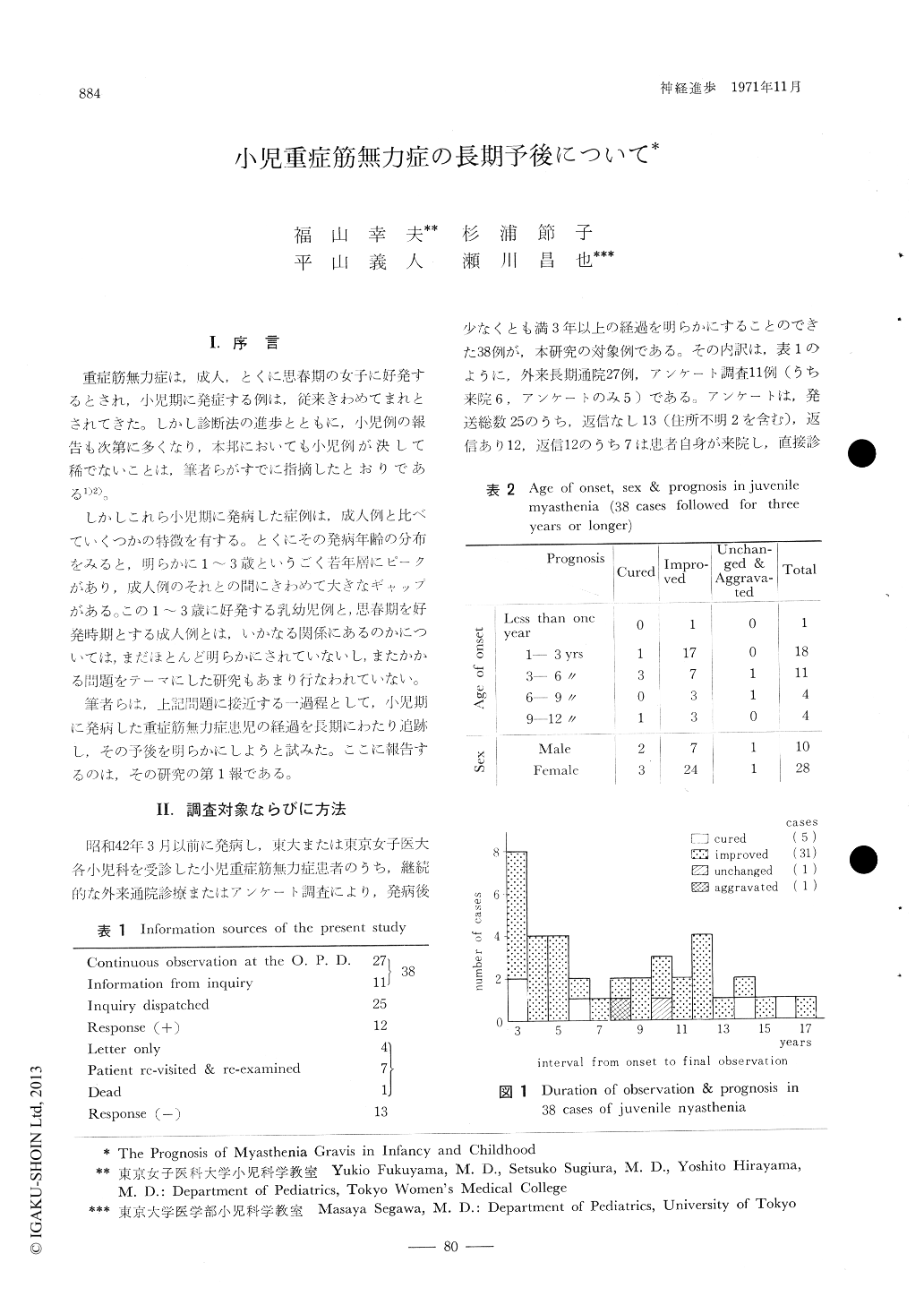
The results of follow-up studies on 38 cases of myasthenia gravis in infancy and childhood were reported. The duration of observation in this study ranged from three to 17 years (eight years in average) after the onset of the disease.
In 22 cases the myasthenic symptoms remained locally in the extraocular muscles throughout the course, while in other 16 cases bulbar, trunk and extremity muscles were involved at some occasions during the course. The spreading of symptoms in these cases occured at various stages from two weeks to four and half years after the onset of ocular symptoms.
Copyright © 1971, Igaku-Shoin Ltd. All rights reserved.