Japanese
English
- 有料閲覧
PPV購入案内
1,320円 (1,200円+税10%) こちらは、838ページから844ページの文献です。購入には医書.jp本会員登録が必要です。
会員登録完了後に改めて上記「購入サイトへ」を選択してください。
または「購入サイトへ」選択後に「購入ログイン」、「新規会員登録」の順に進んでください。
会員登録について詳しくはをご確認ください。
- Abstract 文献概要
- 1ページ目 Look Inside
I.アルツハイマー病原因遺伝子と神経病変
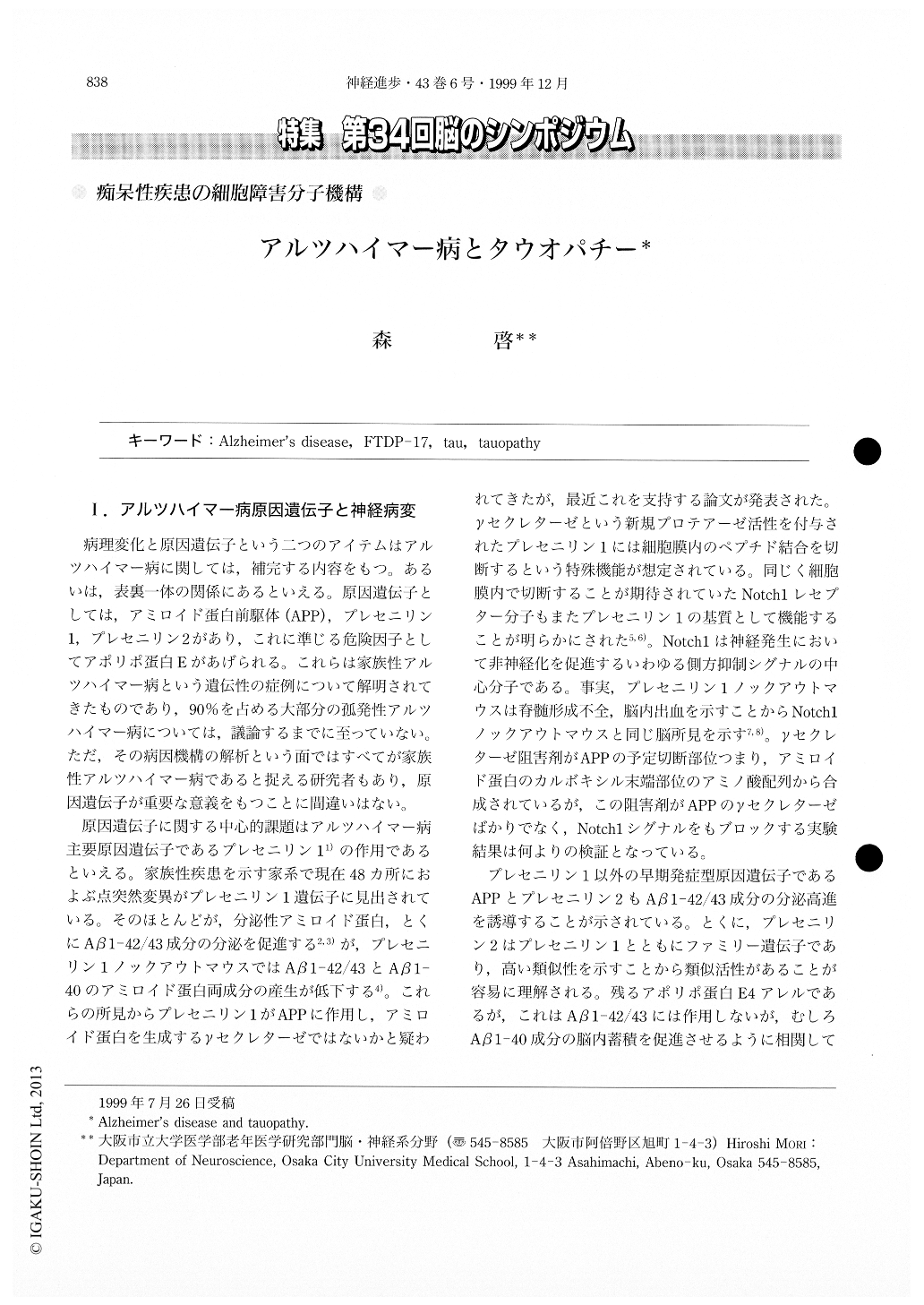
病理変化と原因遺伝子という二つのアイテムはアルツハイマー病に関しては,補完する内容をもつ。あるいは,表裏一体の関係にあるといえる。原因遺伝子としては,アミロイド蛋白前駆体(APP),プレセニリン1,プレセニリン2があり,これに準じる危険因子としてアポリポ蛋白Eがあげられる。これらは家族性アルツハイマー病という遺伝性の症例について解明されてきたものであり,90%を占める大部分の孤発性アルツハイマー病については,議論するまでに至っていない。ただ,その病因機構の解析という面ではすべてが家族性アルツハイマー病であると捉える研究者もあり,原因遺伝子が重要な意義をもつことに間違いはない。
Alzheimer's disease (AD) shares tau inclusion with other neurological disorders. Its presence becomes to be more important than ever because of several reasons. First, the missense point mutations were found in the tau gene of families with frontotemporal dementia and parkinsonism linked to chromosome 17 (FTDP-17), by which tau proved to be the causal molecule for widely spread dementia diseases. The potent classification of the tau mutations is discussed here based on their effects on gene expression and pathology, and tubulin-binding activity, cytoskeletal function and cell shape.
Copyright © 1999, Igaku-Shoin Ltd. All rights reserved.