Japanese
English
- 有料閲覧
PPV購入案内
1,320円 (1,200円+税10%) こちらは、248ページから256ページの文献です。購入には医書.jp本会員登録が必要です。
会員登録完了後に改めて上記「購入サイトへ」を選択してください。
または「購入サイトへ」選択後に「購入ログイン」、「新規会員登録」の順に進んでください。
会員登録について詳しくはをご確認ください。
- Abstract 文献概要
- 1ページ目 Look Inside
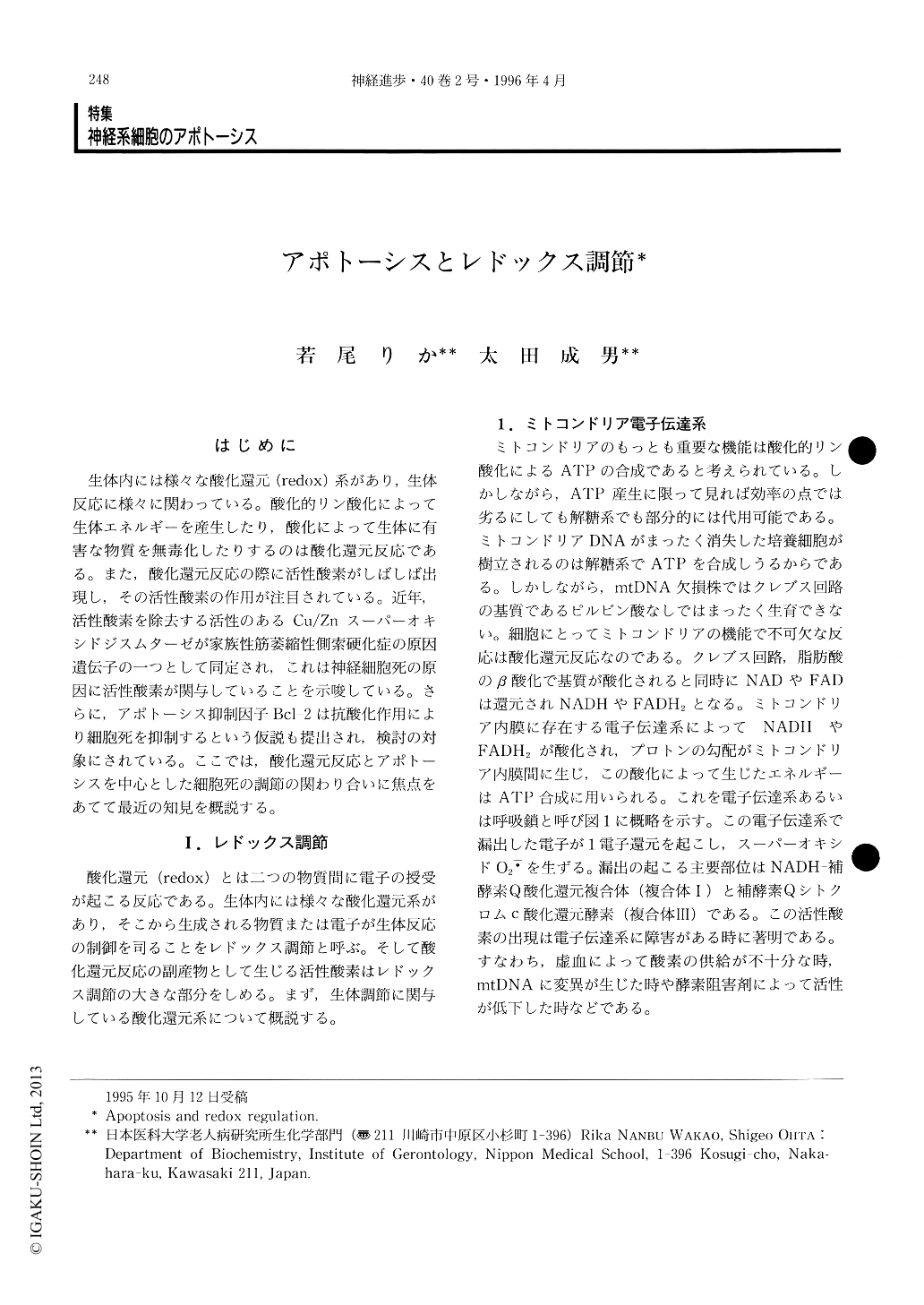
はじめに
生体内には様々な酸化還元(redox)系があり,生体反応に様々に関わっている。酸化的リン酸化によって生体エネルギーを産生したり,酸化によって生体に有害な物質を無毒化したりするのは酸化還元反応である。また,酸化還元反応の際に活性酸素がしばしば出現し,その活性酸素の作用が注目されている。近年,活性酸素を除去する活性のあるCu/Znスーパーオキシドジスムターゼが家族性筋萎縮性側索硬化症の原因遺伝子の一つとして同定され,これは神経細胞死の原因に活性酸素が関与していることを示唆している。さらに,アポトーシス抑制因子Bcl-2は抗酸化作用により細胞死を抑制するという仮説も提出され,検討の対象にされている。ここでは,酸化還元反応とアポトーシスを中心とした細胞死の調節の関わり合いに焦点をあてて最近の知見を概説する。
There are many redox pathways that produce reactive oxygen species in a living cell. One by product of mitochondrial metabolism that is potentially injurious to cellular constituents is the production of superoxide radical, by a single electron transfer to molecular oxygen. The depletion of the mitochondrial electron transport in a fibrosarcoma cell line resulted in abrogation of TNF-induced gene expression, suggesting that reactive oxygen species are not only toxic but, in addition, can function as signal transducers.
Copyright © 1996, Igaku-Shoin Ltd. All rights reserved.