Japanese
English
- 有料閲覧
PPV購入案内
1,320円 (1,200円+税10%) こちらは、367ページから378ページの文献です。購入には医書.jp本会員登録が必要です。
会員登録完了後に改めて上記「購入サイトへ」を選択してください。
または「購入サイトへ」選択後に「購入ログイン」、「新規会員登録」の順に進んでください。
会員登録について詳しくはをご確認ください。
- Abstract 文献概要
- 1ページ目 Look Inside
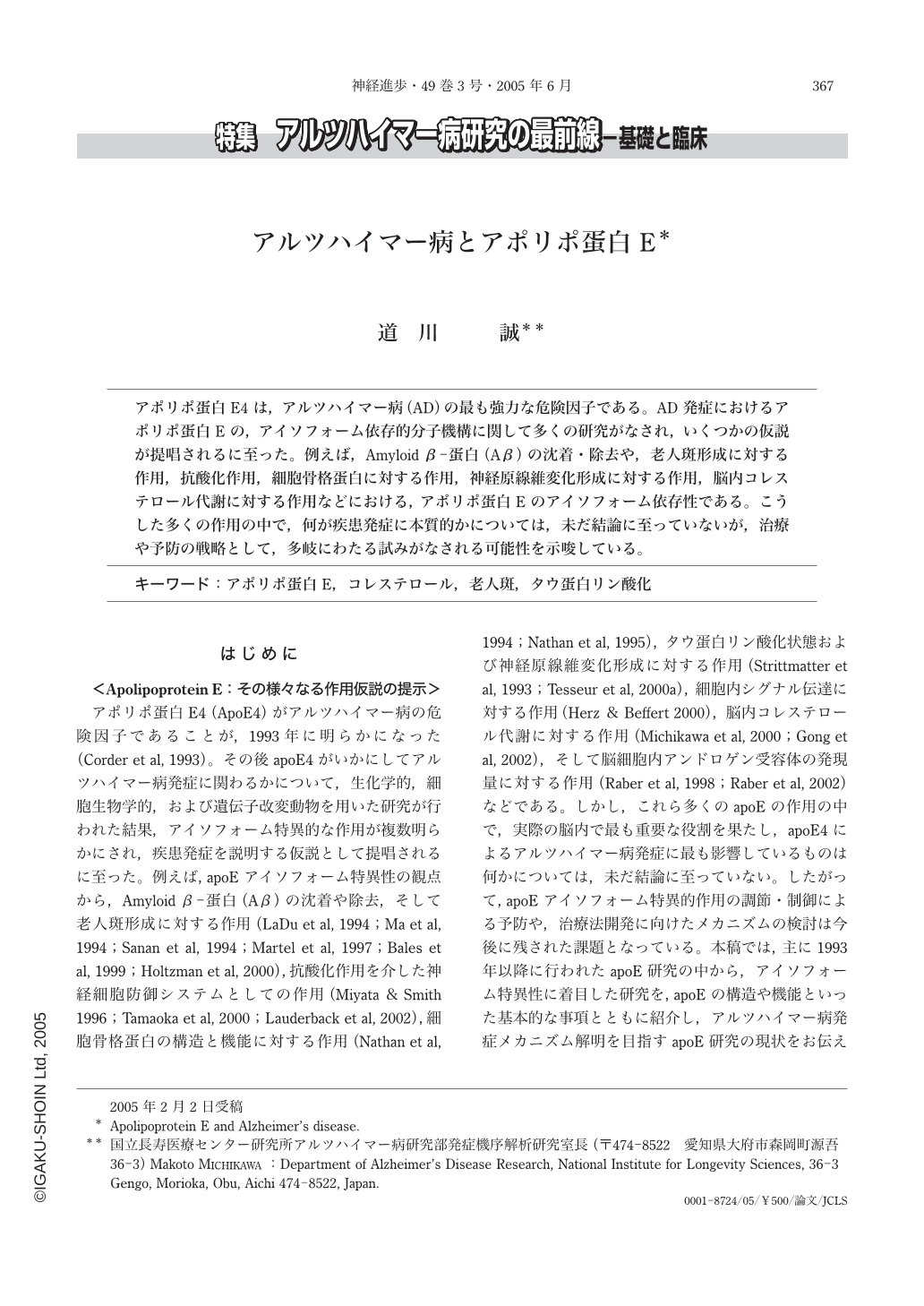
アポリポ蛋白E4は,アルツハイマー病(AD)の最も強力な危険因子である。AD発症におけるアポリポ蛋白Eの,アイソフォーム依存的分子機構に関して多くの研究がなされ,いくつかの仮説が提唱されるに至った。例えば,Amyloid β-蛋白(Aβ)の沈着・除去や,老人斑形成に対する作用,抗酸化作用,細胞骨格蛋白に対する作用,神経原線維変化形成に対する作用,脳内コレステロール代謝に対する作用などにおける,アポリポ蛋白Eのアイソフォーム依存性である。こうした多くの作用の中で,何が疾患発症に本質的かについては,未だ結論に至っていないが,治療や予防の戦略として,多岐にわたる試みがなされる可能性を示唆している。
The possession of apolipoprotein E(apoE)ε4 allele is a major risk factor for Alzheimer's disease(AD). There have been numerous studies to show apoE isoform-specific actions and several hypotheses underlying the association of the apoEε4 allele with AD have been proposed. However, the development of therapeuitical approaches or prevention of AD based on these findings has not been developed, yet. This review article described the differences in structural and biophysical properties of apoE isoform, and their functions under normal and abnormal conditions, which have been proposed to lead AD development. Some of the mechanisms might be targets for the development of AD.
Copyright © 2005, Igaku-Shoin Ltd. All rights reserved.