Japanese
English
- 有料閲覧
PPV購入案内
1,320円 (1,200円+税10%) こちらは、767ページから775ページの文献です。購入には医書.jp本会員登録が必要です。
会員登録完了後に改めて上記「購入サイトへ」を選択してください。
または「購入サイトへ」選択後に「購入ログイン」、「新規会員登録」の順に進んでください。
会員登録について詳しくはをご確認ください。
- Abstract 文献概要
- 1ページ目 Look Inside
- 参考文献 Reference
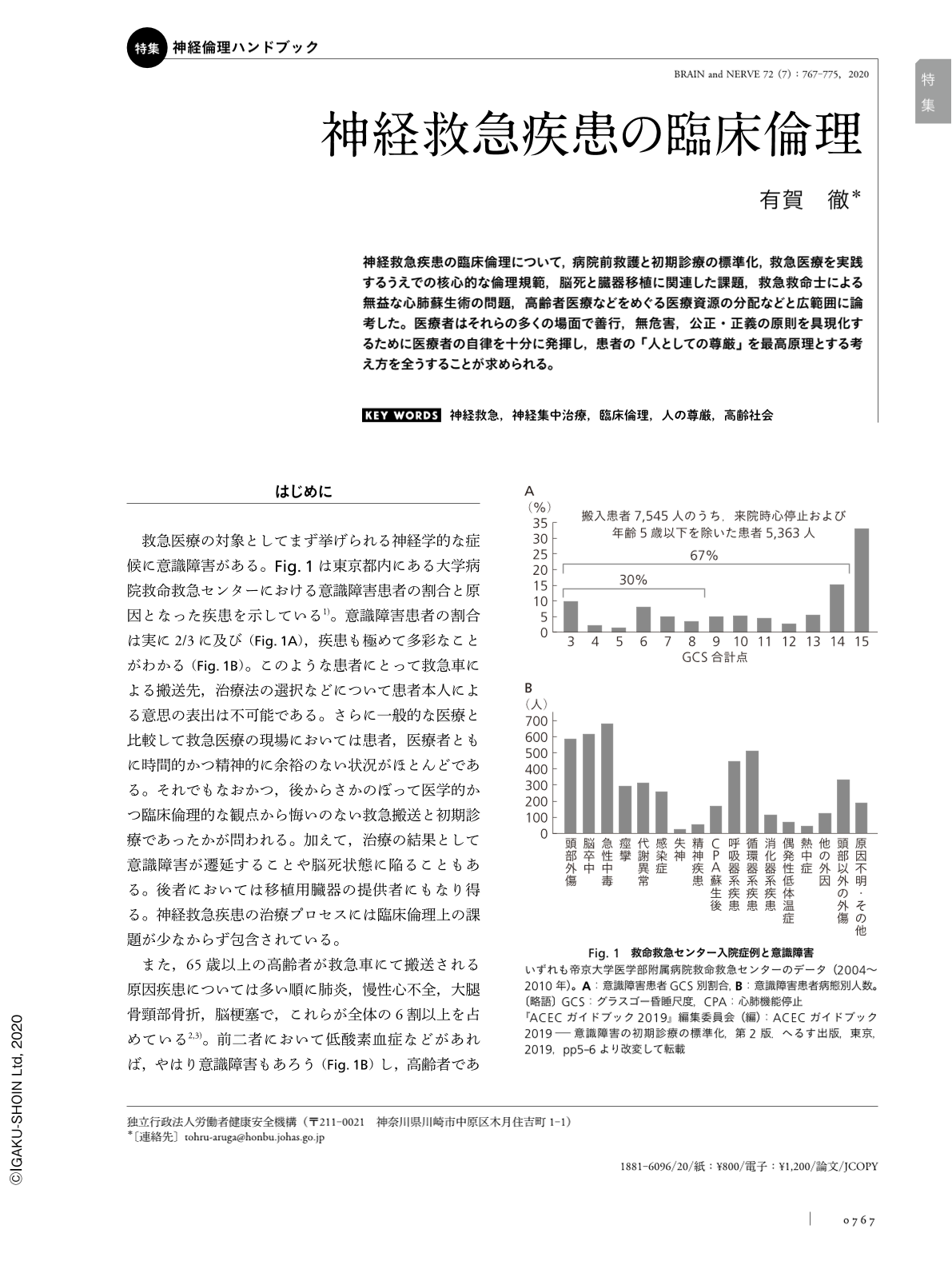
神経救急疾患の臨床倫理について,病院前救護と初期診療の標準化,救急医療を実践するうえでの核心的な倫理規範,脳死と臓器移植に関連した課題,救急救命士による無益な心肺蘇生術の問題,高齢者医療などをめぐる医療資源の分配などと広範囲に論考した。医療者はそれらの多くの場面で善行,無危害,公正・正義の原則を具現化するために医療者の自律を十分に発揮し,患者の「人としての尊厳」を最高原理とする考え方を全うすることが求められる。
Abstract
The author has examined the characteristics of clinical ethics regarding neurological emergencies and critical care. Ethics are involved in areas such as emergency medicine standards, intensive care strategies for brain dead patients who are followed by organ donation as well as those who do not donate their organs, resulting in cardiac deaths, and serious problems about distributing medical resources among the elder in extremely aged society. We must understand not only that we encounter a variety of fluctuating patient emotions in emergency rooms, but also that it is difficult or even impossible for many patients with a disturbance in consciousness to express what is on their minds. Therefore in many cases, we need to consider the patient's dignity be of the ultimate priority and that one of the most important duties for medical personnel is to display autonomy in utilizing the principle of benevolence. Additionally, hospital administrative staff should fully support the autonomy of doctors and other medical personnel.
Copyright © 2020, Igaku-Shoin Ltd. All rights reserved.