Japanese
English
- 有料閲覧
PPV購入案内
1,320円 (1,200円+税10%) こちらは、753ページから766ページの文献です。購入には医書.jp本会員登録が必要です。
会員登録完了後に改めて上記「購入サイトへ」を選択してください。
または「購入サイトへ」選択後に「購入ログイン」、「新規会員登録」の順に進んでください。
会員登録について詳しくはをご確認ください。
- Abstract 文献概要
- 1ページ目 Look Inside
- 参考文献 Reference
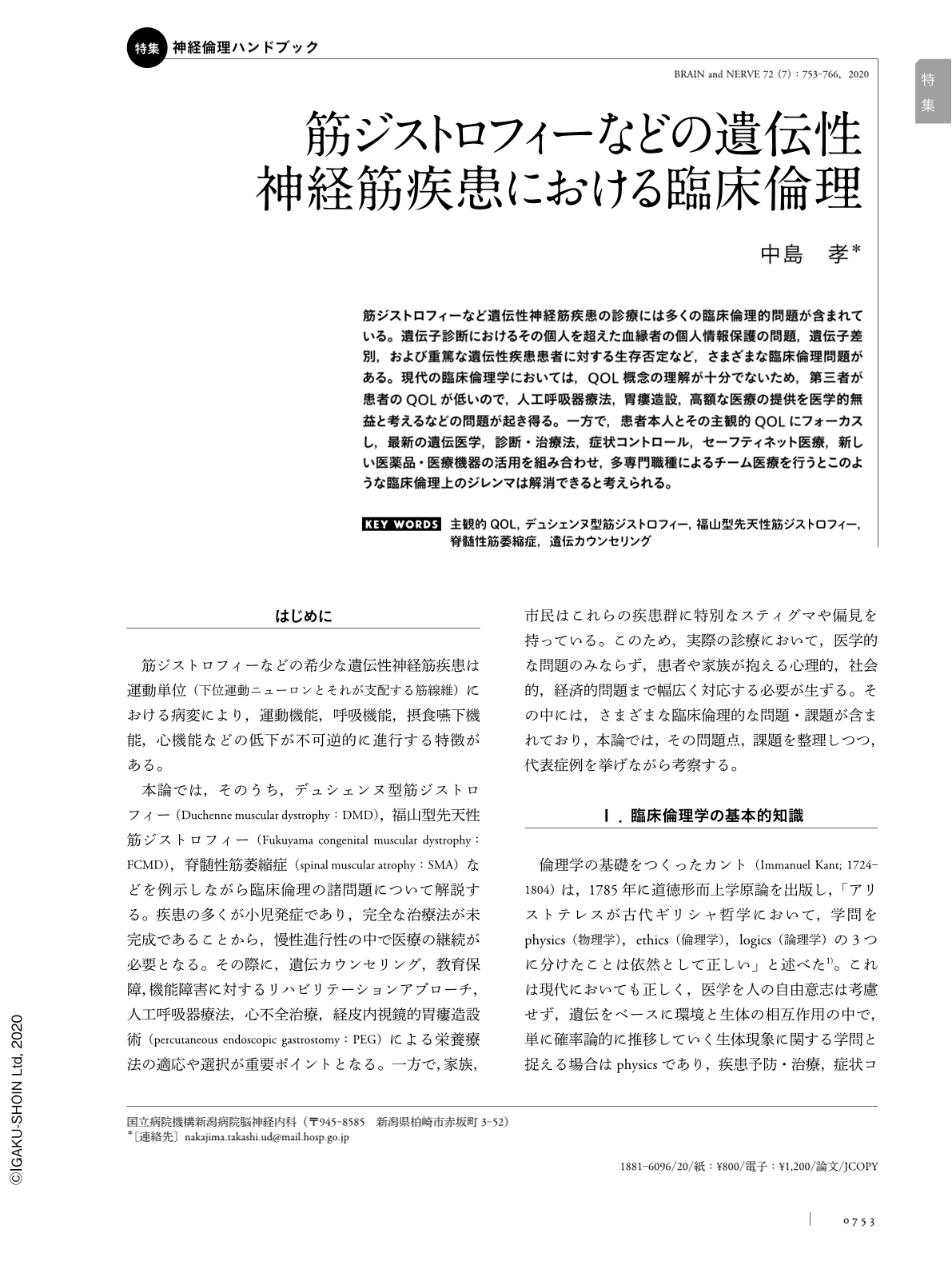
筋ジストロフィーなど遺伝性神経筋疾患の診療には多くの臨床倫理的問題が含まれている。遺伝子診断におけるその個人を超えた血縁者の個人情報保護の問題,遺伝子差別,および重篤な遺伝性疾患患者に対する生存否定など,さまざまな臨床倫理問題がある。現代の臨床倫理学においては,QOL概念の理解が十分でないため,第三者が患者のQOLが低いので,人工呼吸器療法,胃瘻造設,高額な医療の提供を医学的無益と考えるなどの問題が起き得る。一方で,患者本人とその主観的QOLにフォーカスし,最新の遺伝医学,診断・治療法,症状コントロール,セーフティネット医療,新しい医薬品・医療機器の活用を組み合わせ,多専門職種によるチーム医療を行うとこのような臨床倫理上のジレンマは解消できると考えられる。
Abstract
There are many ethical issues in the health care of hereditary neuromuscular diseases such as Duchenne muscular dystrophy. The problems lie in the protection of personal genetic information in genetic diagnosis and genetic discrimination. The idea that allocating expensive medical care to such patients with severe disabilities is futile should be avoided. QOL as patient's individual subjective perception has not been completely understood in the academic field of clinical ethics. From the view of a third party it might be thought that the neuromuscular disease patients' QOL is extremely low. In such cases, ventilator therapy, PEG placement, and latest antisense nucleotide therapy might be considered wasteful. However, these therapies must be necessary and appropriate from the patients' own view. These dilemma on clinical ethics can be solved by focusing on enhancing the patients' subjective QOL. This can be achieved by means of modern genetics, symptom control techniques and the use of a safety net medical care system with a multidisciplinary team.
Copyright © 2020, Igaku-Shoin Ltd. All rights reserved.