Japanese
English
- 有料閲覧
PPV購入案内
1,320円 (1,200円+税10%) こちらは、1099ページから1108ページの文献です。購入には医書.jp本会員登録が必要です。
会員登録完了後に改めて上記「購入サイトへ」を選択してください。
または「購入サイトへ」選択後に「購入ログイン」、「新規会員登録」の順に進んでください。
会員登録について詳しくはをご確認ください。
- Abstract 文献概要
- 1ページ目 Look Inside
- 参考文献 Reference
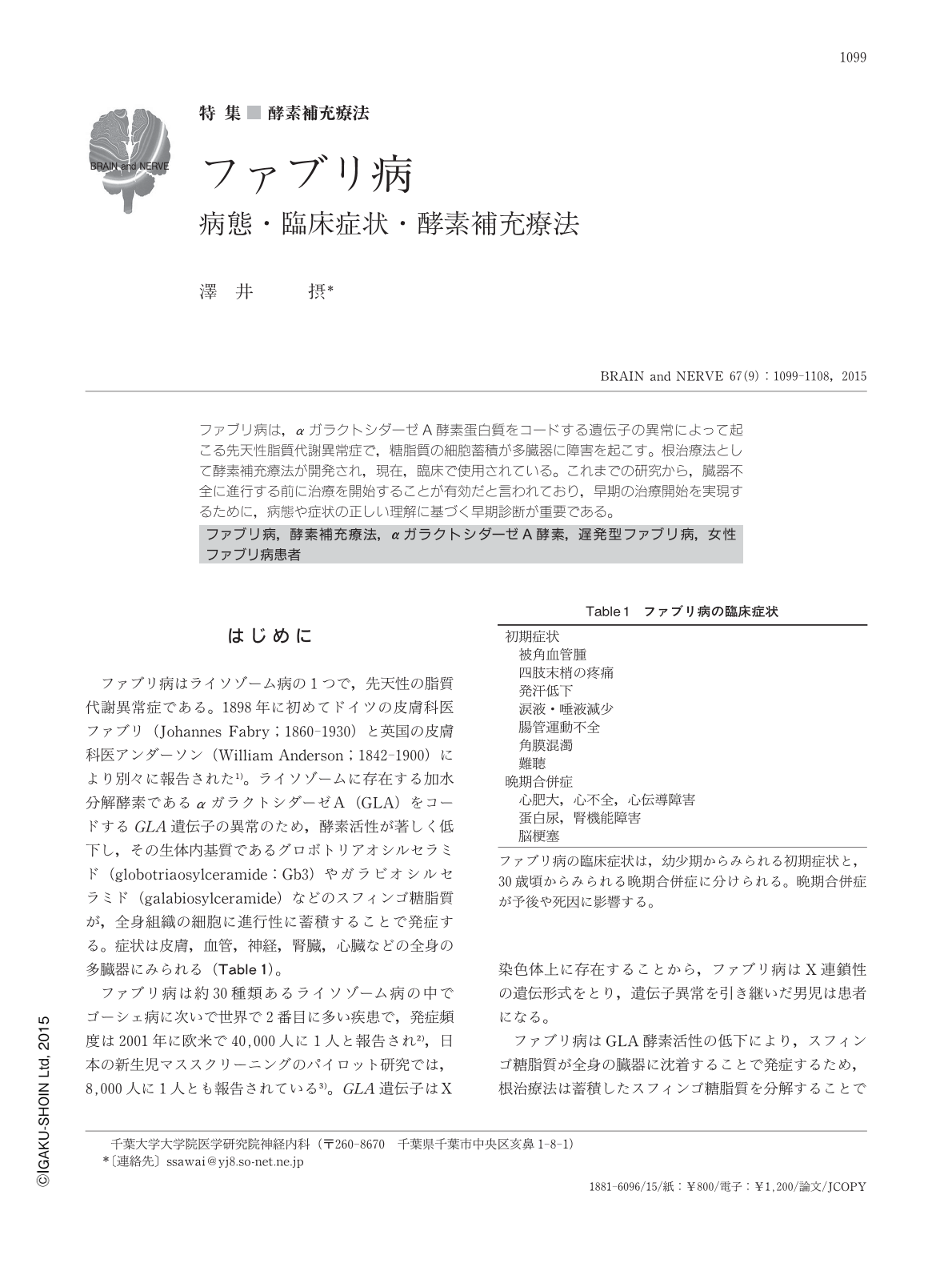
ファブリ病は,αガラクトシダーゼA酵素蛋白質をコードする遺伝子の異常によって起こる先天性脂質代謝異常症で,糖脂質の細胞蓄積が多臓器に障害を起こす。根治療法として酵素補充療法が開発され,現在,臨床で使用されている。これまでの研究から,臓器不全に進行する前に治療を開始することが有効だと言われており,早期の治療開始を実現するために,病態や症状の正しい理解に基づく早期診断が重要である。
Abstract
Fabry disease is an X-linked lysosomal disorder caused by a deficiency in lysosomal glycohydrolase α-galactosidase A. This defect results in the accumulation of glycosphingolipids in various organ systems. Lipid deposits occur preferentially in vascular endothelial and smooth muscle cells, leading to vascular dysfunction, which results in tissue ischemia and vessel occlusion. Clinical symptoms are divided into two categories: early symptoms and late complications. Early symptoms include acroparesthesia, bouts of pain in the hands or feet, hypohidrosis, angiokeratoma, and gastrointestinal complications, which begin in the early childhood of patients with Fabry disease. Late complications include renal and cardiac dysfunction, and cerebral infarction, which determine morbidity and mortality after age 30 years. Enzyme replacement therapy (ERT) using recombinant human α-galactosidase A has recently developed, and has been shown to improve prognosis of patients with Fabry disease. Recent reports investigating long-term outcomes with ERT have shown that early initiation before the development of irreversible organ failure is particularly effective. Diagnosis at the early stage of the disorder and the early initiation of ERT alleviate symptoms and prevent late complications. The disorder should be widely recognized to improve patients' outcome.
Copyright © 2015, Igaku-Shoin Ltd. All rights reserved.