Japanese
English
- 有料閲覧
PPV購入案内
1,320円 (1,200円+税10%) こちらは、707ページから715ページの文献です。購入には医書.jp本会員登録が必要です。
会員登録完了後に改めて上記「購入サイトへ」を選択してください。
または「購入サイトへ」選択後に「購入ログイン」、「新規会員登録」の順に進んでください。
会員登録について詳しくはをご確認ください。
- Abstract 文献概要
- 1ページ目 Look Inside
- 参考文献 Reference
はじめに
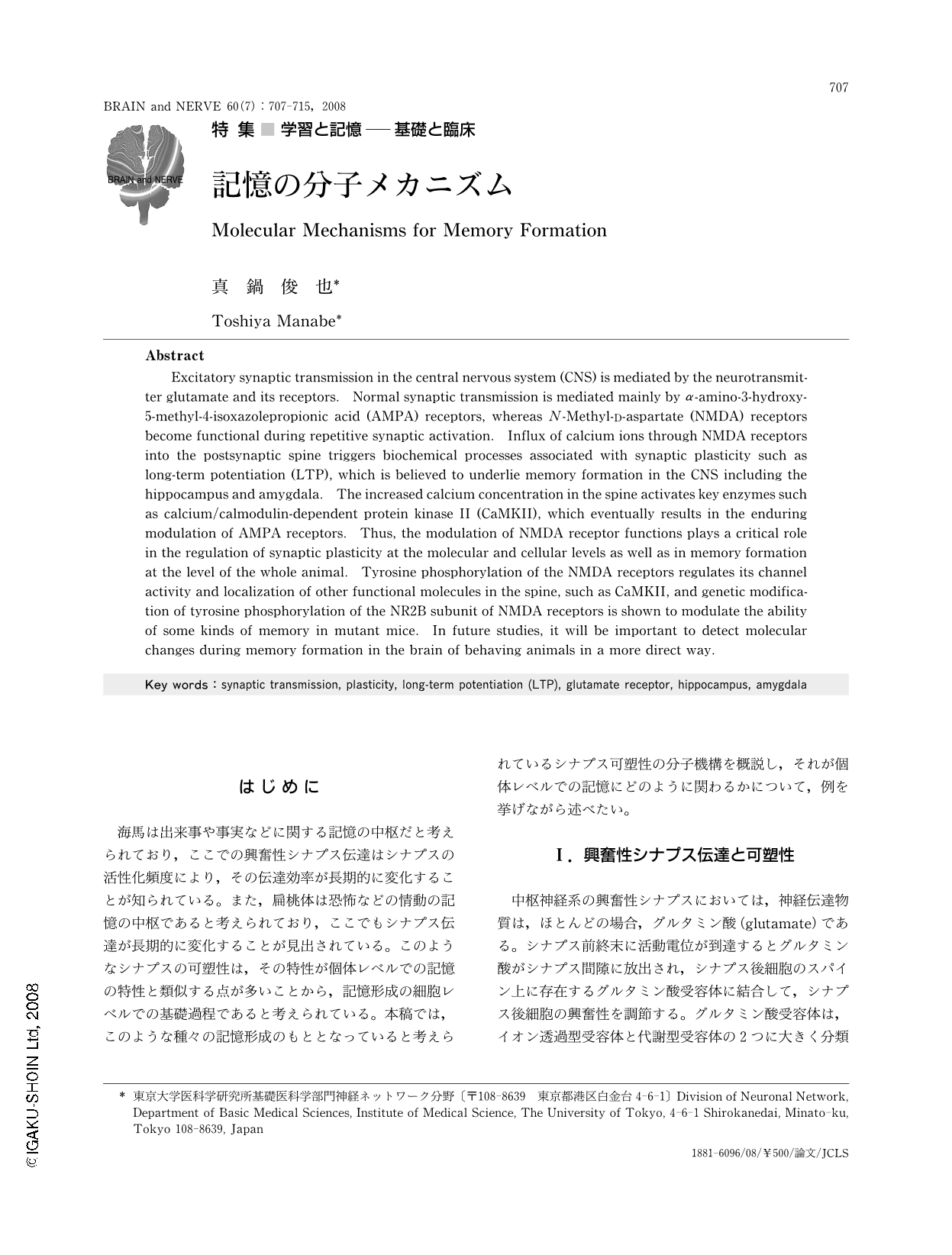
海馬は出来事や事実などに関する記憶の中枢だと考えられており,ここでの興奮性シナプス伝達はシナプスの活性化頻度により,その伝達効率が長期的に変化することが知られている。また,扁桃体は恐怖などの情動の記憶の中枢であると考えられており,ここでもシナプス伝達が長期的に変化することが見出されている。このようなシナプスの可塑性は,その特性が個体レベルでの記憶の特性と類似する点が多いことから,記憶形成の細胞レベルでの基礎過程であると考えられている。本稿では,このような種々の記憶形成のもととなっていると考えられているシナプス可塑性の分子機構を概説し,それが個体レベルでの記憶にどのように関わるかについて,例を挙げながら述べたい。
Abstract
Excitatory synaptic transmission in the central nervous system (CNS) is mediated by the neurotransmitter glutamate and its receptors. Normal synaptic transmission is mediated mainly by α-amino-3-hydroxy-5-methyl-4-isoxazolepropionic acid (AMPA) receptors, whereas N-Methyl-D-aspartate (NMDA) receptors become functional during repetitive synaptic activation. Influx of calcium ions through NMDA receptors into the postsynaptic spine triggers biochemical processes associated with synaptic plasticity such as long-term potentiation (LTP), which is believed to underlie memory formation in the CNS including the hippocampus and amygdala. The increased calcium concentration in the spine activates key enzymes such as calcium/calmodulin-dependent protein kinase II (CaMKII), which eventually results in the enduring modulation of AMPA receptors. Thus, the modulation of NMDA receptor functions plays a critical role in the regulation of synaptic plasticity at the molecular and cellular levels as well as in memory formation at the level of the whole animal. Tyrosine phosphorylation of the NMDA receptors regulates its channel activity and localization of other functional molecules in the spine, such as CaMKII, and genetic modification of tyrosine phosphorylation of the NR2B subunit of NMDA receptors is shown to modulate the ability of some kinds of memory in mutant mice. In future studies, it will be important to detect molecular changes during memory formation in the brain of behaving animals in a more direct way.
Copyright © 2008, Igaku-Shoin Ltd. All rights reserved.