Japanese
English
- 有料閲覧
PPV購入案内
1,320円 (1,200円+税10%) こちらは、421ページから423ページの文献です。購入には医書.jp本会員登録が必要です。
会員登録完了後に改めて上記「購入サイトへ」を選択してください。
または「購入サイトへ」選択後に「購入ログイン」、「新規会員登録」の順に進んでください。
会員登録について詳しくはをご確認ください。
- Abstract 文献概要
- 1ページ目 Look Inside
はじめに
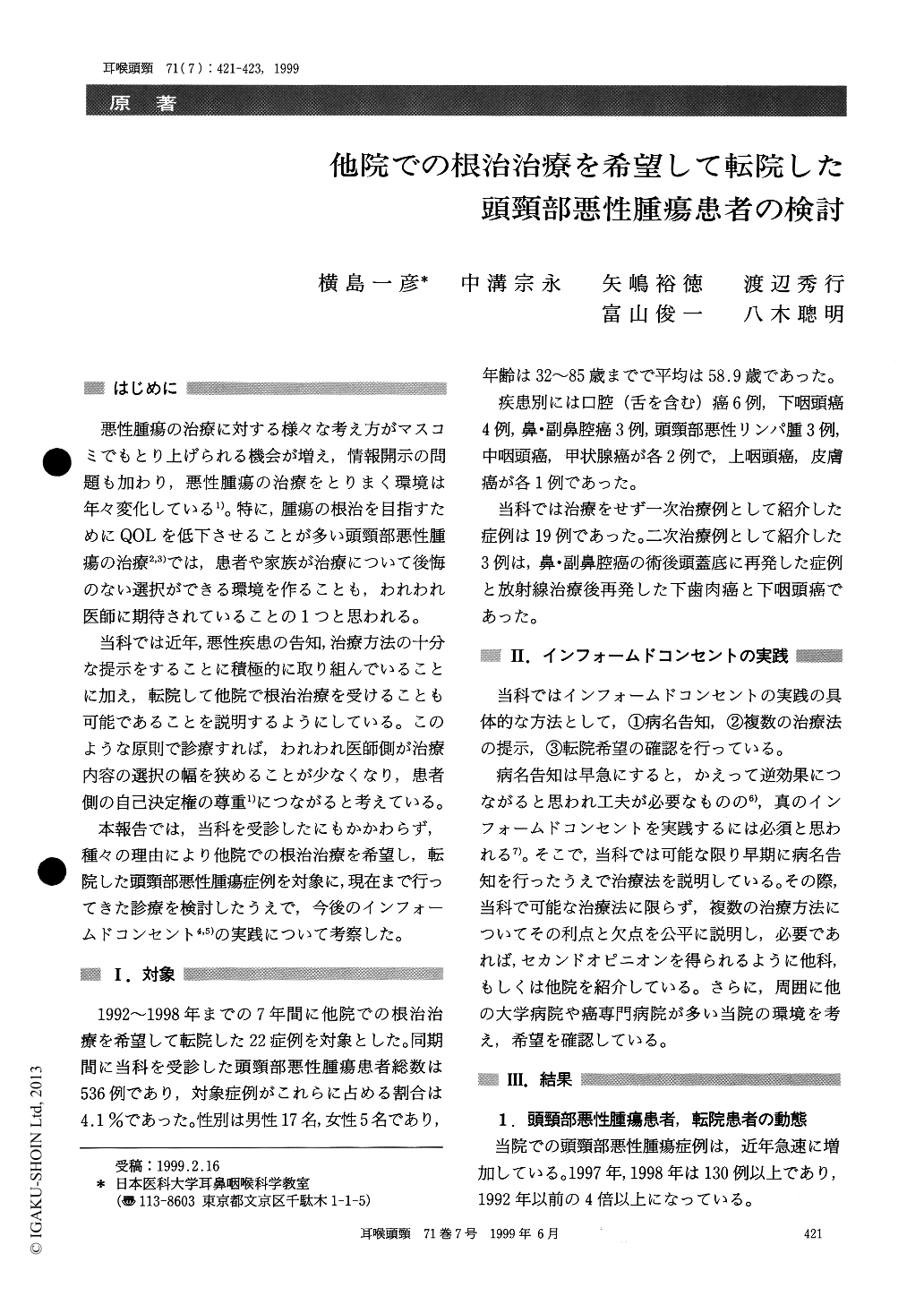
悪性腫瘍の治療に対する様々な考え方がマスコミでもとり上げられる機会が増え,情報開示の問題も加わり,悪性腫瘍の治療をとりまく環境は年々変化している1)。特に,腫瘍の根治を目指すためにQOLを低下させることが多い頭頸部悪性腫瘍の治療2,3)では,患者や家族が治療について後悔のない選択ができる環境を作ることも,われわれ医師に期待されていることの1つと思われる。
当科では近年,悪性疾患の告知,治療方法の十分な提示をすることに積極的に取り組んでいることに加え,転院して他院で根治治療を受けることも可能であることを説明するようにしている。このような原則で診療すれば,われわれ医師側が治療内容の選択の幅を狭めることが少なくなり,患者側の自己決定権の尊重1)につながると考えている。
本報告では,当科を受診したにもかかわらず,種々の理由により他院での根治治療を希望し,転院した頭頸部悪性腫瘍症例を対象に,現在まで行ってきた診療を検討したうえで,今後のインフォームドコンセント4,5)の実践について考察した。
Informed consent in patients with head and neck malignancy is rather difficult. Recently in Japan, patients are given the choice to decide the mode of treatment.
We investigated 22 patients who changed their hospital for radical treatment. Of these, 10 patients have left the hospital due to the diagnosis of cancer and preferred to go to a cancer hospital. Another 5 patients preferred other modes of therapy than that offered by us. Further 7 patients left due to dissatis-faction.
Therefore, information of the diagnosis of cancer, availability of different modes of treatment and liberty to change the hospital are essential for informed consent.
Copyright © 1999, Igaku-Shoin Ltd. All rights reserved.