Japanese
English
- 有料閲覧
PPV購入案内
1,320円 (1,200円+税10%) こちらは、1375ページから1378ページの文献です。購入には医書.jp本会員登録が必要です。
会員登録完了後に改めて上記「購入サイトへ」を選択してください。
または「購入サイトへ」選択後に「購入ログイン」、「新規会員登録」の順に進んでください。
会員登録について詳しくはをご確認ください。
- Abstract 文献概要
- 1ページ目 Look Inside
緒 言
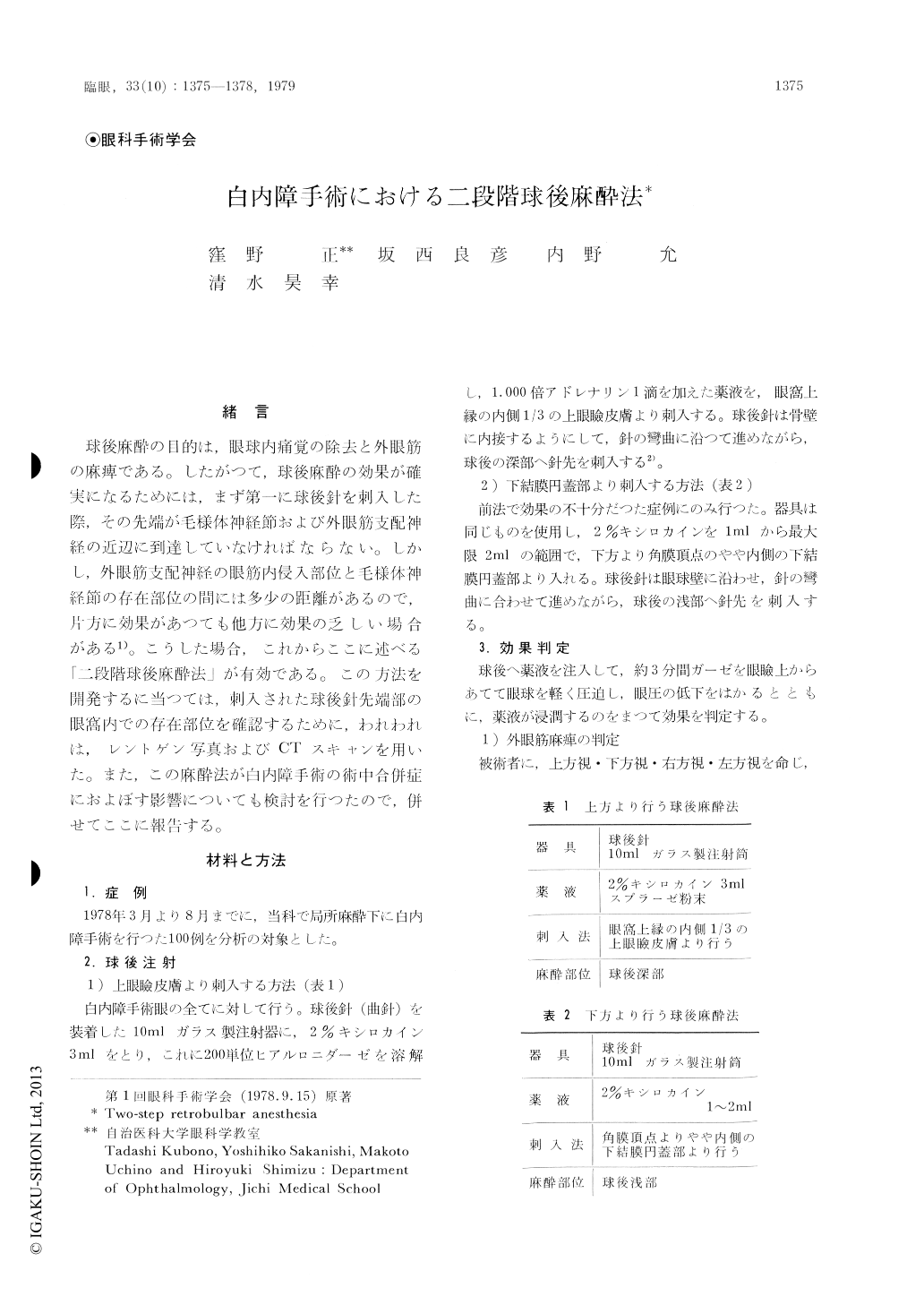
球後麻酔の目的は,眼球内痛覚の除去と外眼筋の麻痺である。したがつて,球後麻酔の効果が確実になるためには,まず第一に球後針を刺入した際,その先端が毛様体神経節および外眼筋支配神経の近辺に到達していなければならない。しかし,外眼筋支配神経の眼筋内侵入部位と毛様体神経節の存在部位の間には多少の距離があるので,片方に効果があつても他方に効果の乏しい場合がある1)。こうした場合,これからここに述べる「二段階球後麻酔法」が有効である。この方法を開発するに当つては,刺入された球後針先端部の眼窩内での存在部位を確認するために,われわれは,レントゲン写真およびCTスキャンを用いた。また,この麻酔法が白内障手術の術中合併症におよぼす影響についても検討を行つたので,併せてここに報告する。
The methods and results of "two step retro-bulbar anesthesia" are reported. For cataract surgery performed under local anesthesia, paralysis of extraocular muscles and anesthesia of ocular tissues with retrobulbar injection are the mostimportant prerequisite to avoid untoward com-plications during surgery. To attain these ends, "two-step retrobulbar injections of 2% xylocaine" was very effective. This method consisted of the first retrobulbar injection performed through the upper route and of the second through the lower route.
Copyright © 1979, Igaku-Shoin Ltd. All rights reserved.