Japanese
English
- 有料閲覧
PPV購入案内
1,320円 (1,200円+税10%) こちらは、149ページから157ページの文献です。購入には医書.jp本会員登録が必要です。
会員登録完了後に改めて上記「購入サイトへ」を選択してください。
または「購入サイトへ」選択後に「購入ログイン」、「新規会員登録」の順に進んでください。
会員登録について詳しくはをご確認ください。
- Abstract 文献概要
- 1ページ目 Look Inside
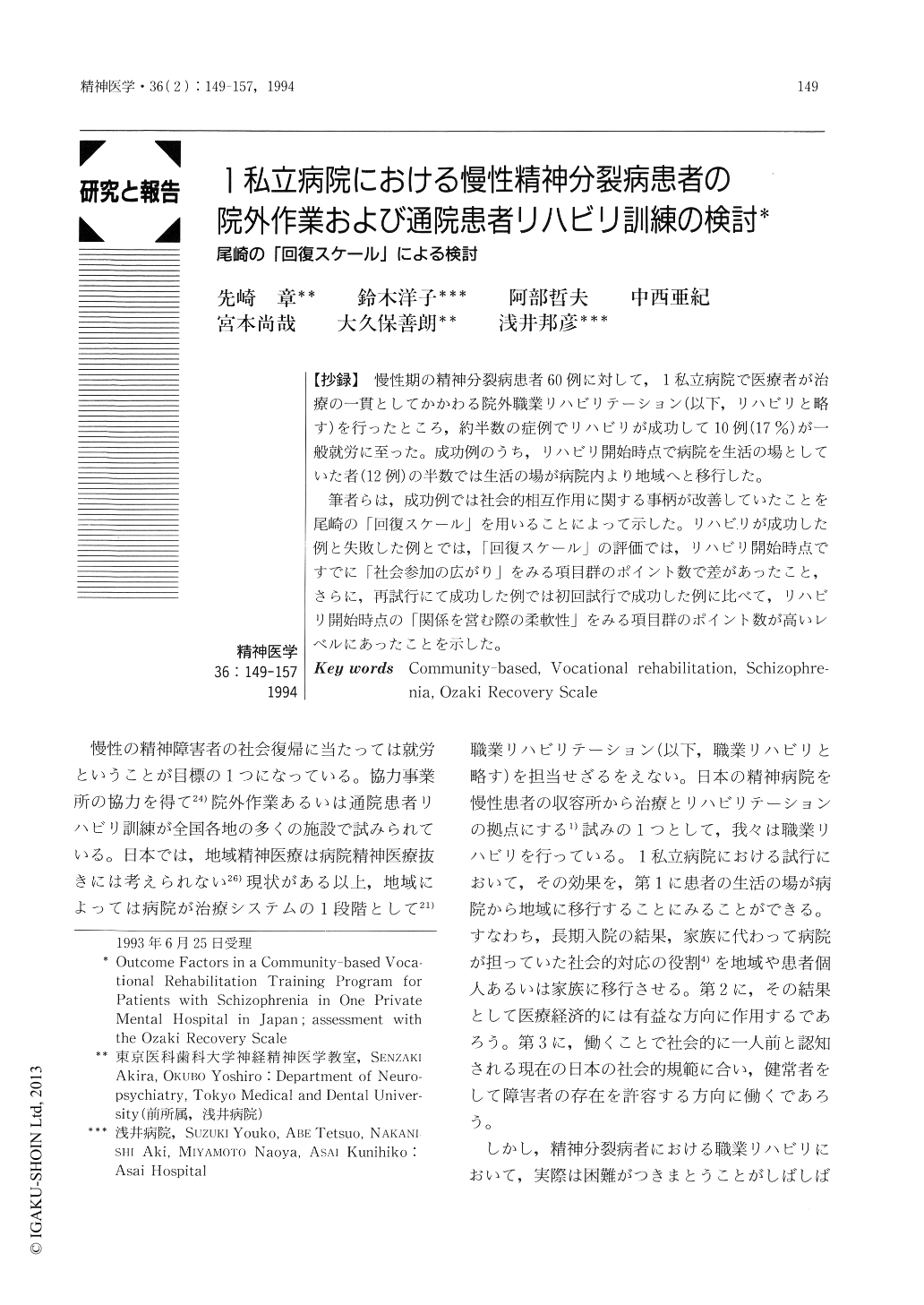
【抄録】 慢性期の精神分裂病患者60例に対して,1私立病院で医療者が治療の一貫としてかかわる院外職業リハビリテーション(以下,リハビリと略す)を行ったところ,約半数の症例でリハビリが成功して10例(17%)が一般就労に至った。成功例のうち,リハビリ開始時点で病院を生活の場としていた者(12例)の半数では生活の場が病院内より地域へと移行した。
筆者らは,成功例では社会的相互作用に関する事柄が改善していたことを尾崎の「回復スケール」を用いることによって示した。リハビリが成功した例と失敗した例とでは,「回復スケール」の評価では,リハビリ開始時点ですでに「社会参加の広がり」をみる項目群のポイント数で差があったこと,さらに,再試行にて成功した例では初回試行で成功した例に比べて,リハビリ開始時点の「関係を営む際の柔軟性」をみる項目群のポイント数が高いレベルにあったことを示した。
The authors studied the present state of vocational rehabilitation for patients with chronic schizophrenia in one private mental hospital in Japan in order to ascertain those factors that had contributed to successful outcomes, and those factors associated with poor outcomes. The authors hypothesized that social functioning variables contributed to outcome, and assessed these variables with the Ozaki Recovery Scale.
Subjects were 60 chronic schizophrenics with mild symptomatology who underwent vocational rehabilitation training in 35 small factories or private companies over a seven year period. 25 patients began the study as psychiatric inpatients, the remainder were outpatients.
The results were as follows : 31 patients (52%) completed rehabilitation training and were assessed to have good outcomes. 10 of these patients were fully rehabilitated and working fulltime. Vocational rehabilitation enabled 6 of the 12 inpatients to return to the community.
The patients with good outcomes had improved in the areas of “personal hygiene”, “increased social participation”, and “interpersonal flexibility” on the Ozaki Recovery Scale compared to those with poor outcomes. Patients with good outcomes had scored higher in the area of “increased social participation” than patients with poor outcomes at the start of vocational training. Patients who eventually improved on the second or third rehabilitation trial scored higher on the “interpersonal flexibility” item compared with patients who had improved on the first rehabilitation trial. These results suggest that prerehabilitation screening of patients' social functioning variables will help to plan therapeutic strategy.
Copyright © 1994, Igaku-Shoin Ltd. All rights reserved.