Japanese
English
- 有料閲覧
PPV購入案内
1,320円 (1,200円+税10%) こちらは、287ページから296ページの文献です。購入には医書.jp本会員登録が必要です。
会員登録完了後に改めて上記「購入サイトへ」を選択してください。
または「購入サイトへ」選択後に「購入ログイン」、「新規会員登録」の順に進んでください。
会員登録について詳しくはをご確認ください。
- Abstract 文献概要
- 1ページ目 Look Inside
- 参考文献 Reference
抄録
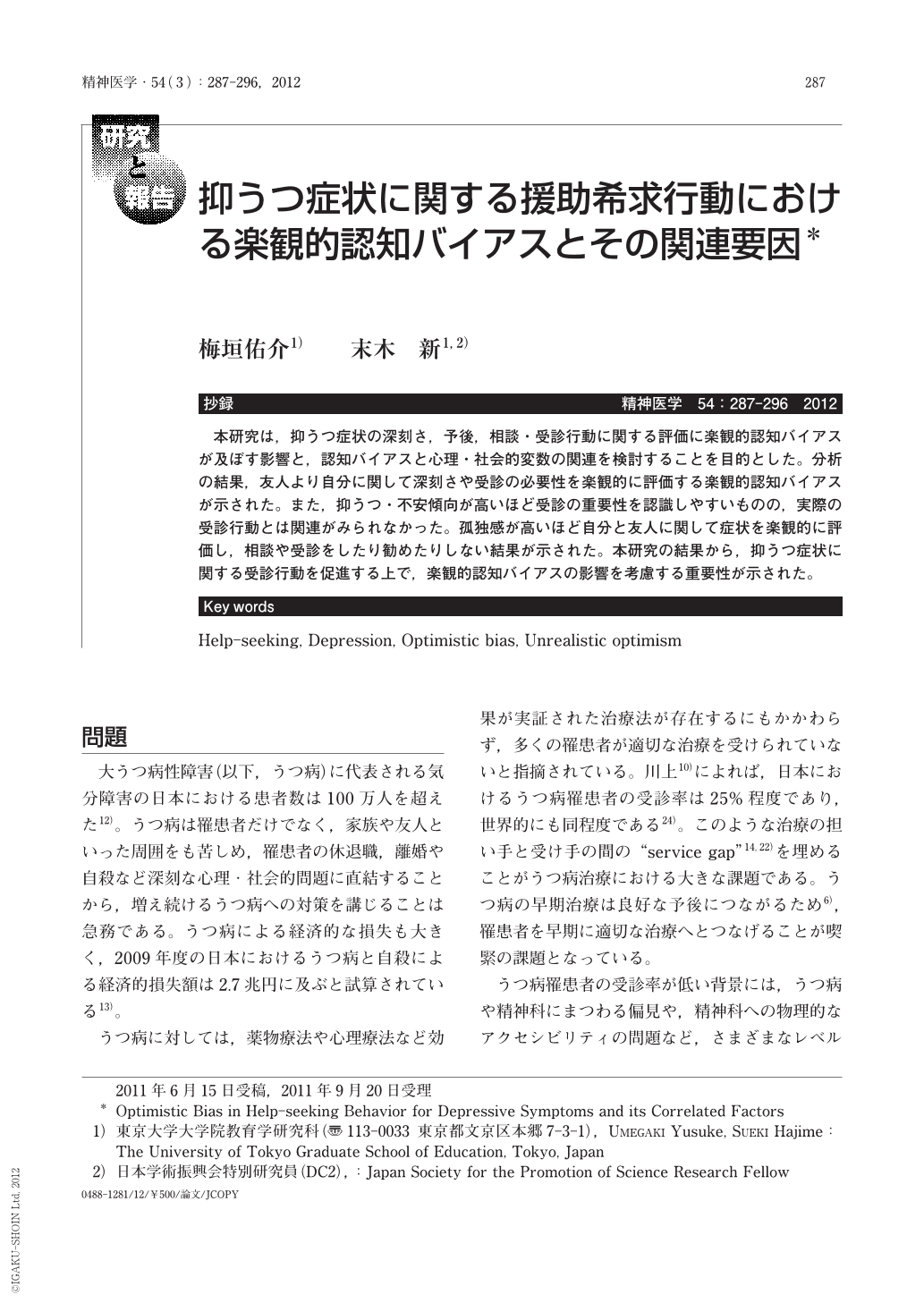
本研究は,抑うつ症状の深刻さ,予後,相談・受診行動に関する評価に楽観的認知バイアスが及ぼす影響と,認知バイアスと心理・社会的変数の関連を検討することを目的とした。分析の結果,友人より自分に関して深刻さや受診の必要性を楽観的に評価する楽観的認知バイアスが示された。また,抑うつ・不安傾向が高いほど受診の重要性を認識しやすいものの,実際の受診行動とは関連がみられなかった。孤独感が高いほど自分と友人に関して症状を楽観的に評価し,相談や受診をしたり勧めたりしない結果が示された。本研究の結果から,抑うつ症状に関する受診行動を促進する上で,楽観的認知バイアスの影響を考慮する重要性が示された。
The present study investigated the impact of optimistic bias on the ratings of problem severity, prognosis, and importance of and intentions for help-seeking towards lay people and mental health professionals. The study also aimed to examine whether the level of bias is affected by psychological and social variables. The results indicated the presence of optimistic bias. Depression and anxiety were correlated with ratings of severity and importance of help-seeking towards mental health professionals, but was not related to actual help-seeking behavior. Subjective loneliness was negatively correlated with ratings of severity and help-seeking for both oneself and for a friend, which may result in delayed help-seeking. These findings indicate that optimistic bias is an important factor in understanding the low help-seeking rates in depressive patients.
Copyright © 2012, Igaku-Shoin Ltd. All rights reserved.