Japanese
English
- 有料閲覧
PPV購入案内
1,320円 (1,200円+税10%) こちらは、1069ページから1077ページの文献です。購入には医書.jp本会員登録が必要です。
会員登録完了後に改めて上記「購入サイトへ」を選択してください。
または「購入サイトへ」選択後に「購入ログイン」、「新規会員登録」の順に進んでください。
会員登録について詳しくはをご確認ください。
- Abstract 文献概要
- 1ページ目 Look Inside
- 参考文献 Reference
抄録
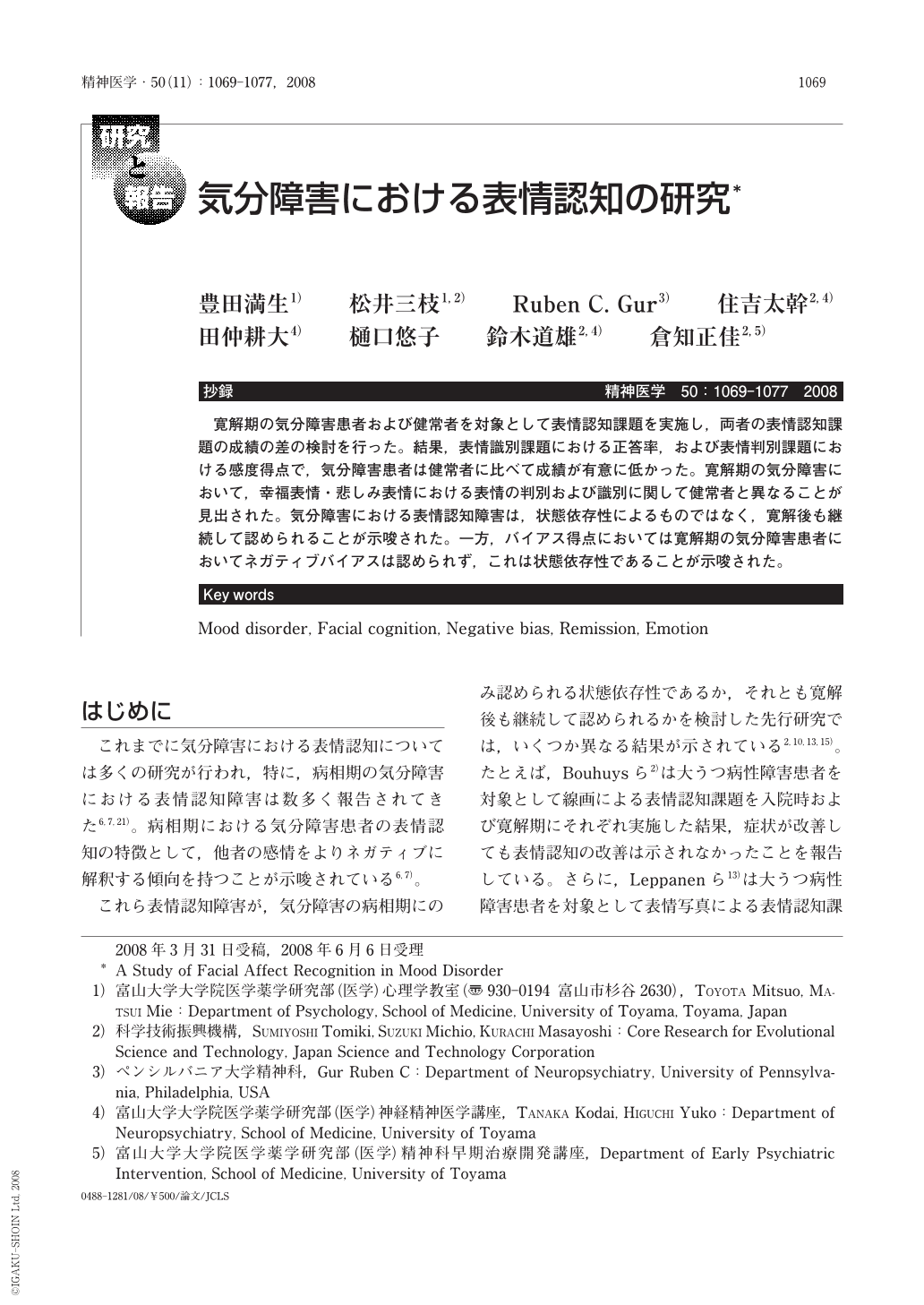
寛解期の気分障害患者および健常者を対象として表情認知課題を実施し,両者の表情認知課題の成績の差の検討を行った。結果,表情識別課題における正答率,および表情判別課題における感度得点で,気分障害患者は健常者に比べて成績が有意に低かった。寛解期の気分障害において,幸福表情・悲しみ表情における表情の判別および識別に関して健常者と異なることが見出された。気分障害における表情認知障害は,状態依存性によるものではなく,寛解後も継続して認められることが示唆された。一方,バイアス得点においては寛解期の気分障害患者においてネガティブバイアスは認められず,これは状態依存性であることが示唆された。
The purpose of this study was to examine the facial affect recognition in patients with mood disorder who were in remission. The Emotion Differentiation Test and the Penn Emotion Acuity Test were administered to 18 patients with mood disorder and 19 healthy people. The patients with mood disorder performed worse than the control subjects on measures of rates of correct responses in the Emotion Differentiation Test and the sensitivity score in the Penn Emotion Acuity Test. The results showed that the recognition of happy/sad faces in patients with mood disorder during remission was different from that in healthy subjects. This implies that the impairments of facial affect recognition in mood disorder does not depend on the diseased state;but is maintained even during remission. On the other hand, patients with mood disorder during remission did not show a high negative bias. This suggests that the negative bias for facial affect recognition in patients with mood disorder depends on the diseased state.
Copyright © 2008, Igaku-Shoin Ltd. All rights reserved.