Japanese
English
- 有料閲覧
PPV購入案内
1,320円 (1,200円+税10%) こちらは、757ページから761ページの文献です。購入には医書.jp本会員登録が必要です。
会員登録完了後に改めて上記「購入サイトへ」を選択してください。
または「購入サイトへ」選択後に「購入ログイン」、「新規会員登録」の順に進んでください。
会員登録について詳しくはをご確認ください。
- Abstract 文献概要
- 1ページ目 Look Inside
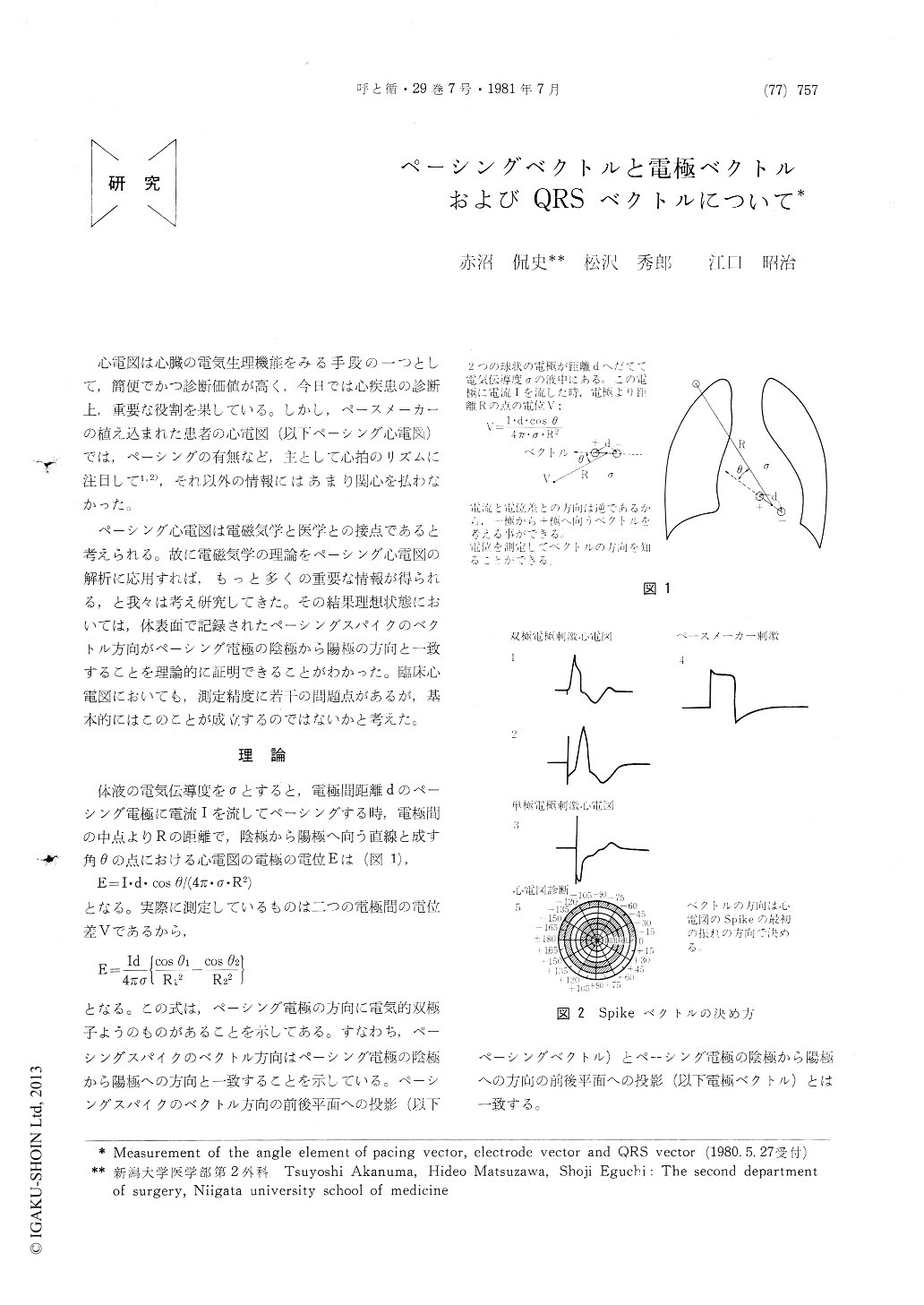
心電図は心臓の電気生理機能をみる手段の一つとして,簡便でかつ診断価値が高く,今日では心疾患の診断上,重要な役割を果している。しかし,ペースメーカーの植え込まれた患者の心電図(以下ペーシング心電図)では,ペーシングの有無など,主として心拍のリズムに注目して1,2),それ以外の情報にはあまり関心を払わなかった。
ペーシング心電図は電磁気学と医学との接点であると考えられる。故に電磁気学の理論をペーシング心電図の解析に応用すれば,もっと多くの重要な情報が得られる,と我々は考え研究してきた。その結果理想状態においては,体表面で記録されたペーシングスパイクのベクトル方向がペーシング電極の陰極から陽極の方向と一致することを理論的に証明できることがわかった。臨床心電図においても,測定精度に若干の問題点があるが,基本的にはこのことが成立するのではないかと考えた。
Pacing spikes recorded on the ECG recording paper are different from the stimulus of the pacemaker, but the polarity of the pacemaker spike on the recording paper and of the pacergraphy is in the same direction, if they are recorded with the same ECG electrodes. From this reason we measured the angle element of pacing vector (the electric axis calculated from the polarity of the pacemaker spikes recorded on the ECG recording paper) and the angle element of electrode vector (the angle between pacemaker lead and horizontal line measured from the chestX-ray photograph), and compared them.
The results are those ;
Copyright © 1981, Igaku-Shoin Ltd. All rights reserved.