Japanese
English
- 有料閲覧
- Abstract 文献概要
- 1ページ目 Look Inside
- 参考文献 Reference
はじめに
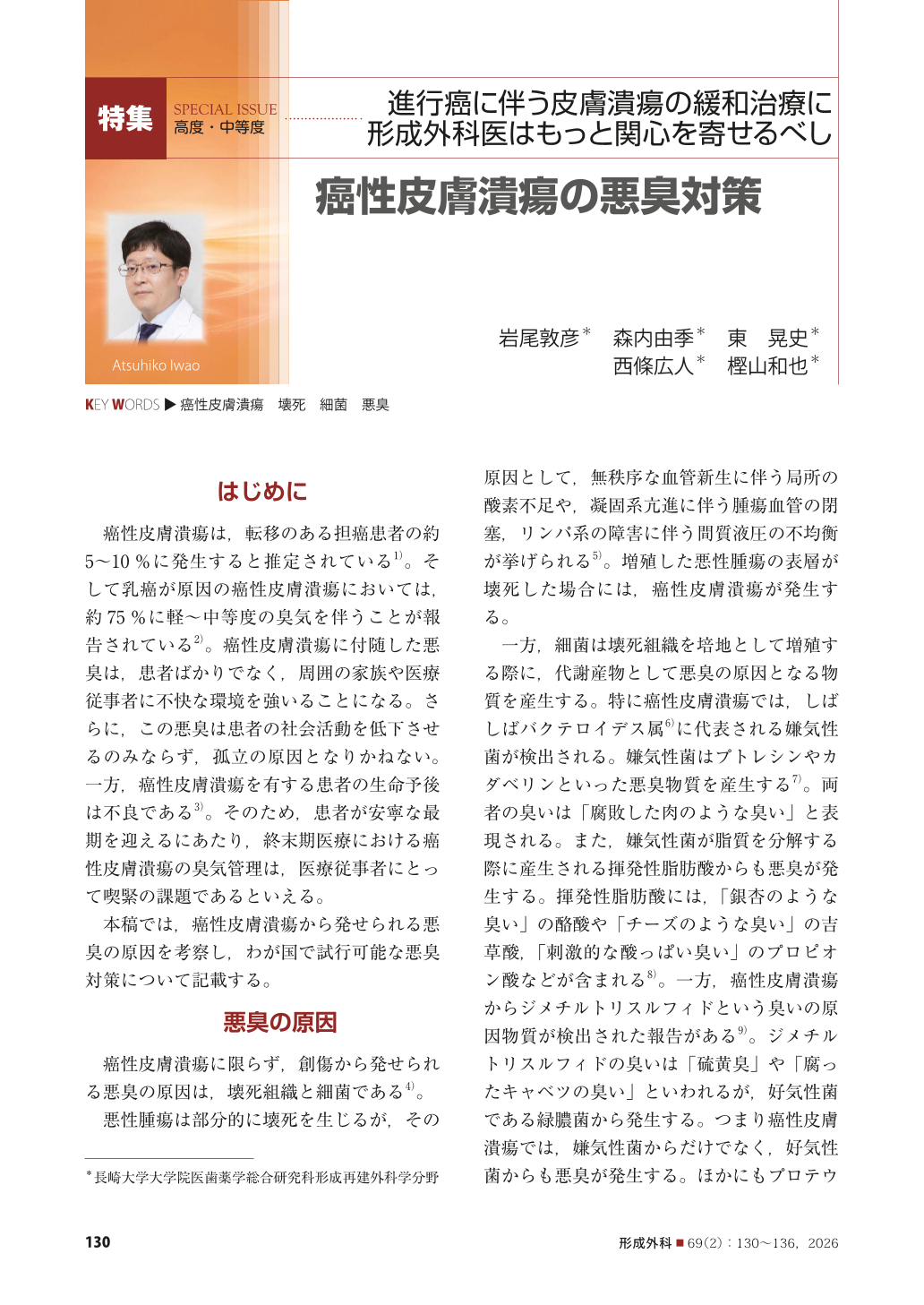
癌性皮膚潰瘍は,転移のある担癌患者の約5~10 %に発生すると推定されている 1)。そして乳癌が原因の癌性皮膚潰瘍においては,約75 %に軽~中等度の臭気を伴うことが報告されている 2)。癌性皮膚潰瘍に付随した悪臭は,患者ばかりでなく,周囲の家族や医療従事者に不快な環境を強いることになる。さらに,この悪臭は患者の社会活動を低下させるのみならず,孤立の原因となりかねない。一方,癌性皮膚潰瘍を有する患者の生命予後は不良である 3)。そのため,患者が安寧な最期を迎えるにあたり,終末期医療における癌性皮膚潰瘍の臭気管理は,医療従事者にとって喫緊の課題であるといえる。
本稿では,癌性皮膚潰瘍から発せられる悪臭の原因を考察し,わが国で試行可能な悪臭対策について記載する。
Fungating ulcers sometimes occur in patients with advanced malignant tumors. The malodor emanating from these ulcers results in significant distress for patients and their families. Mitigating such malodor remains a formidable challenge for healthcare providers. The present article delineates methodologies for managing the malodors associated with fungating ulcers. The malodor from any wound is attributable to necrotic tissue and bacteria, and the proliferation of bacteria in necrotic tissue results in the production of malodorous substances through metabolic processes. It is imperative to address these underlying causes when seeking to achieve effective malodor management. Surgical excision and the topical application of Mohs paste effectively reduce necrotic tissue. Metronidazole gel and silver-inpregrated foam dressings has been demonstrated to be efficacious in the reduction of the bacterial load. Hydrogels containing polyhexanide and dialkylcarbamoyl chloride-coated dressings are also considered effective. Charcoal and rice bran sheets have been shown to help reduce odors. In addition, pouch systems have been developed for the purpose of sealing the sources malodors. Although the perception of odors varies from person to person, the use of aromatherapy candles has also been reported to be helpful. However, there are few sufficiently reliable reports regarding odor control for fungating ulcers, and further research is required to establish a high level of evidence.
Copyright© 2026 KOKUSEIDO CO., LTD. All Rights Reserved.