Japanese
English
- 有料閲覧
- Abstract 文献概要
- 1ページ目 Look Inside
- 参考文献 Reference
Point
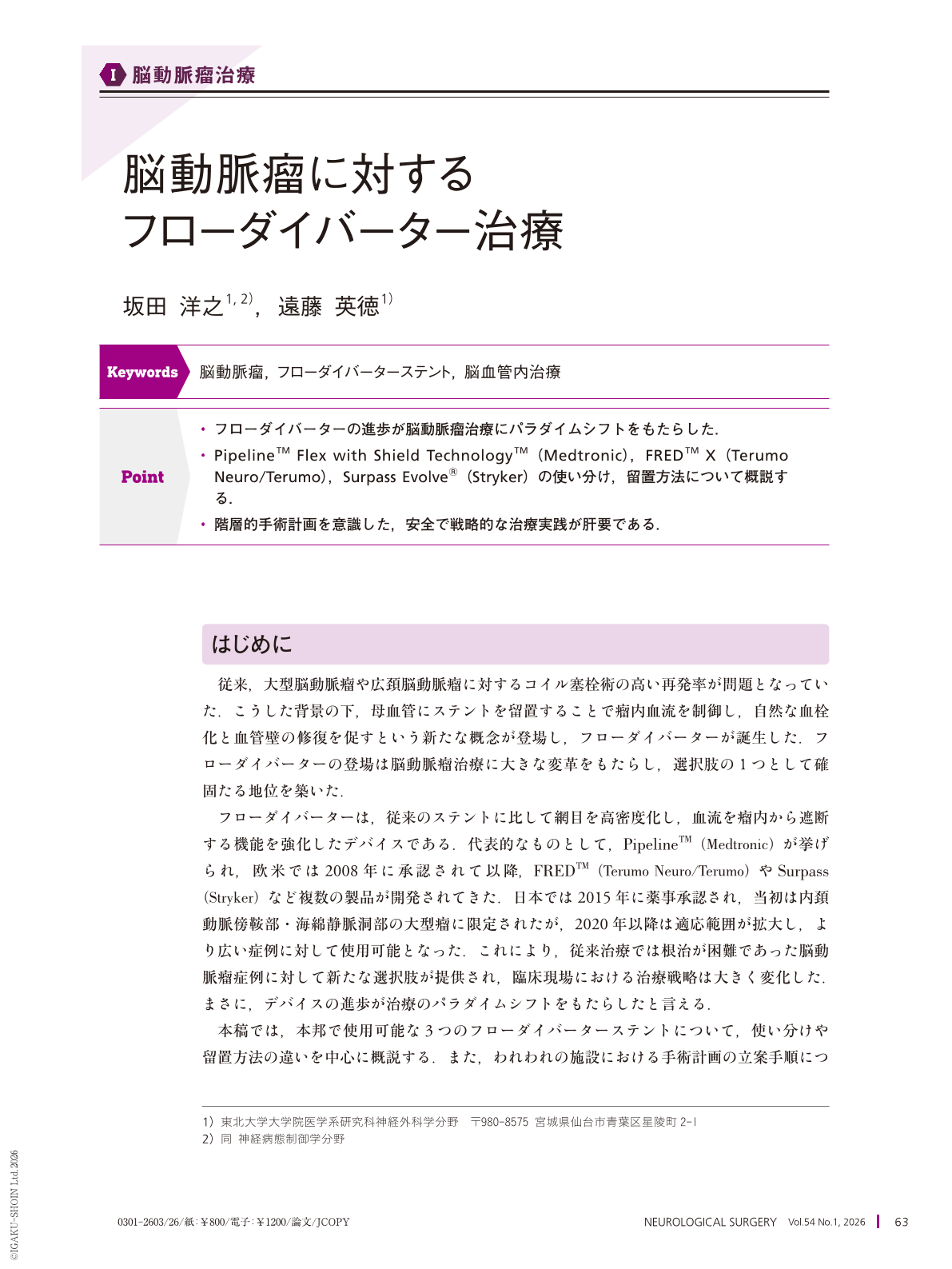
・フローダイバーターの進歩が脳動脈瘤治療にパラダイムシフトをもたらした.
・PipelineTM Flex with Shield TechnologyTM(Medtronic),FREDTM X(Terumo Neuro/Terumo),Surpass Evolve®(Stryker)の使い分け,留置方法について概説する.
・階層的手術計画を意識した,安全で戦略的な治療実践が肝要である.
Endovascular treatment of large, wide-necked intracranial aneurysms has been challenged by high recurrence rates following coil embolization. Flow diverters, designed to redirect blood flow away from the aneurysm sac and promote thrombosis and vessel wall reconstruction, have transformed therapeutic strategies. These devices, characterized by high mesh density compared to conventional stents, have become cornerstones in aneurysm management. Since the approval of the Pipeline device in 2008, multiple flow diverters have been developed worldwide; clinical use in Japan began in 2015, with expanded indications after 2020. Currently, Pipeline Flex with Shield Technology, FRED X, and Surpass Evolve are available domestically, each with distinct structural features, deployment characteristics, and antithrombotic properties. This article provides an overview of their differences, focusing on device selection, deployment techniques, and clinical applicability. By integrating device-specific considerations with structured preoperative planning, flow-diverter therapy offers a paradigm shift in treating complex aneurysms, thereby expanding options for cases resistant to conventional interventions.
Copyright © 2026, Igaku-Shoin Ltd. All rights reserved.