Japanese
English
- 有料閲覧
PPV購入案内
1,320円 (1,200円+税10%) こちらは、898ページから905ページの文献です。購入には医書.jp本会員登録が必要です。
会員登録完了後に改めて上記「購入サイトへ」を選択してください。
または「購入サイトへ」選択後に「購入ログイン」、「新規会員登録」の順に進んでください。
会員登録について詳しくはをご確認ください。
- Abstract 文献概要
- 1ページ目 Look Inside
- 参考文献 Reference
はじめに
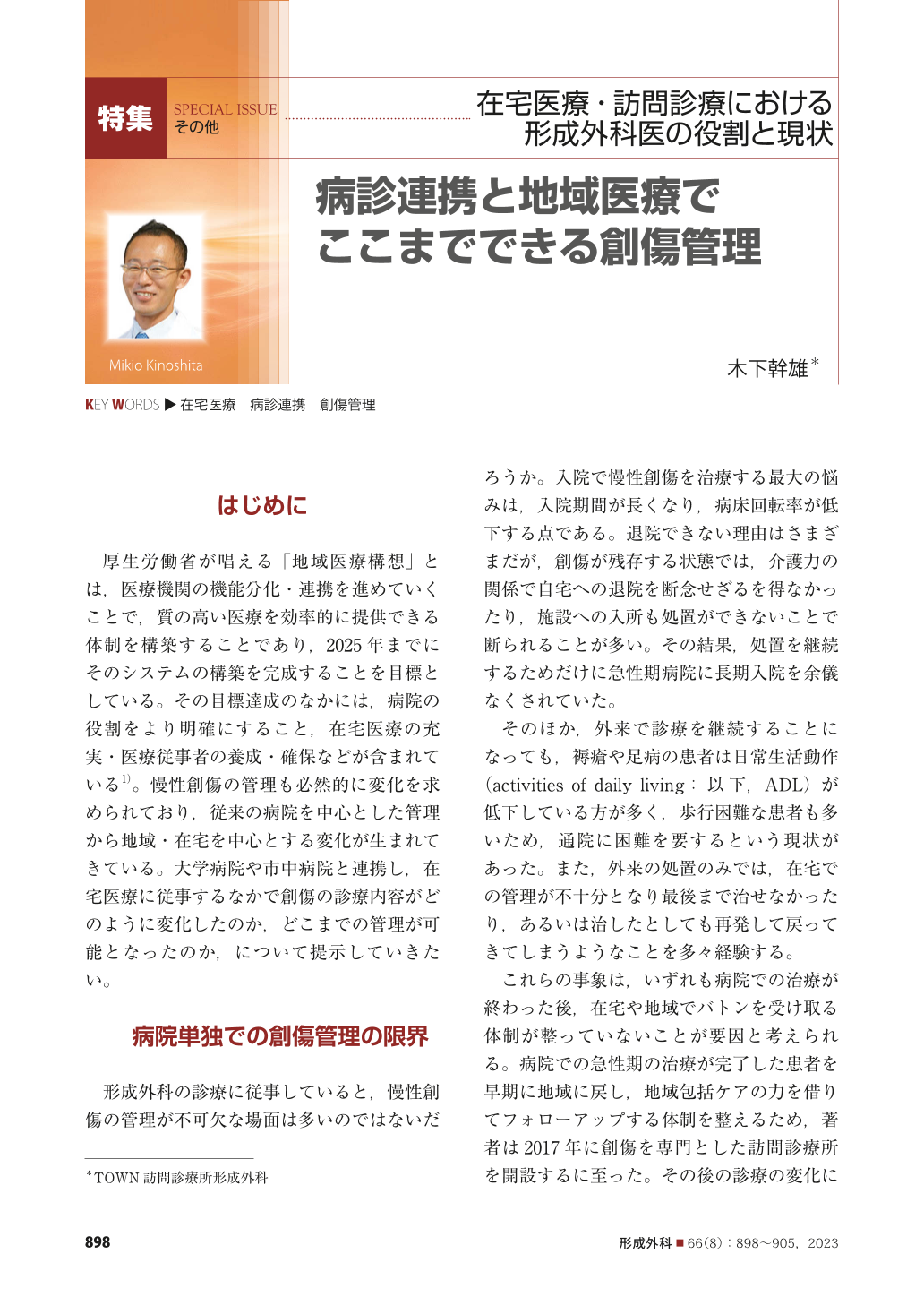
厚生労働省が唱える「地域医療構想」とは,医療機関の機能分化・連携を進めていくことで,質の高い医療を効率的に提供できる体制を構築することであり,2025年までにそのシステムの構築を完成することを目標としている。その目標達成のなかには,病院の役割をより明確にすること,在宅医療の充実・医療従事者の養成・確保などが含まれている 1)。慢性創傷の管理も必然的に変化を求められており,従来の病院を中心とした管理から地域・在宅を中心とする変化が生まれてきている。大学病院や市中病院と連携し,在宅医療に従事するなかで創傷の診療内容がどのように変化したのか,どこまでの管理が可能となったのか,について提示していきたい。
Wound management in hospitals alone is reaching its limits. It is necessary to return patients who have completed acute treatment at a hospital to their communities as soon as possible, and to establish a system for following up the patients with the help of comprehensive community care.
Wound management has changed significantly based on collaborations between hospitals and community medicine. Information-sharing has become easier with the use of information and communications technology (ICT), and hospitalization and discharge have become smoother. It has become possible to improve both the treatment environment at patients' homes and the level of regional medical care, and thus the performance of high-level wound management can be achieved. Easy-to-understand explanations of tips and precautions for hospital–clinic cooperation are also presented.
Copyright© 2023 KOKUSEIDO CO., LTD. All Rights Reserved.