Japanese
English
- 有料閲覧
PPV購入案内
1,650円 (1,500円+税10%) こちらは、267ページから276ページの文献です。購入には医書.jp本会員登録が必要です。
会員登録完了後に改めて上記「購入サイトへ」を選択してください。
または「購入サイトへ」選択後に「購入ログイン」、「新規会員登録」の順に進んでください。
会員登録について詳しくはをご確認ください。
- Abstract 文献概要
- 1ページ目 Look Inside
- 参考文献 Reference
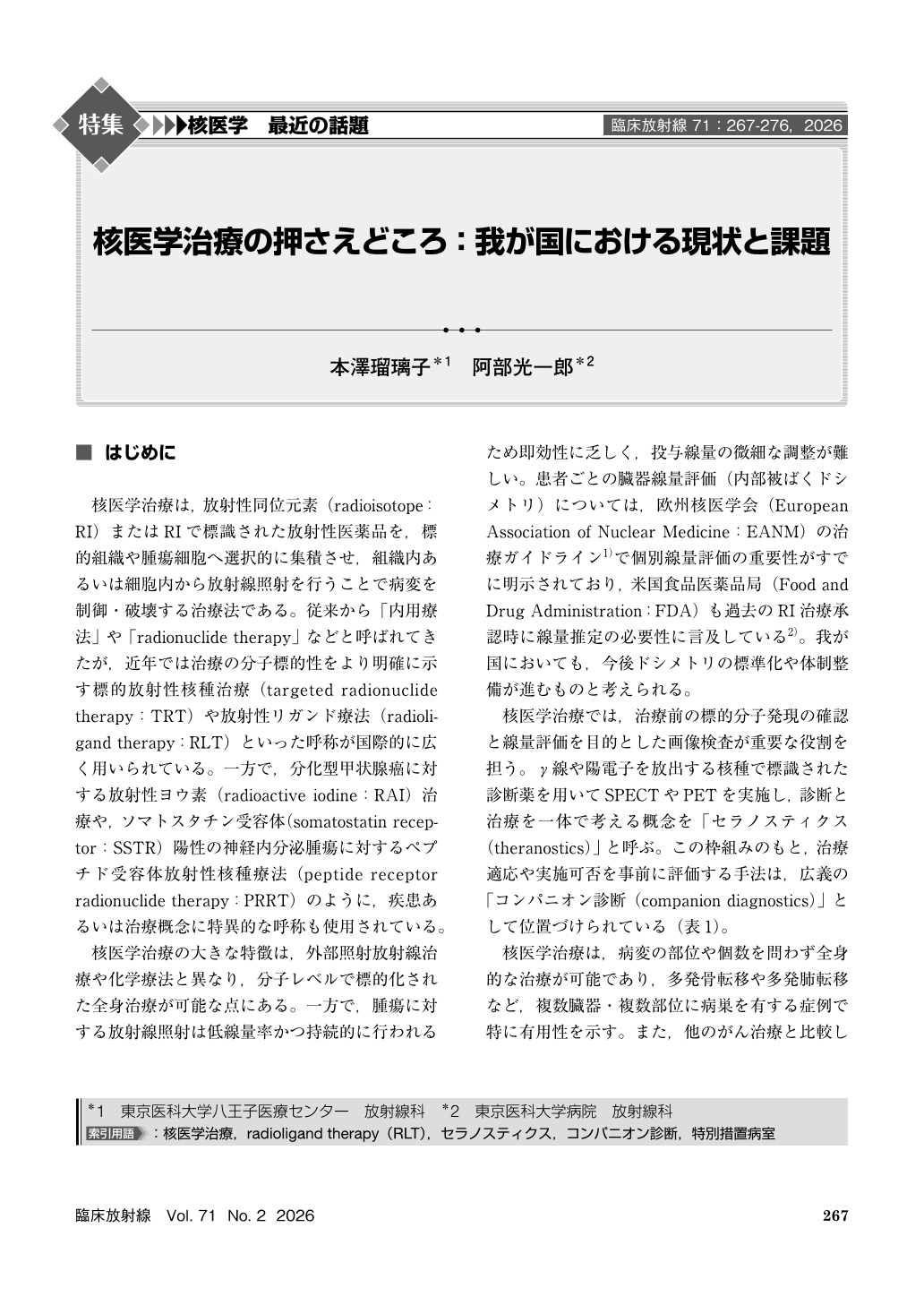
核医学治療は,放射性同位元素(radioisotope:RI)またはRIで標識された放射性医薬品を,標的組織や腫瘍細胞へ選択的に集積させ,組織内あるいは細胞内から放射線照射を行うことで病変を制御・破壊する治療法である。従来から「内用療法」や「radionuclide therapy」などと呼ばれてきたが,近年では治療の分子標的性をより明確に示す標的放射性核種治療(targeted radionuclide therapy:TRT)や放射性リガンド療法(radioligand therapy:RLT)といった呼称が国際的に広く用いられている。一方で,分化型甲状腺癌に対する放射性ヨウ素(radioactive iodine:RAI)治療や,ソマトスタチン受容体(somatostatin receptor:SSTR)陽性の神経内分泌腫瘍に対するペプチド受容体放射性核種療法(peptide receptor radionuclide therapy:PRRT)のように,疾患あるいは治療概念に特異的な呼称も使用されている。
Nuclear medicine therapy delivers radioisotopes or radiolabeled pharmaceuticals that selectively accumulate in target tissues, enabling molecularly targeted systemic irradiation. While historically termed “radionuclide therapy” or “internal radiotherapy,” targeted radionuclide therapy(TRT)and radioligand therapy(RLT)are now widely adopted. Key examples include 131I for differentiated thyroid carcinoma and 177Lu labeled agents for neuroendocrine tumors and mCRPC. These therapies offer meaningful clinical benefits, yet low-dose-rate exposure, dosimetry standardization, and radiation safety infrastructure remain challenges. In Japan, a critical barrier is the persistent shortage of dedicated radionuclide therapy rooms and regulated inpatient facilities, which may limit equitable patient access despite rising demand.
Copyright © 2026, KANEHARA SHUPPAN Co.LTD. All rights reserved.