Japanese
English
- 有料閲覧
- Abstract 文献概要
- 1ページ目 Look Inside
- 参考文献 Reference
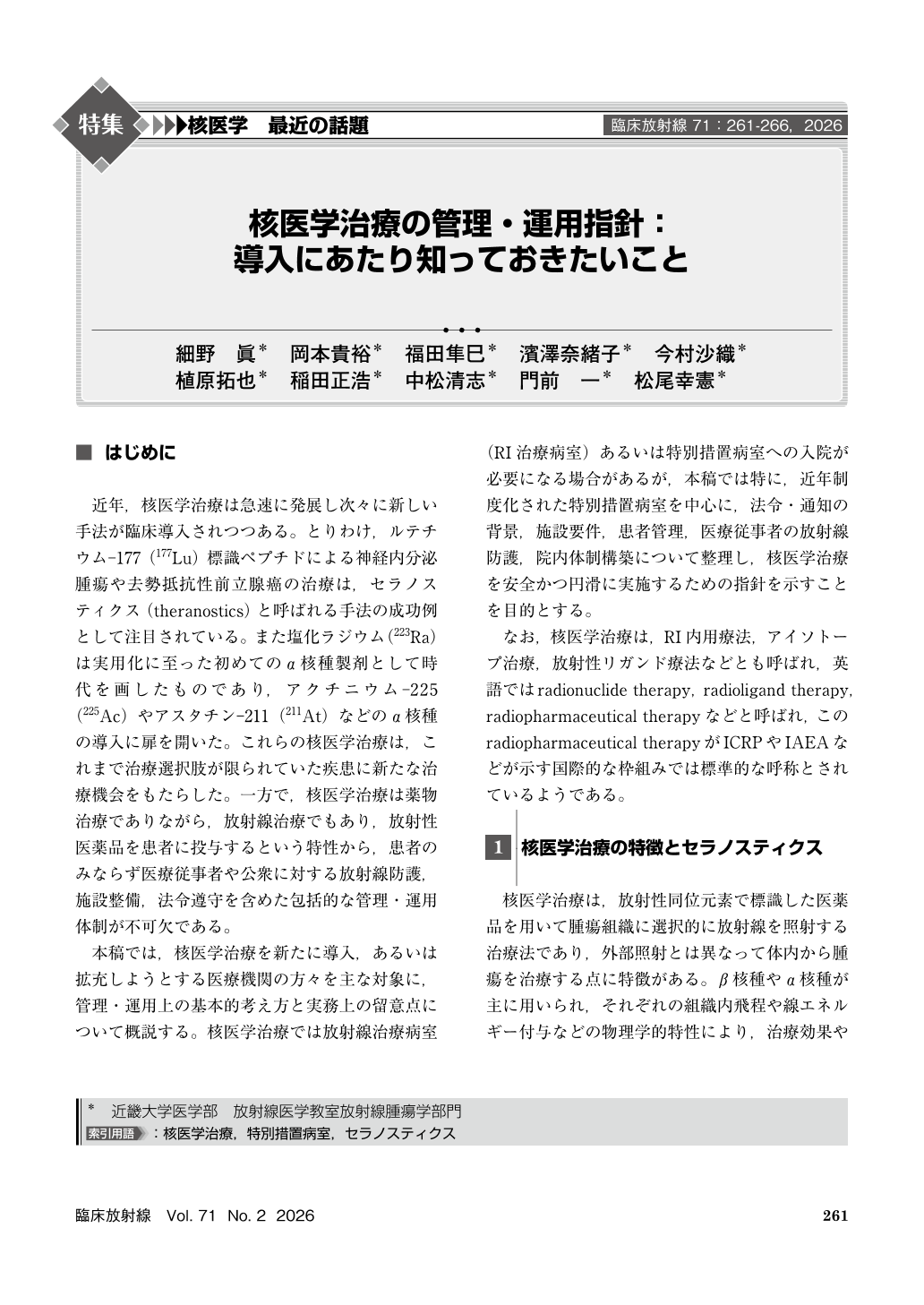
近年,核医学治療は急速に発展し次々に新しい手法が臨床導入されつつある。とりわけ,ルテチウム-177(177Lu)標識ペプチドによる神経内分泌腫瘍や去勢抵抗性前立腺癌の治療は,セラノスティクス(theranostics)と呼ばれる手法の成功例として注目されている。また塩化ラジウム(223Ra)は実用化に至った初めてのα核種製剤として時代を画したものであり,アクチニウム-225(225Ac)やアスタチン-211(211At)などのα核種の導入に扉を開いた。これらの核医学治療は,これまで治療選択肢が限られていた疾患に新たな治療機会をもたらした。一方で,核医学治療は薬物治療でありながら,放射線治療でもあり,放射性医薬品を患者に投与するという特性から,患者のみならず医療従事者や公衆に対する放射線防護,施設整備,法令遵守を含めた包括的な管理・運用体制が不可欠である。
Nuclear medicine therapy has rapidly advanced, with multiple new modalities entering clinical practice. In particular, lutetium-177-labeled peptides for neuroendocrine tumors and castration-resistant prostate cancer represent successful examples of theranostics. Radium-223 chloride, the first clinically implemented alpha-emitting radiopharmaceutical, marked a milestone and paved the way for agents radiolabeled with alpha-emitters such as actinium-225 and astatine-211. These therapies have expanded treatment options for previously limited diseases. However, nuclear medicine therapy requires comprehensive management encompassing radiation protection, facility preparedness, and regulatory compliance. This article outlines fundamental concepts and practical considerations for institutions introducing or expanding nuclear medicine therapy, focusing on sickrooms with radioprotective special measures(or special measures patient room)and sustainable clinical implementation.
Copyright © 2026, KANEHARA SHUPPAN Co.LTD. All rights reserved.