Japanese
English
- 有料閲覧
PPV購入案内
1,320円 (1,200円+税10%) こちらは、11ページから21ページの文献です。購入には医書.jp本会員登録が必要です。
会員登録完了後に改めて上記「購入サイトへ」を選択してください。
または「購入サイトへ」選択後に「購入ログイン」、「新規会員登録」の順に進んでください。
会員登録について詳しくはをご確認ください。
- Abstract 文献概要
- 1ページ目 Look Inside
- 参考文献 Reference
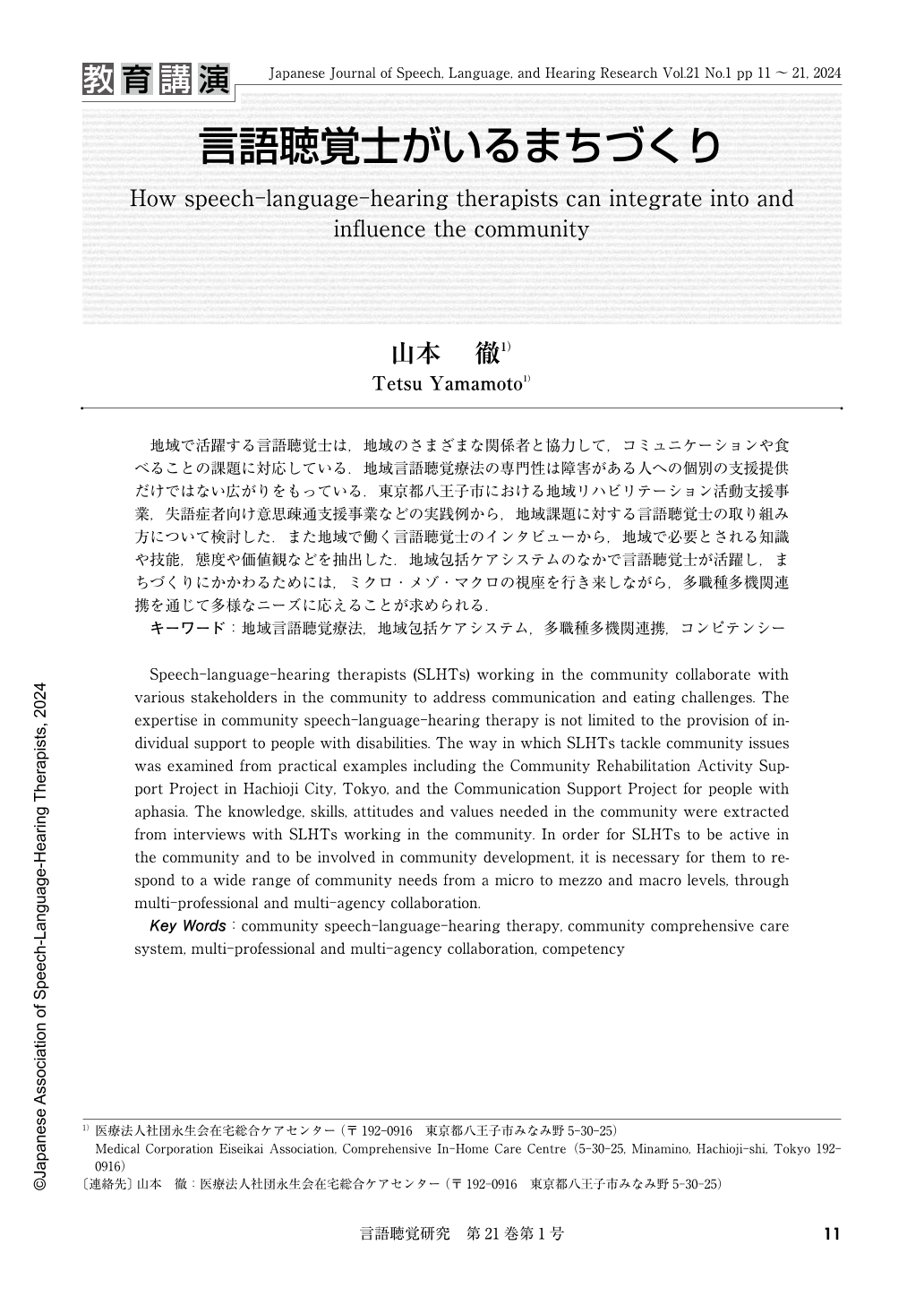
地域で活躍する言語聴覚士は,地域のさまざまな関係者と協力して,コミュニケーションや食べることの課題に対応している.地域言語聴覚療法の専門性は障害がある人への個別の支援提供だけではない広がりをもっている.東京都八王子市における地域リハビリテーション活動支援事業,失語症者向け意思疎通支援事業などの実践例から,地域課題に対する言語聴覚士の取り組み方について検討した.また地域で働く言語聴覚士のインタビューから,地域で必要とされる知識や技能,態度や価値観などを抽出した.地域包括ケアシステムのなかで言語聴覚士が活躍し,まちづくりにかかわるためには,ミクロ・メゾ・マクロの視座を行き来しながら,多職種多機関連携を通じて多様なニーズに応えることが求められる.
Speech-language-hearing therapists (SLHTs) working in the community collaborate with various stakeholders in the community to address communication and eating challenges. The expertise in community speech-language-hearing therapy is not limited to the provision of individual support to people with disabilities. The way in which SLHTs tackle community issues was examined from practical examples including the Community Rehabilitation Activity Support Project in Hachioji City, Tokyo, and the Communication Support Project for people with aphasia. The knowledge, skills, attitudes and values needed in the community were extracted from interviews with SLHTs working in the community. In order for SLHTs to be active in the community and to be involved in community development, it is necessary for them to respond to a wide range of community needs from a micro to mezzo and macro levels, through multi-professional and multi-agency collaboration.
Copyright © 2024, Japanese Association of Speech-Language-Hearing Therapists. All rights reserved.