Japanese
English
総説
発達障害児者へのポジティブな行動支援
Positive behavioral support to patients with developmental disabilities
橋本 圭司
1
Keiji Hashimoto
1
1はしもとクリニック経堂
1Hashimoto Clinic Kyodo
キーワード:
リハビリテーション
,
発達障害
,
ポジティブな行動支援
,
rehabilitation
,
developmental disability
,
positive behavioral support
Keyword:
リハビリテーション
,
発達障害
,
ポジティブな行動支援
,
rehabilitation
,
developmental disability
,
positive behavioral support
pp.332-336
発行日 2017年12月15日
Published Date 2017/12/15
DOI https://doi.org/10.11477/mf.6001200145
- 有料閲覧
PPV購入案内
1,320円 (1,200円+税10%) こちらは、332ページから336ページの文献です。
PPV(ペイ・パー・ビュー)とは、論文(記事)単位で購入・閲覧ができるサービスです。
購入には医書.jp本会員登録が必要です。
会員登録完了後に改めて上記「購入サイトへ」を選択してください。
または「購入サイトへ」選択後に「購入ログイン」、「新規会員登録」の順に進んでください。
会員登録について詳しくはをご確認ください。
購入には医書.jp本会員登録が必要です。
会員登録完了後に改めて上記「購入サイトへ」を選択してください。
または「購入サイトへ」選択後に「購入ログイン」、「新規会員登録」の順に進んでください。
会員登録について詳しくはをご確認ください。
- Abstract 文献概要
- 1ページ目 Look Inside
- 参考文献 Reference
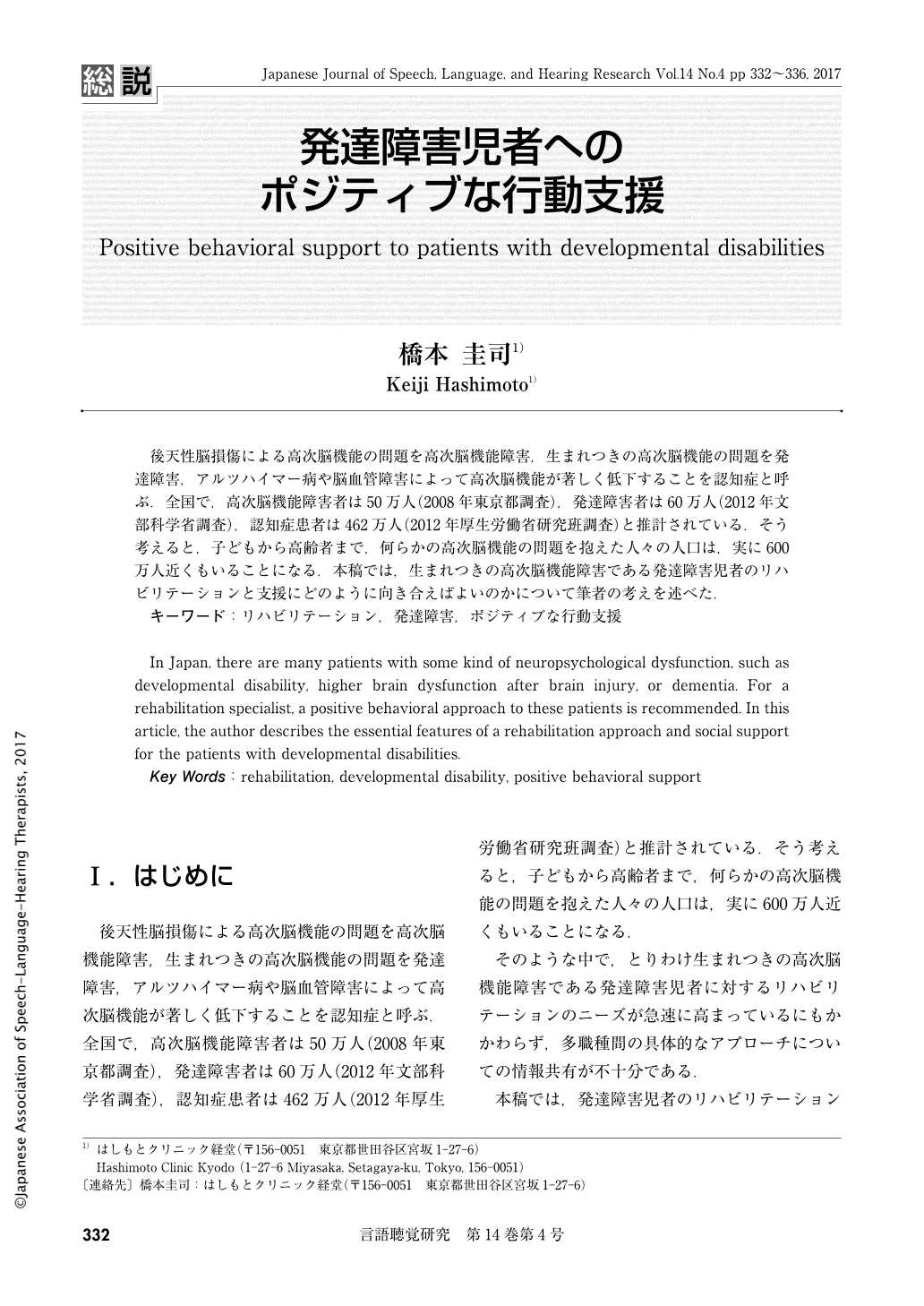
後天性脳損傷による高次脳機能の問題を高次脳機能障害,生まれつきの高次脳機能の問題を発達障害,アルツハイマー病や脳血管障害によって高次脳機能が著しく低下することを認知症と呼ぶ.全国で,高次脳機能障害者は50万人(2008年東京都調査),発達障害者は60万人(2012年文部科学省調査),認知症患者は462万人(2012年厚生労働省研究班調査)と推計されている.そう考えると,子どもから高齢者まで,何らかの高次脳機能の問題を抱えた人々の人口は,実に600万人近くもいることになる.本稿では,生まれつきの高次脳機能障害である発達障害児者のリハビリテーションと支援にどのように向き合えばよいのかについて筆者の考えを述べた.
In Japan, there are many patients with some kind of neuropsychological dysfunction, such as developmental disability, higher brain dysfunction after brain injury, or dementia. For a rehabilitation specialist, a positive behavioral approach to these patients is recommended. In this article, the author describes the essential features of a rehabilitation approach and social support for the patients with developmental disabilities.
Copyright © 2017, Japanese Association of Speech-Language-Hearing Therapists. All rights reserved.