Japanese
English
- 有料閲覧
PPV購入案内
1,320円 (1,200円+税10%) こちらは、118ページから125ページの文献です。購入には医書.jp本会員登録が必要です。
会員登録完了後に改めて上記「購入サイトへ」を選択してください。
または「購入サイトへ」選択後に「購入ログイン」、「新規会員登録」の順に進んでください。
会員登録について詳しくはをご確認ください。
- Abstract 文献概要
- 1ページ目 Look Inside
- 参考文献 Reference
- サイト内被引用 Cited by
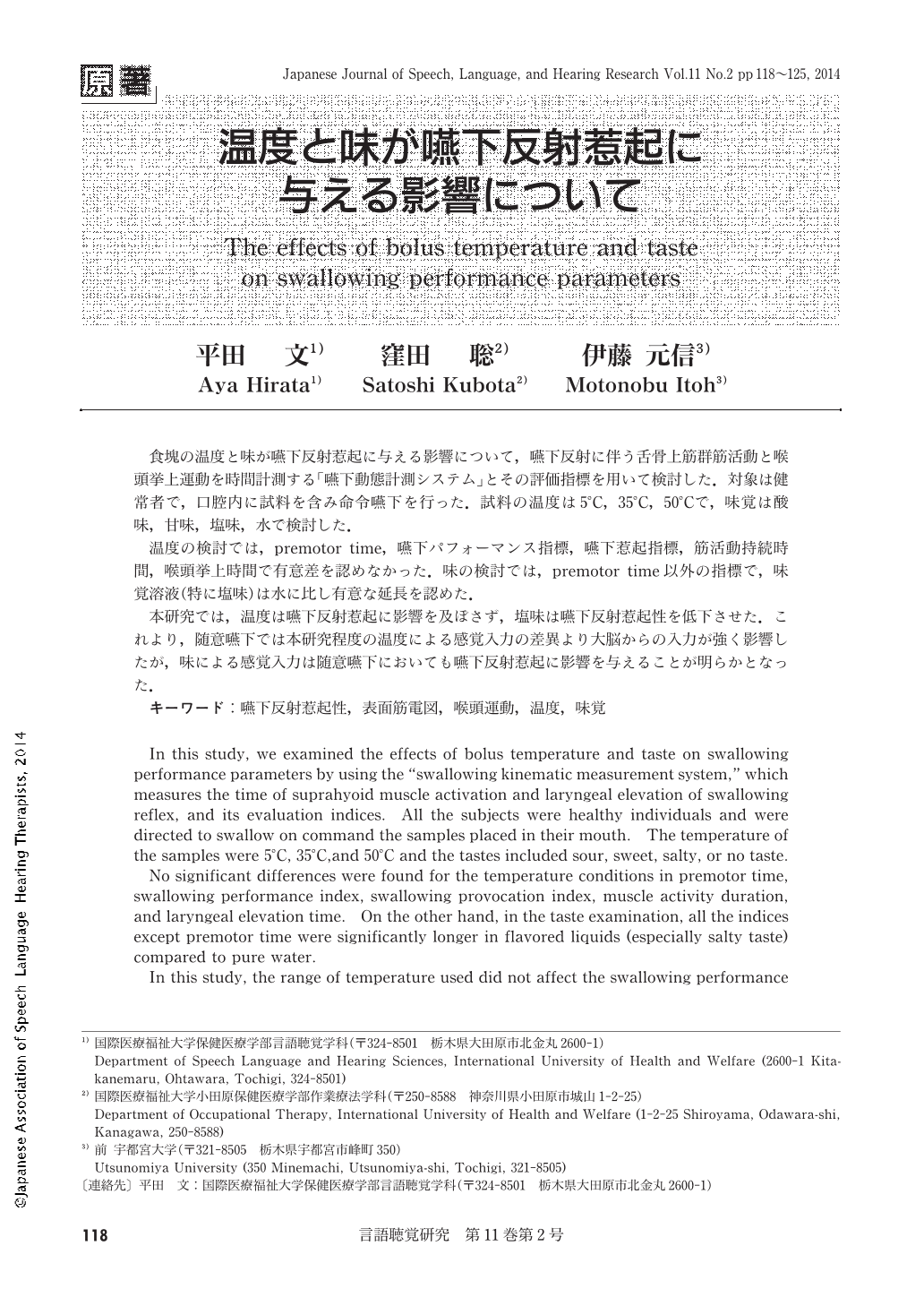
食塊の温度と味が嚥下反射惹起に与える影響について,嚥下反射に伴う舌骨上筋群筋活動と喉頭挙上運動を時間計測する「嚥下動態計測システム」とその評価指標を用いて検討した.対象は健常者で,口腔内に試料を含み命令嚥下を行った.試料の温度は5℃,35℃,50℃で,味覚は酸味,甘味,塩味,水で検討した.
温度の検討では,premotor time,嚥下パフォーマンス指標,嚥下惹起指標,筋活動持続時間,喉頭挙上時間で有意差を認めなかった.味の検討では,premotor time以外の指標で,味覚溶液(特に塩味)は水に比し有意な延長を認めた.
本研究では,温度は嚥下反射惹起に影響を及ぼさず,塩味は嚥下反射惹起性を低下させた.これより,随意嚥下では本研究程度の温度による感覚入力の差異より大脳からの入力が強く影響したが,味による感覚入力は随意嚥下においても嚥下反射惹起に影響を与えることが明らかとなった.
In this study, we examined the effects of bolus temperature and taste on swallowing performance parameters by using the "swallowing kinematic measurement system," which measures the time of suprahyoid muscle activation and laryngeal elevation of swallowing reflex, and its evaluation indices. All the subjects were healthy individuals and were directed to swallow on command the samples placed in their mouth. The temperature of the samples were 5℃, 35℃,and 50℃ and the tastes included sour, sweet, salty, or no taste.
No significant differences were found for the temperature conditions in premotor time, swallowing performance index, swallowing provocation index, muscle activity duration, and laryngeal elevation time. On the other hand, in the taste examination, all the indices except premotor time were significantly longer in flavored liquids (especially salty taste) compared to pure water.
In this study, the range of temperature used did not affect the swallowing performance but the salty taste degraded the swallowing performance. Based on this result, it was concluded that the input from cerebrum more strongly affects the voluntary swallowing than the sensory input of temperature, but the sensory input of taste affects voluntary swallowing as well as swallowing performance.
Copyright © 2014, Japanese Association of Speech-Language-Hearing Therapists. All rights reserved.