Japanese
English
- 有料閲覧
PPV購入案内
1,320円 (1,200円+税10%) こちらは、195ページから199ページの文献です。購入には医書.jp本会員登録が必要です。
会員登録完了後に改めて上記「購入サイトへ」を選択してください。
または「購入サイトへ」選択後に「購入ログイン」、「新規会員登録」の順に進んでください。
会員登録について詳しくはをご確認ください。
- Abstract 文献概要
- 1ページ目 Look Inside
- 参考文献 Reference
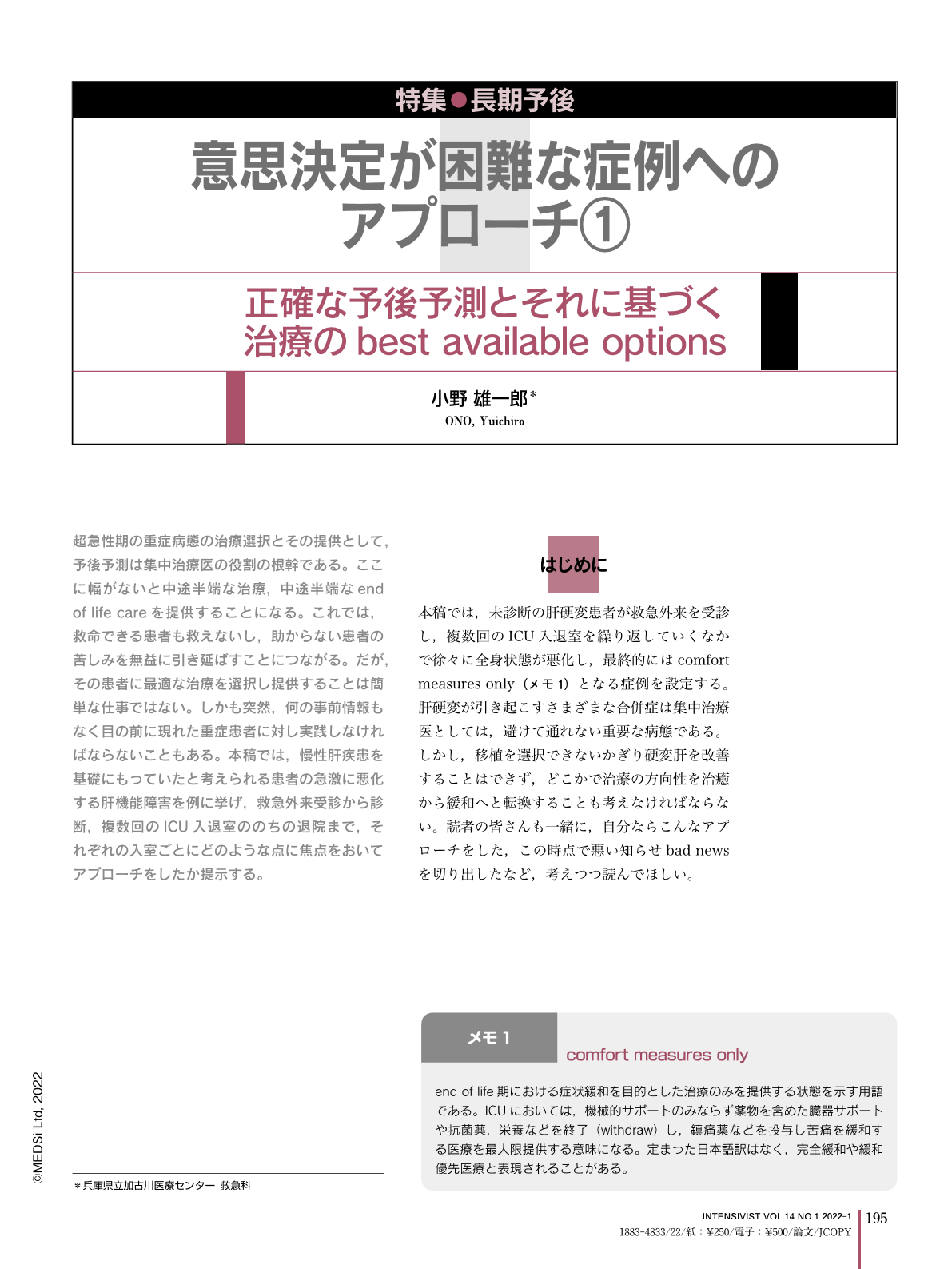
超急性期の重症病態の治療選択とその提供として,予後予測は集中治療医の役割の根幹である。ここに幅がないと中途半端な治療,中途半端なend of life careを提供することになる。これでは,救命できる患者も救えないし,助からない患者の苦しみを無益に引き延ばすことにつながる。だが,その患者に最適な治療を選択し提供することは簡単な仕事ではない。しかも突然,何の事前情報もなく目の前に現れた重症患者に対し実践しなければならないこともある。本稿では,慢性肝疾患を基礎にもっていたと考えられる患者の急激に悪化する肝機能障害を例に挙げ,救急外来受診から診断,複数回のICU入退室ののちの退院まで,それぞれの入室ごとにどのような点に焦点をおいてアプローチをしたか提示する。
Management and prognostication for acute and critically ill patients is a pivotal role for intensivists. If an ambiguous decision regarding care is made, it may lead to incomplete recovery and prolonged suffering of patients in the Intensive Care Unit. This role is our expertise but is not an easy task. Unfortunately, a chronically and severely ill person may present unexpectedly to the emergency department with very little information and we are forced to make significant decisions regarding their life. In this section, we explore the situation of a male patient with presumed chronic liver disease, who developed acute liver failure requiring several ICU admissions and heading towards End of Life care discussions. Each ICU presentation included different stages of care such as first impression, initial management, rapid in-hospital deterioration, escalation of care, and palliative care. This discussion is a great opportunity for readers to consider their own approaches.
Copyright © 2022, MEDICAL SCIENCES INTERNATIONAL, LTD. All rights reserved.