Japanese
English
- 有料閲覧
PPV購入案内
1,320円 (1,200円+税10%) こちらは、175ページから181ページの文献です。購入には医書.jp本会員登録が必要です。
会員登録完了後に改めて上記「購入サイトへ」を選択してください。
または「購入サイトへ」選択後に「購入ログイン」、「新規会員登録」の順に進んでください。
会員登録について詳しくはをご確認ください。
- Abstract 文献概要
- 1ページ目 Look Inside
- 参考文献 Reference
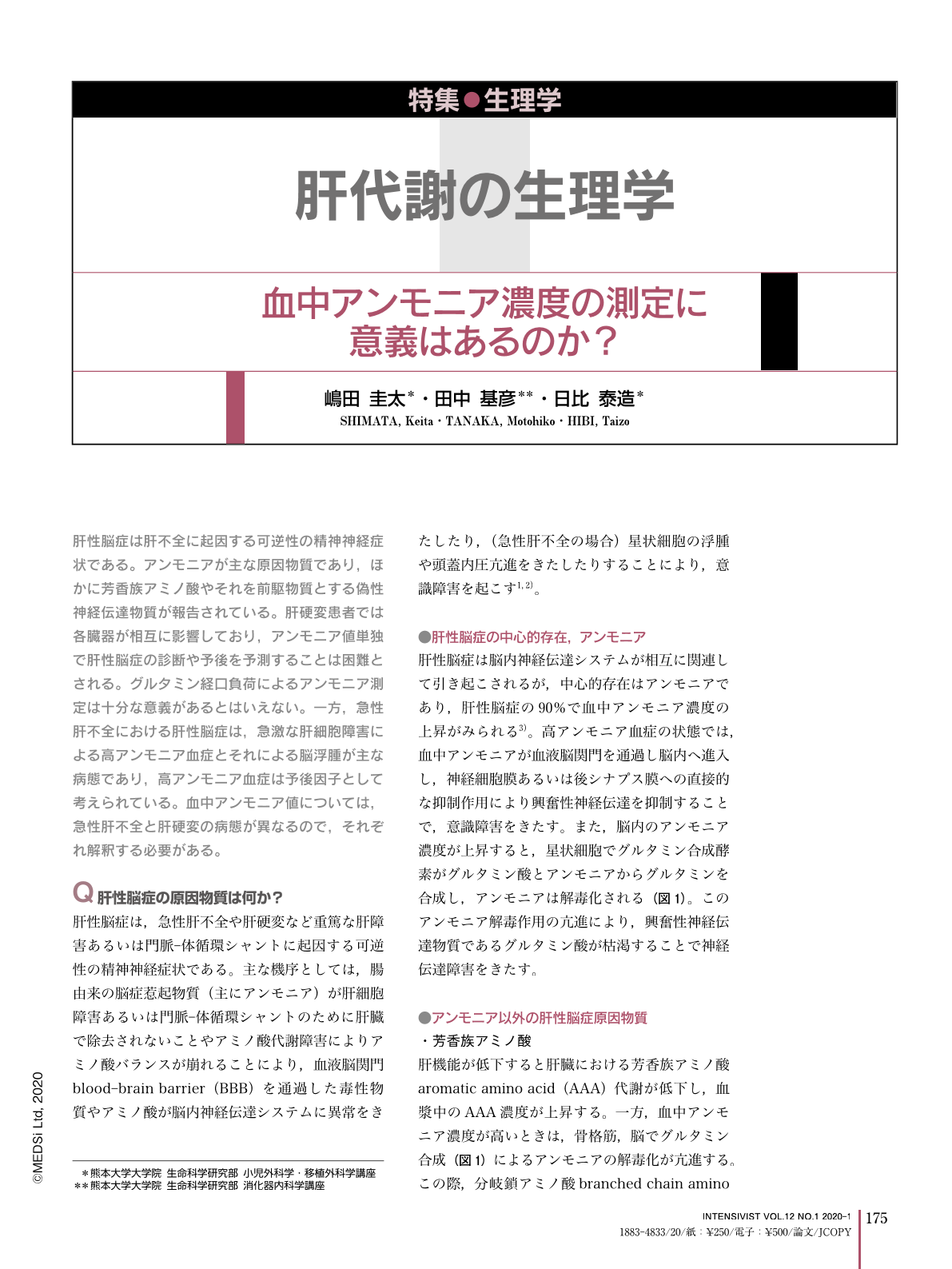
肝性脳症は肝不全に起因する可逆性の精神神経症状である。アンモニアが主な原因物質であり,ほかに芳香族アミノ酸やそれを前駆物質とする偽性神経伝達物質が報告されている。肝硬変患者では各臓器が相互に影響しており,アンモニア値単独で肝性脳症の診断や予後を予測することは困難とされる。グルタミン経口負荷によるアンモニア測定は十分な意義があるとはいえない。一方,急性肝不全における肝性脳症は,急激な肝細胞障害による高アンモニア血症とそれによる脳浮腫が主な病態であり,高アンモニア血症は予後因子として考えられている。血中アンモニア値については,急性肝不全と肝硬変の病態が異なるので,それぞれ解釈する必要がある。
Hepatic encephalopathy (HE) is a potentially reversible neuropsychiatric disorder resulting from liver failure. Ammonia plays a central role in the pathogenesis of HE, and aromatic amino acids and their pseudo-neurotransmitter derivatives are also reported as causative substances. In patients with liver cirrhosis, intricate interactions between multiple organs exist and it is difficult to confirm the diagnosis of HE and predict its outcome based solely on blood ammonia level. Therefore, the clinical implications of ammonia level measurement after oral glutamine challenge in this patient cohort remain unknown. However, in patients with acute liver failure, high blood ammonia levels due to acute liver damage resulting in cerebral edema is the main cause. As a consequence, the blood ammonia level is considered to be a prognostic factor. In conclusion, the blood ammonia level should be interpreted judiciously with the clinical situation of each patient taken into account.
Copyright © 2020, MEDICAL SCIENCES INTERNATIONAL, LTD. All rights reserved.