Japanese
English
- 有料閲覧
PPV購入案内
1,320円 (1,200円+税10%) こちらは、349ページから356ページの文献です。購入には医書.jp本会員登録が必要です。
会員登録完了後に改めて上記「購入サイトへ」を選択してください。
または「購入サイトへ」選択後に「購入ログイン」、「新規会員登録」の順に進んでください。
会員登録について詳しくはをご確認ください。
- Abstract 文献概要
- 1ページ目 Look Inside
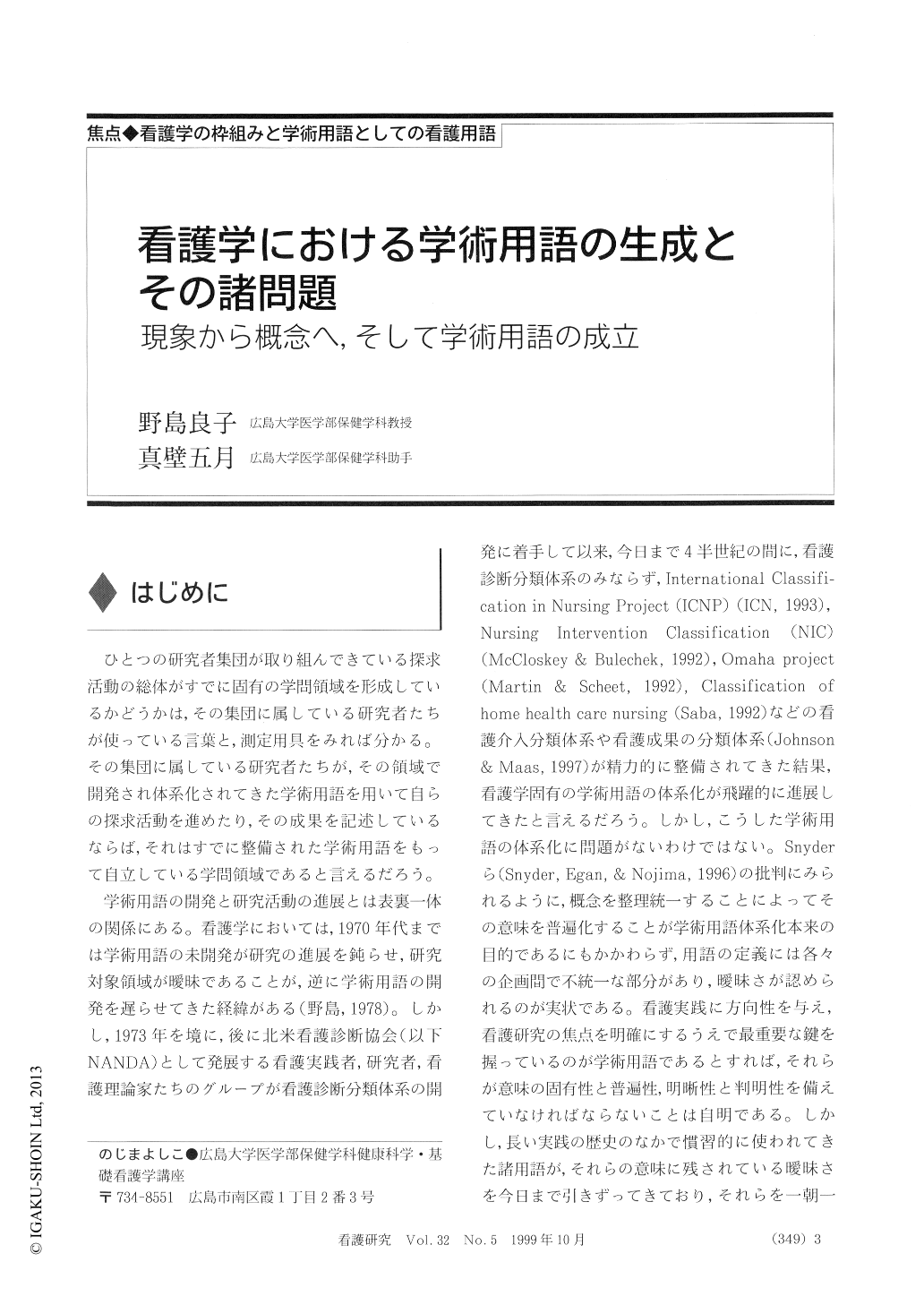
はじめに
ひとつの研究者集団が取り組んできている探求活動の総体がすでに固有の学問領域を形成しているかどうかは,その集団に属している研究者たちが使っている言葉と,測定用具をみれば分かる。その集団に属している研究者たちが,その領域で開発され体系化されてきた学術用語を用いて自らの探求活動を進めたり,その成果を記述しているならば,それはすでに整備された学術用語をもって自立している学問領域であると言えるだろう。
学術用語の開発と研究活動の進展とは表裏一体の関係にある。看護学においては,1970年代までは学術用語の未開発が研究の進展を鈍らせ,研究対象領域が曖昧であることが,逆に学術用語の開発を遅らせてきた経緯がある(野島,1978)。
The purpose of this article is to examine the fundamental question of concept in nursing from a philosophical point of view; what it is and how it evolves. A need for having an universal language system as a scientific basis for nursing practice led the nurse theorist to develop the classification systems of nursing diagnosis, e.g., NANDA diagnoses, nursing intervention classification and the Omaha system. A conceptual problem is lack of clearness and distinctness in meaning. Most of the concepts of nursing are derived from traditional nursing practices and/or related disciplines, such as medicine and psychology. Concepts are a mental image of reality depicted with one's perception. Reality of nursing is a complex constellation of things and matters, which are relevant to a person, health, environment and nursing. Therefore, formation of concepts is affected by a nurse's perception and worldview. Keen definition of concepts is critical to give them clearness and distinctness in meaning. Unique concepts of nursing can facilitate the development of middle range theories, which can guide research and practice.
Copyright © 1999, Igaku-Shoin Ltd. All rights reserved.