Japanese
English
- 有料閲覧
PPV購入案内
1,320円 (1,200円+税10%) こちらは、115ページから125ページの文献です。購入には医書.jp本会員登録が必要です。
会員登録完了後に改めて上記「購入サイトへ」を選択してください。
または「購入サイトへ」選択後に「購入ログイン」、「新規会員登録」の順に進んでください。
会員登録について詳しくはをご確認ください。
- Abstract 文献概要
- 1ページ目 Look Inside
- 参考文献 Reference
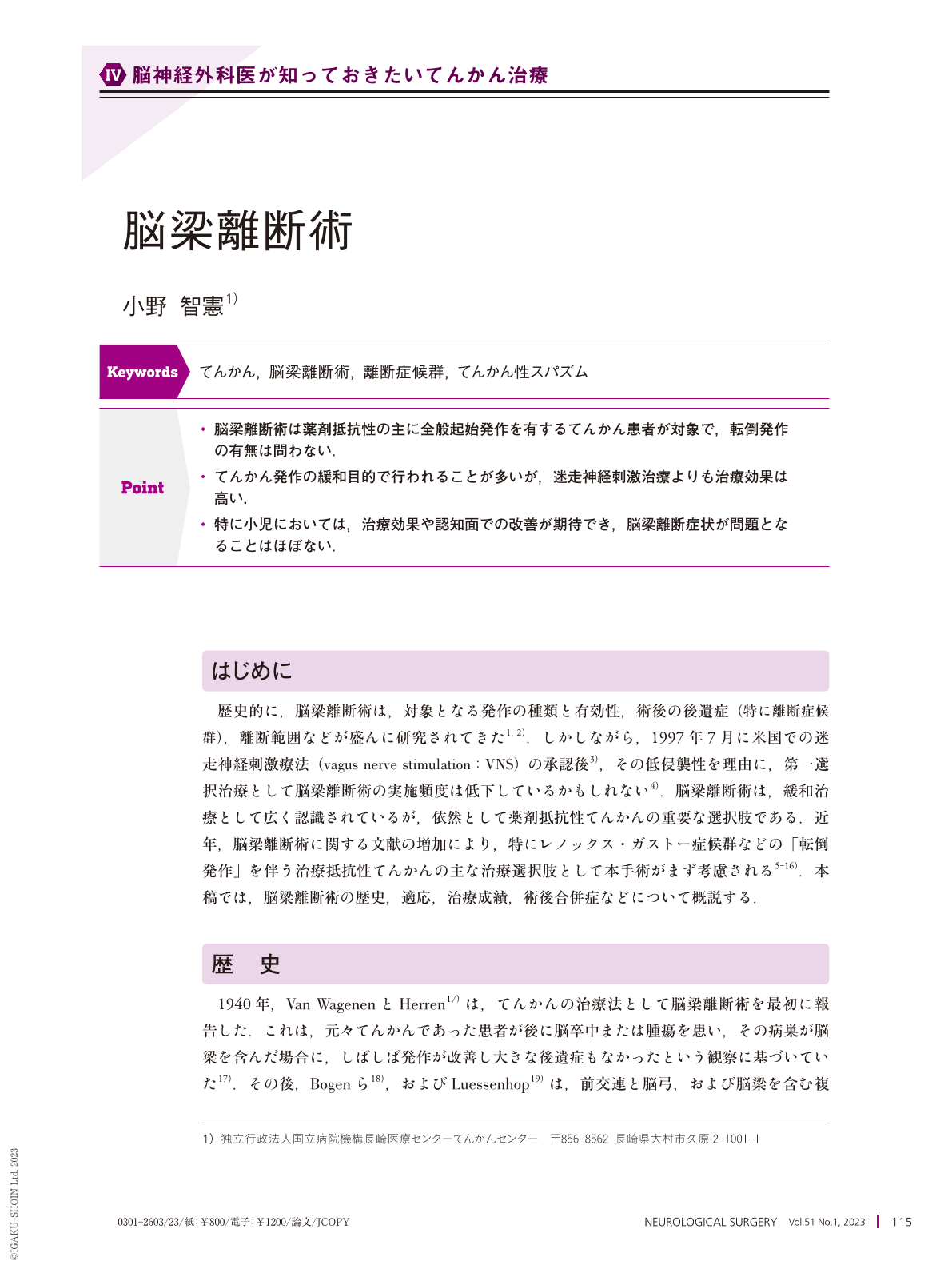
Point
・脳梁離断術は薬剤抵抗性の主に全般起始発作を有するてんかん患者が対象で,転倒発作の有無は問わない.
・てんかん発作の緩和目的で行われることが多いが,迷走神経刺激治療よりも治療効果は高い.
・特に小児においては,治療効果や認知面での改善が期待でき,脳梁離断症状が問題となることはほぼない.
Callosotomy is widely used today as a treatment option for medically refractory epilepsy in patients with generalized or unknown-onset seizures. Other surgical indications include bilaterally distributed, most often synchronous, epileptiform discharges on EEG and some epilepsy syndromes, including Lennox-Gastaut syndrome and infantile spasms/West syndrome. Patients with drop attacks, mainly caused by epileptic spasms or atonic seizures, are most likely to benefit from this procedure. A more favorable seizure outcome was observed after a one-stage total callosal section in pediatric patients. For older children and adults, anterior callosotomy should initially be applied, and staged complete sections should be considered if the seizure outcome is insufficient. In terms of complications, most surgically associated brain and vascular injuries are avoidable in this era of microsurgery, and some less invasive newer methods, including endoscopic and stereotactic methods, are being explored. Disconnection syndrome is an unavoidable condition. However, it is usually transient in most cases and does not outweigh the improvement in symptoms of epilepsy in most patients, particularly in children who have compensatory functions or plasticity of the developing brain.
Copyright © 2023, Igaku-Shoin Ltd. All rights reserved.