Japanese
English
- 有料閲覧
PPV購入案内
1,320円 (1,200円+税10%) こちらは、787ページから798ページの文献です。購入には医書.jp本会員登録が必要です。
会員登録完了後に改めて上記「購入サイトへ」を選択してください。
または「購入サイトへ」選択後に「購入ログイン」、「新規会員登録」の順に進んでください。
会員登録について詳しくはをご確認ください。
- Abstract 文献概要
- 1ページ目 Look Inside
- 参考文献 Reference
Point
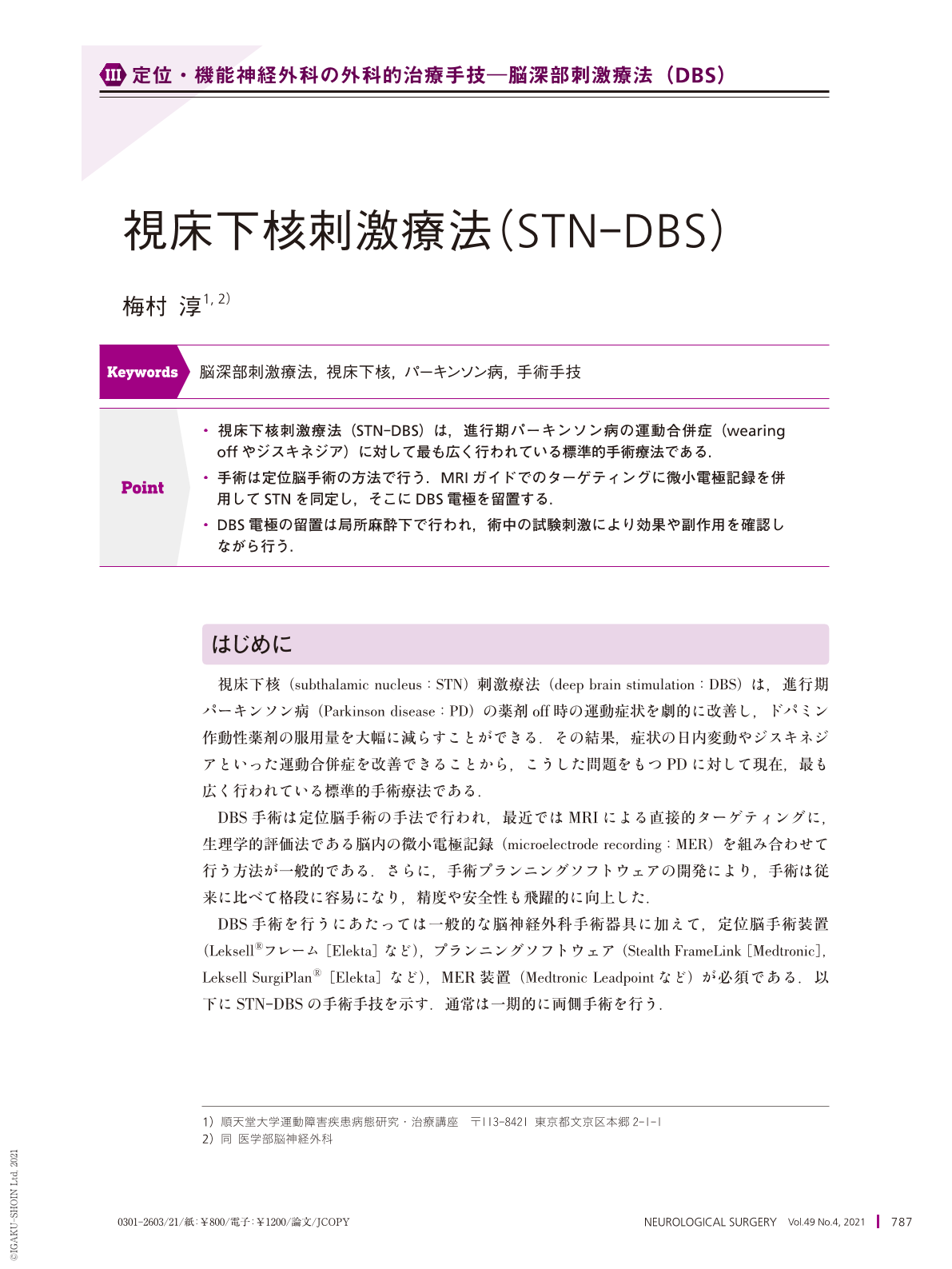
・視床下核刺激療法(STN-DBS)は,進行期パーキンソン病の運動合併症(wearing offやジスキネジア)に対して最も広く行われている標準的手術療法である.
・手術は定位脳手術の方法で行う.MRIガイドでのターゲティングに微小電極記録を併用してSTNを同定し,そこにDBS電極を留置する.
・DBS電極の留置は局所麻酔下で行われ,術中の試験刺激により効果や副作用を確認しながら行う.
Recently, deep brain stimulation(DBS)of the subthalamic nucleus(STN)has emerged as the most promising surgical treatment for medically refractory Parkinson disease, with the aim of achieving precise implantation of the DBS lead into the STN. DBS lead placement is performed using stereotactic surgery, with targeting based on MR imaging. Initial targeting is performed by a combination of indirect targeting based on the Schartenbrand and Wahren atlas and the direct visualization of anatomical structures on MRI. Surgical planning software is useful for target localization and simulation of the trajectory from the entry point to the target. A burr hole is placed under local anesthesia. Subsequently, the target region is physiologically explored by microelectrode recording, which is the gold standard to identify the STN. After lead placement, test stimulation is performed to assess symptom relief and to evaluate the threshold for adverse effects. Subsequently, the patient is placed under general anesthesia and the implantable pulse generator is placed in the infraclavicular subcutaneous pocket.
Copyright © 2021, Igaku-Shoin Ltd. All rights reserved.