Japanese
English
- 有料閲覧
PPV購入案内
1,320円 (1,200円+税10%) こちらは、75ページから79ページの文献です。購入には医書.jp本会員登録が必要です。
会員登録完了後に改めて上記「購入サイトへ」を選択してください。
または「購入サイトへ」選択後に「購入ログイン」、「新規会員登録」の順に進んでください。
会員登録について詳しくはをご確認ください。
- Abstract 文献概要
- 1ページ目 Look Inside
I.はじめに
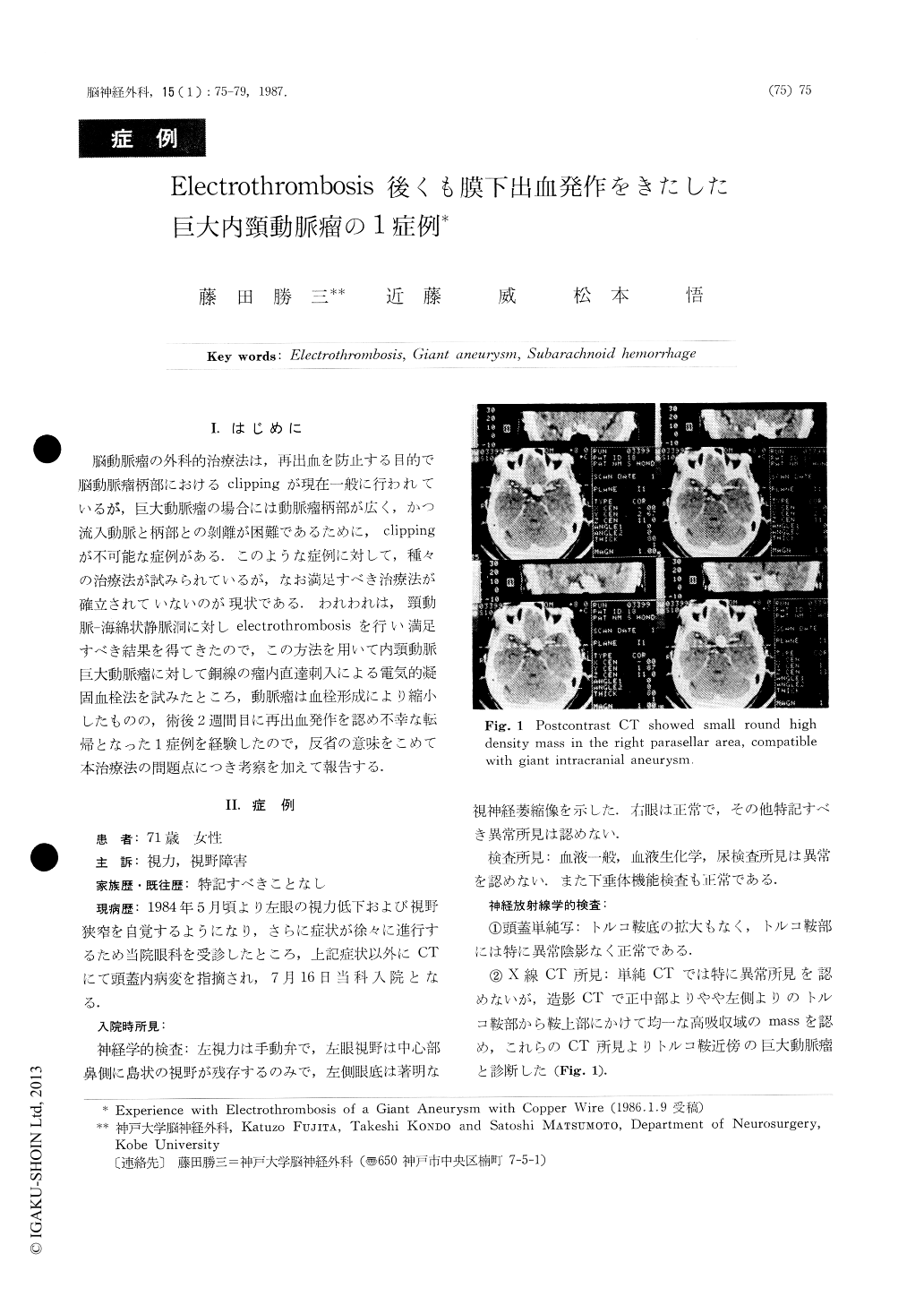
脳動脈瘤の外科的治療法は,再出血を防止する日的で脳動脈瘤柄部におけるclippingが現在一般に行われているが,巨大動脈瘤の場合には動脈瘤柄部が広く,かつ流入動脈と柄部との剥離が困難であるために,clippingが不可能な症例がある.このような症例に対して,種々の治療法が試みられているが,なお満足すべき治療法が確立されていないのが現状である.われわれは,頸動脈—海綿状静脈洞に対しelectrothrolnbosisを行い満足すべき結果を得てきたので,この方法を用いて内頸動脈巨大動脈瘤に対して銅線の瘤内直達刺入による電気的凝固血栓法を試みたところ,動脈瘤は血栓形成により縮小したものの,術後2週間日に再出血発作を認め不幸な転帰となった1症例を経験したので,反省の意味をこめて本治療法の問題点につき考察を加えて報告する.
A 71-year-old woman with left internal carotid giant artery aneurysm was treated by copper wire electrothrombosis after craniotomy. In spite of almost obliteration of the giant aneurysm by copper wire insertion, the giant aneurysm bled and the patient died of severe subarachnoid hemorrhage. Autopsy showed massive subarachnoid clot, large intracerebral hematoma in the left frontal lobe and intraventricular hemorrhage with thrombosis in the giant aneurysm.
From the autopsy findings and our experimental study, the mechanism of the aneurysmal rupture after copper wire insertion was speculated as follows.
Copyright © 1987, Igaku-Shoin Ltd. All rights reserved.