Japanese
English
- 有料閲覧
PPV購入案内
1,320円 (1,200円+税10%) こちらは、1185ページから1190ページの文献です。購入には医書.jp本会員登録が必要です。
会員登録完了後に改めて上記「購入サイトへ」を選択してください。
または「購入サイトへ」選択後に「購入ログイン」、「新規会員登録」の順に進んでください。
会員登録について詳しくはをご確認ください。
- Abstract 文献概要
- 1ページ目 Look Inside
I.はじめに
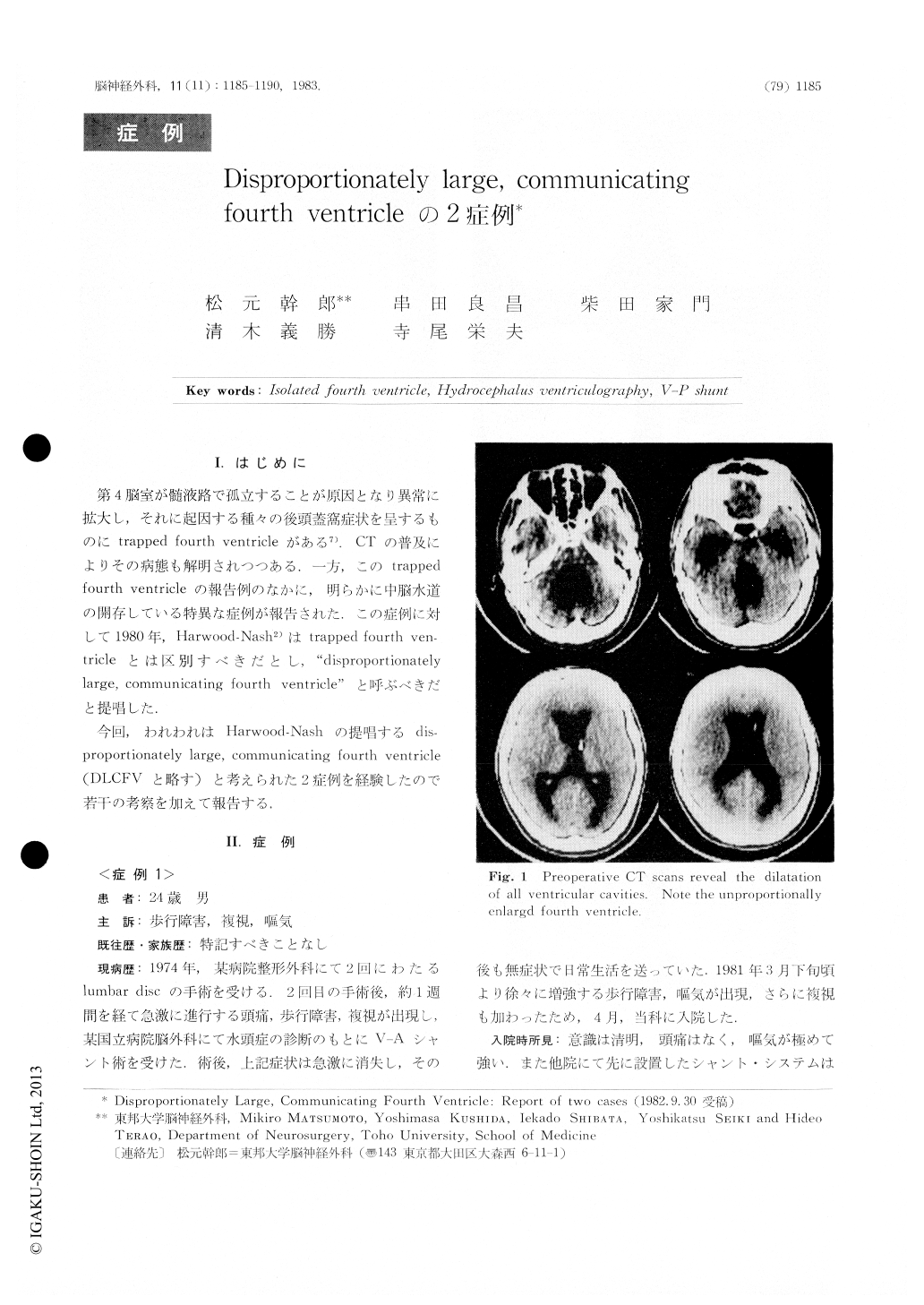
第4脳室が髄液路で孤立することが原因となり異常に拡大し,それに起因する種々の後頭蓋窩症状を呈するものにtrapped fourth ventricleがある7).CTの普及によりその病態も解明されつつある.一方,このtrappedfourth ventricleの報告例のなかに,明らかに中脳水道の開存している特異な症例が報告された.この症例に対して1980年,Harwood-Nash2)はtrapped fourth ven-tricleとは区別すべきだとし,"disproportionatelylarge,communicating fourth ventricle"と呼ぶべきだと提唱した.
今回,われわれはHarwood-Nashの提唱するdis-proportionately large, communicating fourth ventricle(DLCFVと略す)と考えられた2症例を経験したので若干の考察を加えて報告する.
A term of 'disproportionately large, communicatingfourth ventricle' (DLCFV) was first proposed by inHarwood-Nash in 1980.
It is somewhat different from the well known clini-cal entity of 'isolated or trapped fourth ventricle',because of apparent patency of aqueductal canal.Two cases of typical DLCFV encountered in ourclinic were described. First patient was a 24 yearold man in whom this condition developed followingoperations for lumber disc and second patient was 22year old woman in whom the disease developed aftersubarachnoid hemorrhage.
Copyright © 1983, Igaku-Shoin Ltd. All rights reserved.