Japanese
English
- 有料閲覧
PPV購入案内
1,320円 (1,200円+税10%) こちらは、498ページから507ページの文献です。購入には医書.jp本会員登録が必要です。
会員登録完了後に改めて上記「購入サイトへ」を選択してください。
または「購入サイトへ」選択後に「購入ログイン」、「新規会員登録」の順に進んでください。
会員登録について詳しくはをご確認ください。
- Abstract 文献概要
- 1ページ目 Look Inside
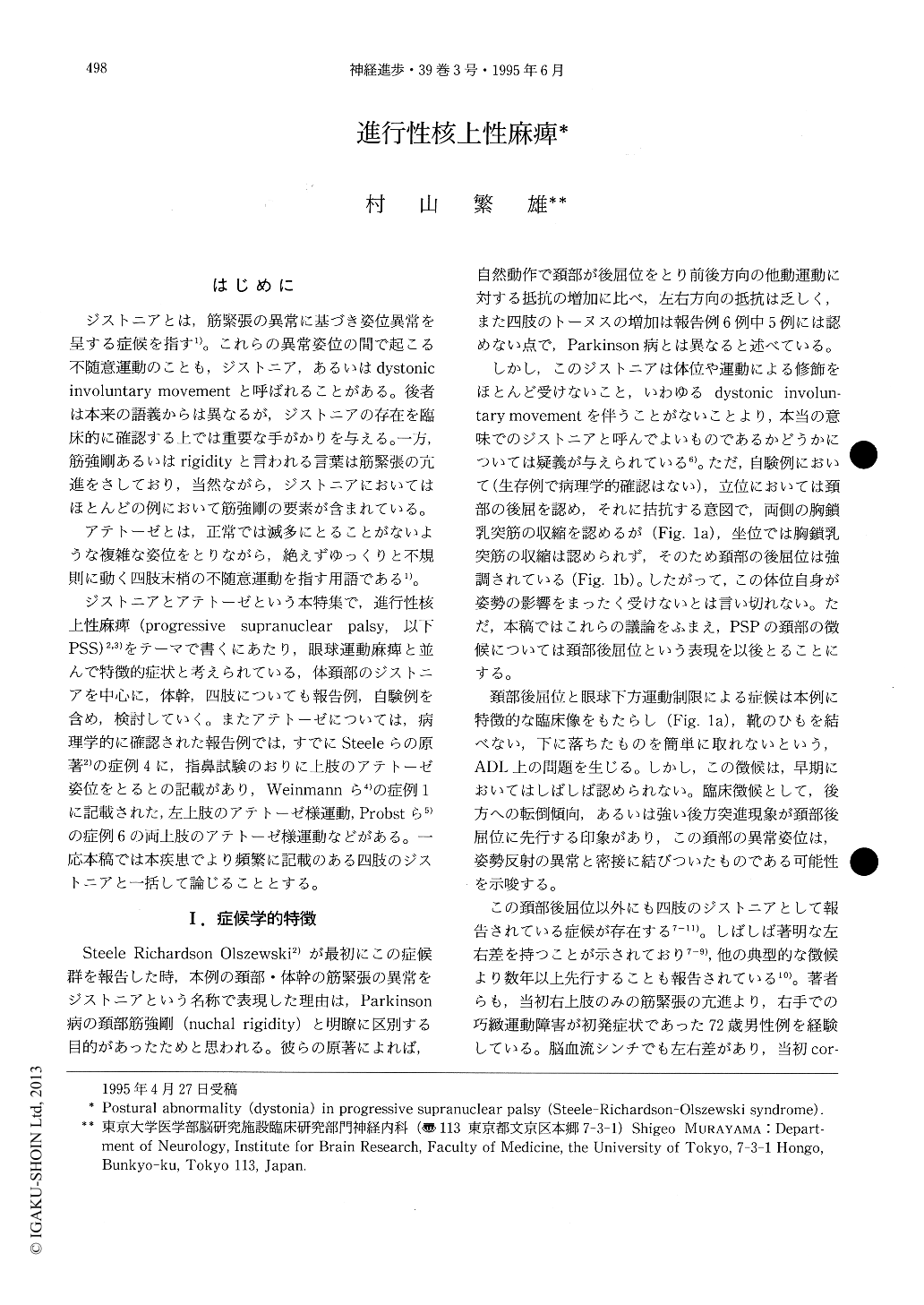
はじめに
ジストニアとは,筋緊張の異常に基づき姿位異常を呈する症候を指す1)。これらの異常姿位の間で起こる不随意運動のことも,ジストニア,あるいはdystonicinvoluntary movementと呼ばれることがある。後者は本来の語義からは異なるが,ジストニアの存在を臨床的に確認する上では重要な手がかりを与える。一方,筋強剛あるいはrigidityと言われる言葉は筋緊張の亢進をさしており,当然ながら,ジストニアにおいてはほとんどの例において筋強剛の要素が含まれている。
アテトーゼとは,正常では滅多にとることがないような複雑な姿位をとりながら,絶えずゆっくりと不規則に動く四肢末梢の不随意運動を指す用語である1)。
Dystonia is defined as an abnormal posture caused by inappropriate tonus of responsible muscles. In progressive supranuclear palsy (PSP), abnormal extension of the neck, in combination with downward gaze palsy formed pathognomonic clinical presentation of the disorder. Abnormal dorsiflexion of the neck in PSP was termed nuchal dystonia by Steele, Richardson and Olszewski. It is not clear whether this postural abnormality fulfilled classic criteria of dystonia, because this abnormal posture is not much influenced by either postural of psychological stress.
Copyright © 1995, Igaku-Shoin Ltd. All rights reserved.