Japanese
English
- 有料閲覧
PPV購入案内
1,320円 (1,200円+税10%) こちらは、519ページから525ページの文献です。購入には医書.jp本会員登録が必要です。
会員登録完了後に改めて上記「購入サイトへ」を選択してください。
または「購入サイトへ」選択後に「購入ログイン」、「新規会員登録」の順に進んでください。
会員登録について詳しくはをご確認ください。
- Abstract 文献概要
- 1ページ目 Look Inside
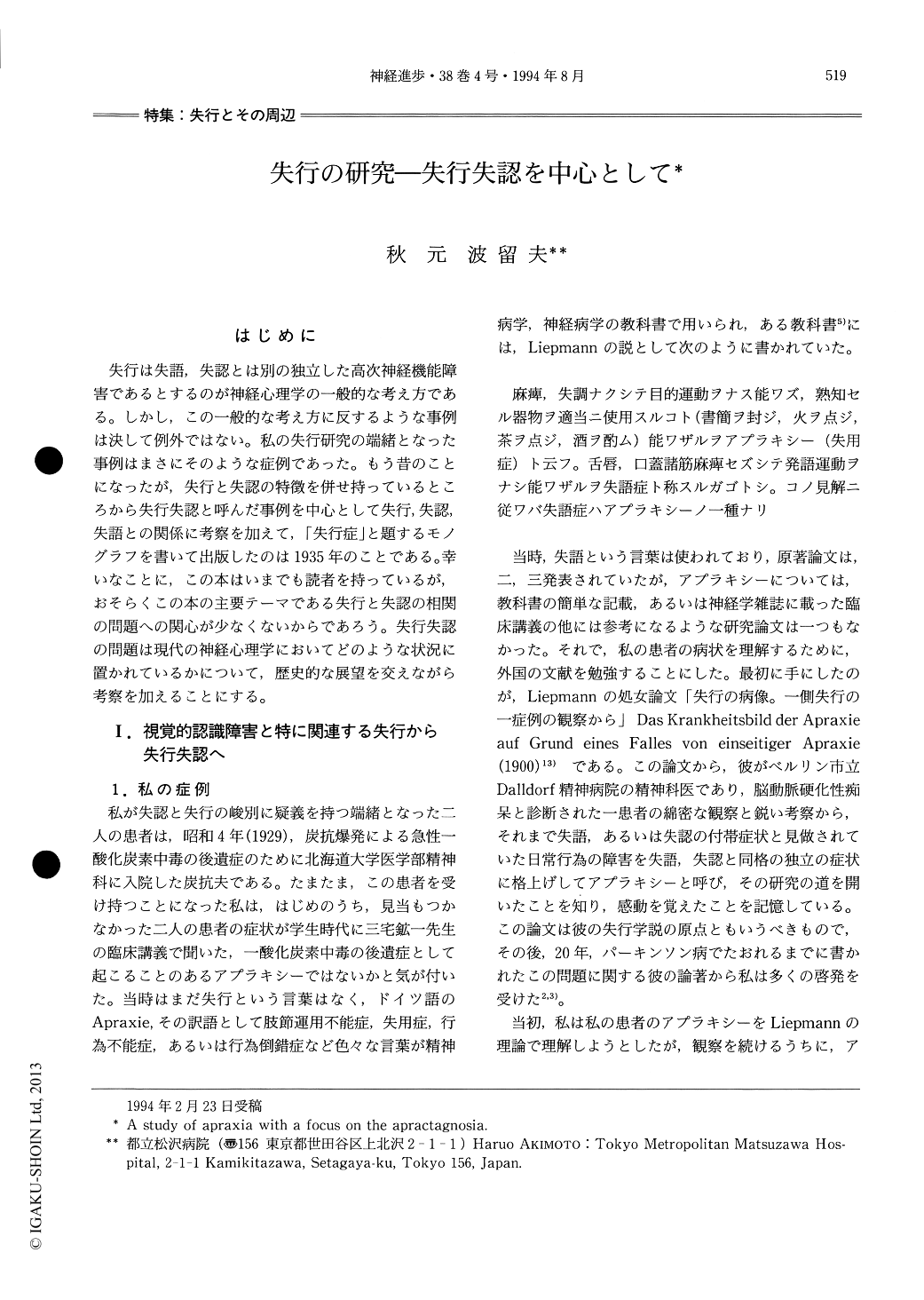
はじめに
失行は失語,失認とは別の独立した高次神経機能障害であるとするのが神経心理学の一般的な考え方である。しかし,この一般的な考え方に反するような事例は決して例外ではない。私の失行研究の端緒となった事例はまさにそのような症例であった。もう昔のことになったが,失行と失認の特徴を併せ持っているところから失行失認と呼んだ事例を中心として失行,失認失語との関係に考察を加えて,「失行症」と題するモノグラフを書いて出版したのは1935年のことである。幸いなことに,この本はいまでも読者を持っているが,おそらくこの本の主要テーマである失行と失認の相関の問題への関心が少なくないからであろう。失行失認の問題は現代の神経心理学においてどのような状況に置かれているかについて,歴史的な展望を交えながら考察を加えることにする。
Since Liepmann identified apraxia as an authentic, genuine syndrome separating it from aphasia and agnosia at the beginning of this century, apraxia has been constituted as a specific research category side by side with aphasia and agnosia. However, the study of the constructive apractic disturbances in the 1930's has thrown some doubt over the propriety of strict separation between apraxia and agnosia. Since then, the investigation of the relation between apraxia and agnosia, that of apractagnosia and aphasia has been an important task of Neuropsychology.
Copyright © 1994, Igaku-Shoin Ltd. All rights reserved.