Japanese
English
- 有料閲覧
PPV購入案内
1,320円 (1,200円+税10%) こちらは、231ページから238ページの文献です。購入には医書.jp本会員登録が必要です。
会員登録完了後に改めて上記「購入サイトへ」を選択してください。
または「購入サイトへ」選択後に「購入ログイン」、「新規会員登録」の順に進んでください。
会員登録について詳しくはをご確認ください。
- Abstract 文献概要
- 1ページ目 Look Inside
- 参考文献 Reference
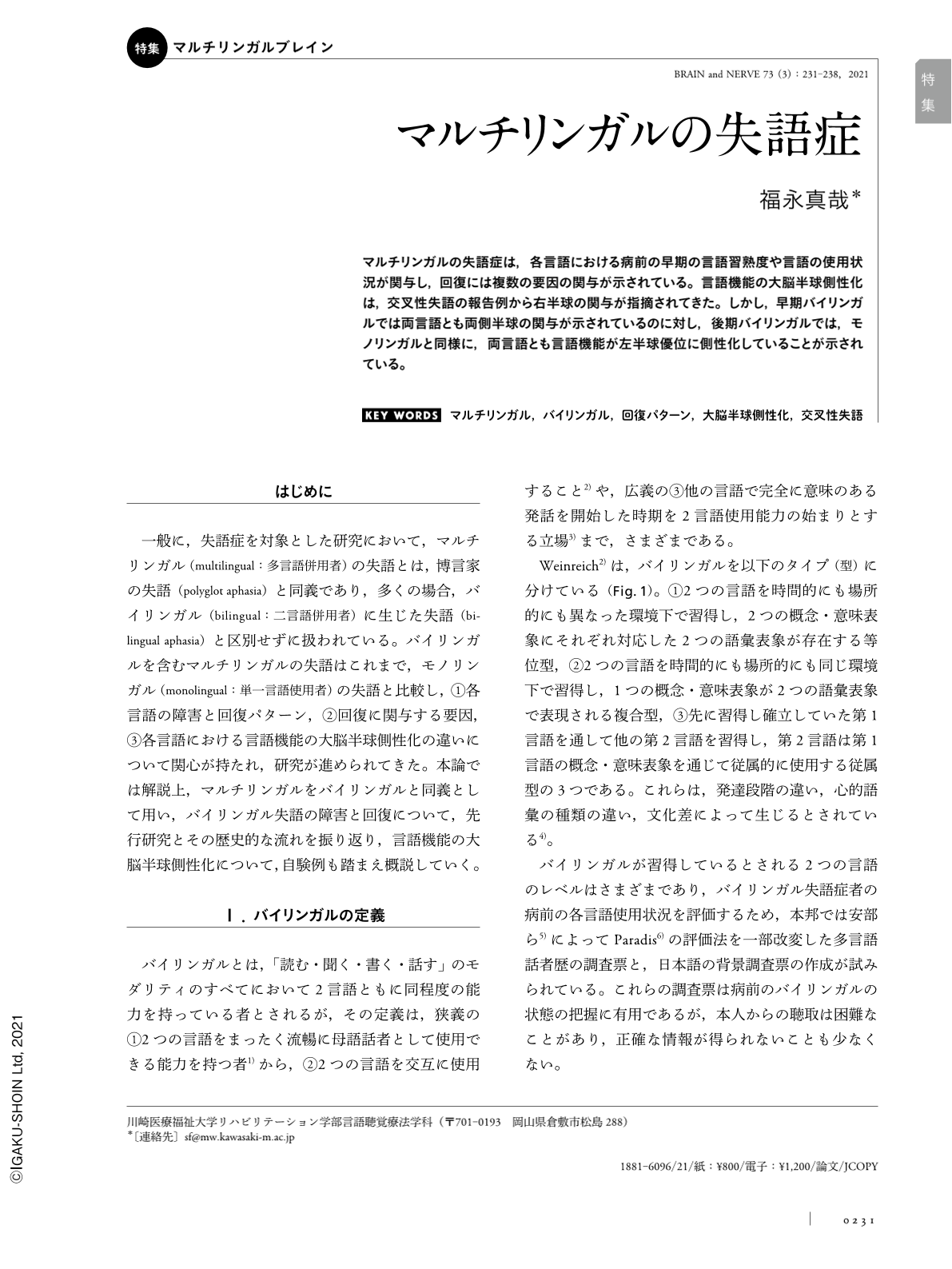
マルチリンガルの失語症は,各言語における病前の早期の言語習熟度や言語の使用状況が関与し,回復には複数の要因の関与が示されている。言語機能の大脳半球側性化は,交叉性失語の報告例から右半球の関与が指摘されてきた。しかし,早期バイリンガルでは両言語とも両側半球の関与が示されているのに対し,後期バイリンガルでは,モノリンガルと同様に,両言語とも言語機能が左半球優位に側性化していることが示されている。
Abstract
Multilingual aphasia is synonymous with polyglot aphasia and is often indistinguishable from bilingual aphasia. Multilingual aphasia, including bilingual aphasia, has been of interest from the perspectives of impairment and recovery patterns in each language, factors involved in recovery, and variations in cerebral lateralization of language function in each language. Early premorbid language proficiency and language use have been shown to play a crucial role in the manifestation of bilingual aphasia. Paradis (1989) classified the recovery pattern from bilingual aphasia into nine patterns and demonstrated that multiple variables, including age of language acquisition and language proficiency are involved in multiple dimensions. Previous studies on crossed aphasia have suggested the involvement of the right hemisphere in the cerebral lateralization of language function. However, a subsequent meta-analysis demonstrated that early bilingual individuals who acquired both languages by the age of 6 years had a bilateral organization of both languages. In contrast, late bilingual and monolingual individuals who acquired a second language after the age of 6 years had the lateralization of language function in the left hemisphere for both languages.
Copyright © 2021, Igaku-Shoin Ltd. All rights reserved.