Japanese
English
- 有料閲覧
PPV購入案内
1,320円 (1,200円+税10%) こちらは、1143ページから1150ページの文献です。購入には医書.jp本会員登録が必要です。
会員登録完了後に改めて上記「購入サイトへ」を選択してください。
または「購入サイトへ」選択後に「購入ログイン」、「新規会員登録」の順に進んでください。
会員登録について詳しくはをご確認ください。
- Abstract 文献概要
- 1ページ目 Look Inside
- 参考文献 Reference
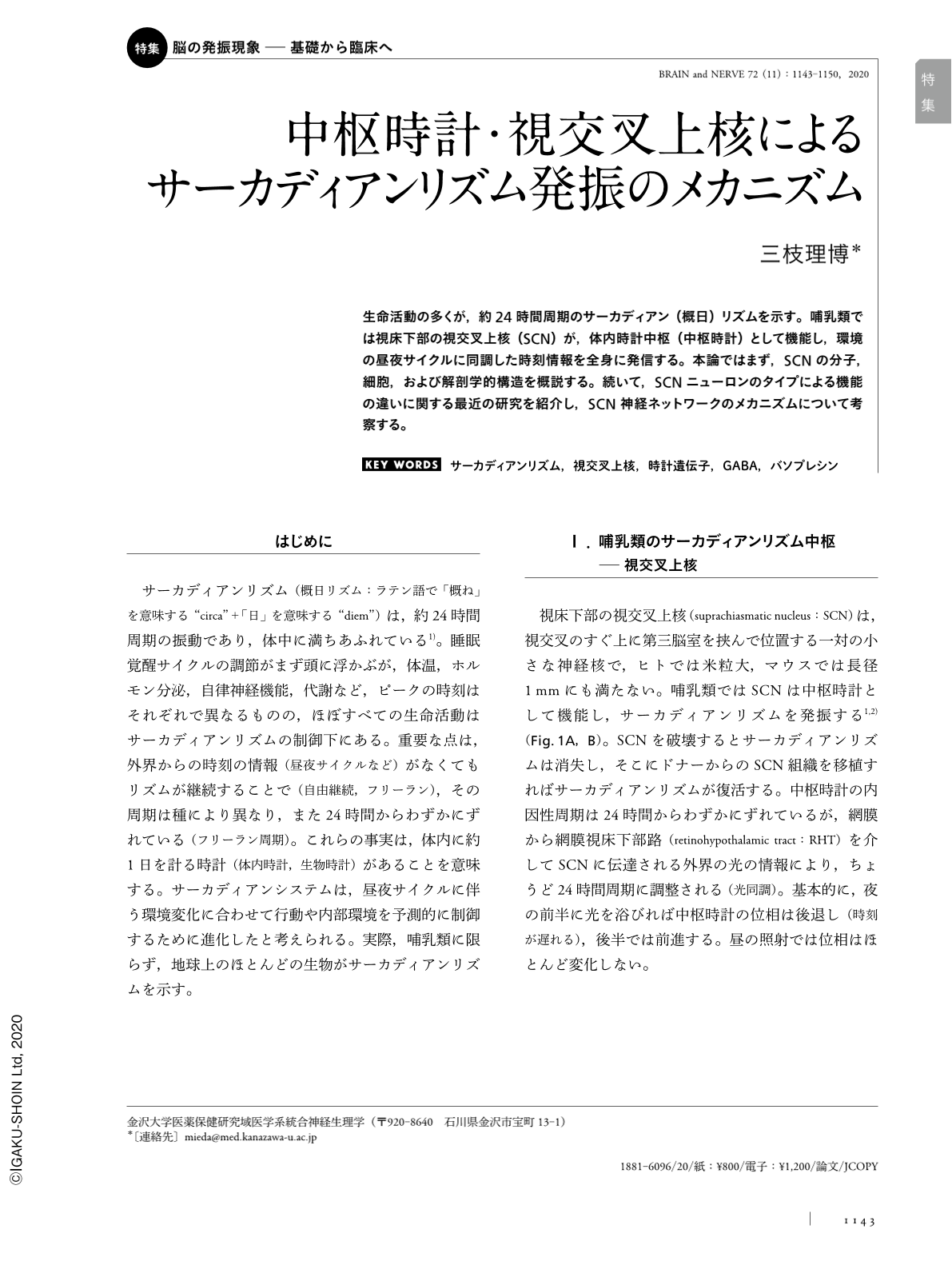
生命活動の多くが,約24時間周期のサーカディアン(概日)リズムを示す。哺乳類では視床下部の視交叉上核(SCN)が,体内時計中枢(中枢時計)として機能し,環境の昼夜サイクルに同調した時刻情報を全身に発信する。本論ではまず,SCNの分子,細胞,および解剖学的構造を概説する。続いて,SCNニューロンのタイプによる機能の違いに関する最近の研究を紹介し,SCN神経ネットワークのメカニズムについて考察する。
Abstract
Circadian rhythms are oscillations with an approximately 24-h period and appear in most of the physiological events of our body. The suprachiasmatic nucleus (SCN) of the hypothalamus functions as the central circadian clock in mammals and entrains to the environmental light/dark (day/night) cycle. Here, I briefly review the molecular, cellular, and anatomical structures of the SCN, present findings of recent studies on the differential roles of multiple neuropeptides and neuropeptide-expressing neurons in the SCN, and discuss the mechanisms of the SCN network.
Copyright © 2020, Igaku-Shoin Ltd. All rights reserved.