Japanese
English
- 有料閲覧
PPV購入案内
1,320円 (1,200円+税10%) こちらは、681ページから694ページの文献です。購入には医書.jp本会員登録が必要です。
会員登録完了後に改めて上記「購入サイトへ」を選択してください。
または「購入サイトへ」選択後に「購入ログイン」、「新規会員登録」の順に進んでください。
会員登録について詳しくはをご確認ください。
- Abstract 文献概要
- 1ページ目 Look Inside
- 参考文献 Reference
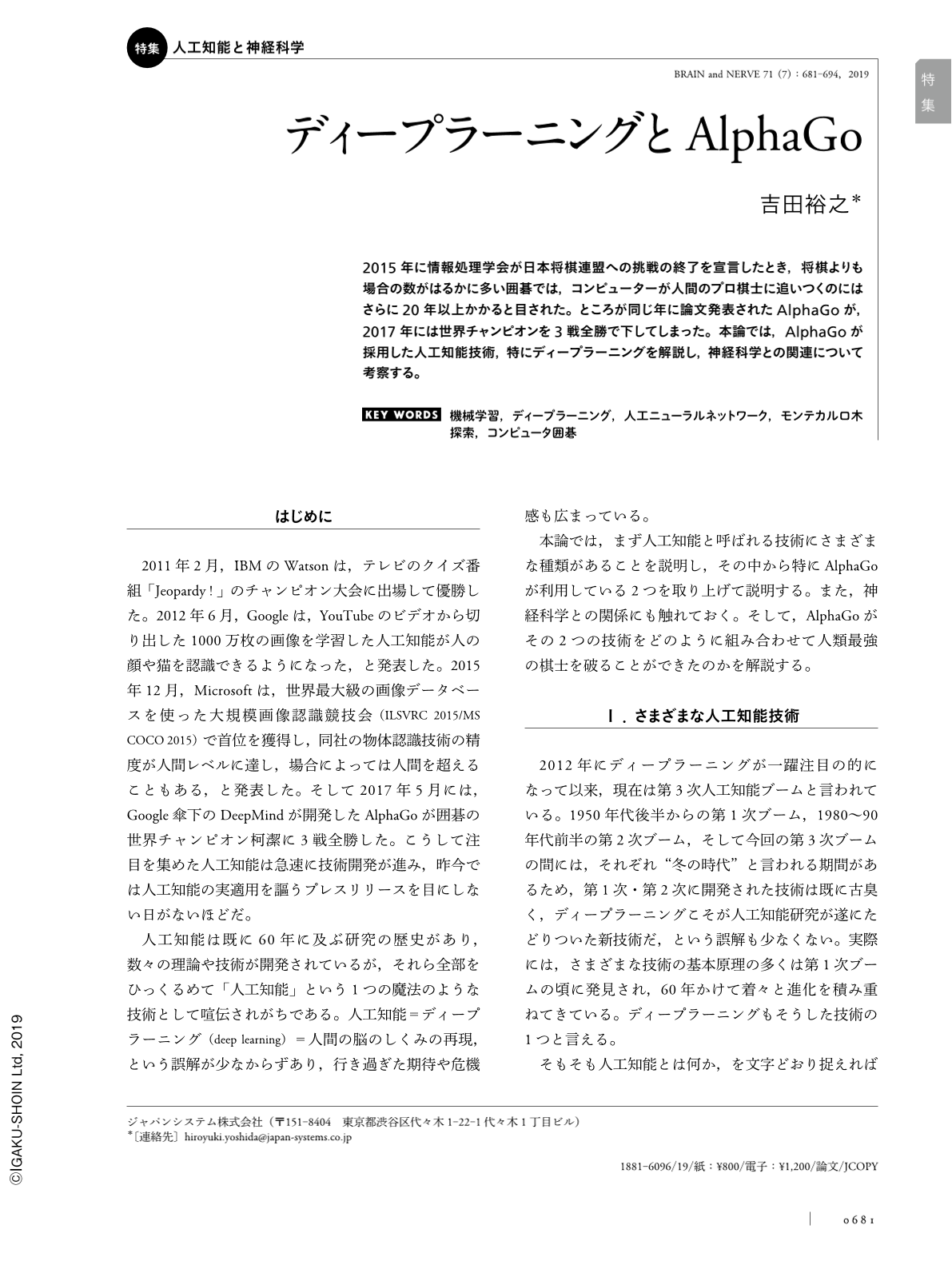
2015年に情報処理学会が日本将棋連盟への挑戦の終了を宣言したとき,将棋よりも場合の数がはるかに多い囲碁では,コンピューターが人間のプロ棋士に追いつくのにはさらに20年以上かかると目された。ところが同じ年に論文発表されたAlphaGoが,2017年には世界チャンピオンを3戦全勝で下してしまった。本論では,AlphaGoが採用した人工知能技術,特にディープラーニングを解説し,神経科学との関連について考察する。
Abstract
When the Information Processing Society of Japan (IPSJ) declared the end of the challenge to the Japanese Shogi Association in 2015, the belief was that it would take more than 20 years for computers to catch up with human professional Go players, as Go is far more complex than shogi from a combinatorial perspective. However, AlphaGo, whose paper was just published the same year, beat the Go world champion in all three games in 2017. In this paper, we describe the artificial intelligence methods adopted by AlphaGo, especially deep learning, and consider their relationship with neuroscience.
Copyright © 2019, Igaku-Shoin Ltd. All rights reserved.