Japanese
English
- 有料閲覧
PPV購入案内
1,320円 (1,200円+税10%) こちらは、25ページから33ページの文献です。購入には医書.jp本会員登録が必要です。
会員登録完了後に改めて上記「購入サイトへ」を選択してください。
または「購入サイトへ」選択後に「購入ログイン」、「新規会員登録」の順に進んでください。
会員登録について詳しくはをご確認ください。
- Abstract 文献概要
- 1ページ目 Look Inside
- 参考文献 Reference
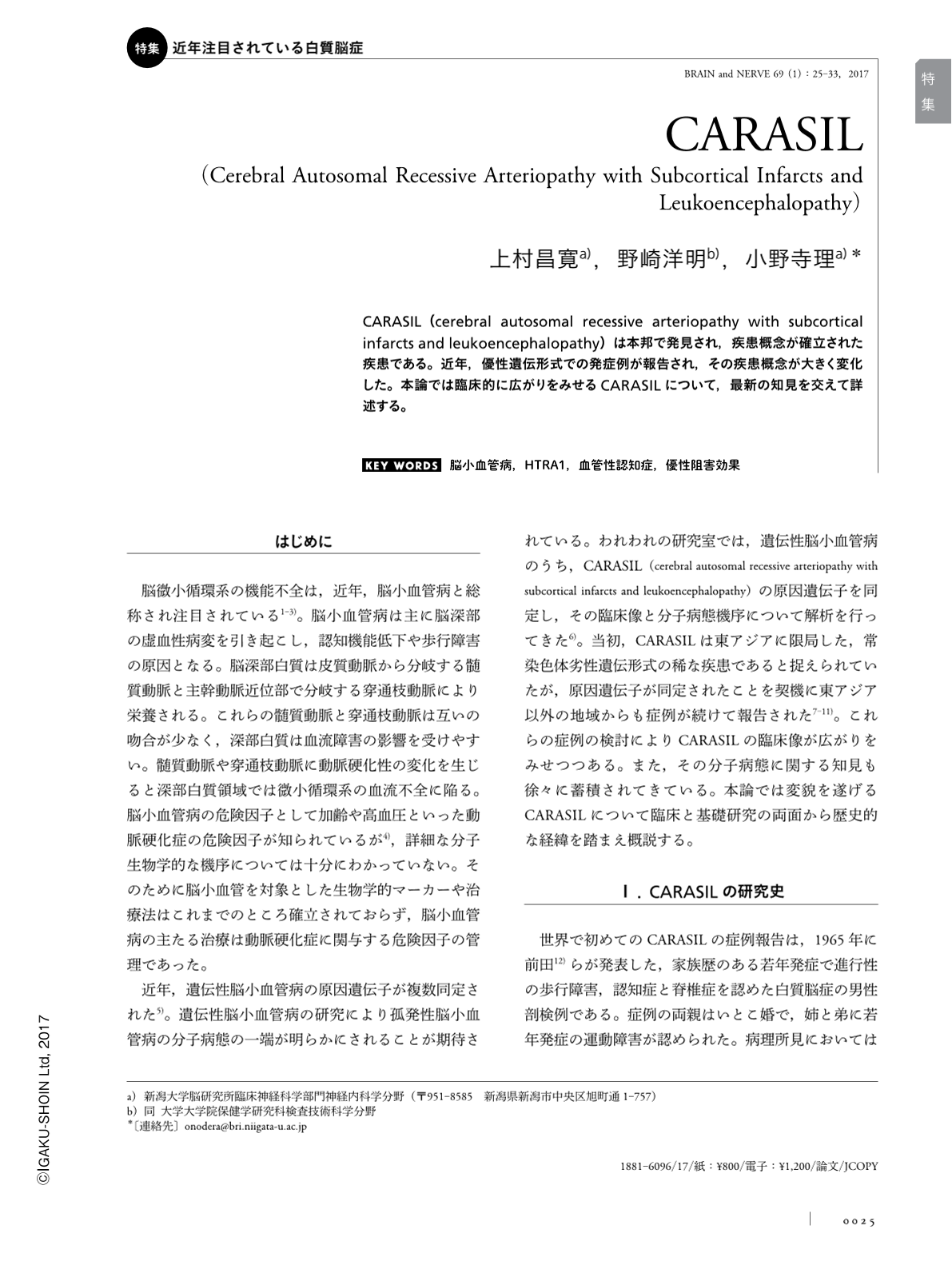
CARASIL(cerebral autosomal recessive arteriopathy with subcortical infarcts and leukoencephalopathy)は本邦で発見され,疾患概念が確立された疾患である。近年,優性遺伝形式での発症例が報告され,その疾患概念が大きく変化した。本論では臨床的に広がりをみせるCARASILについて,最新の知見を交えて詳述する。
Abstract
Cerebral small vessel disease (CSVD) is frequently observed among the elderly and is known to cause dementia and gait disturbance associated with white matter lesions, lacunar infarcts, and cerebral hemorrhage. Molecular mechanistic studies promise to provide new insights into the pathogenesis of hereditary CSVD. Cerebral autosomal recessive arteriopathy with subcortical infarcts and leukoencephalopathy (CARASIL) is one of the hereditary CSVDs caused by a mutation in the high-temperature requirement serine peptidase A1 (HTRA1) gene. The loss of HTRA1 protease activity increases signaling via transforming growth factor (TGF)β, thereby resulting in CARASIL. Although the CARASIL has been characterized by juvenile onset alopecia and spondylosis deformans, these features are not always observed in individuals with an HTRA1 mutation. Moreover, some HTRA1 mutations cause CSVD in heterozygous states. Therefore, the clinical features of CSVD resulting from an HTRA1 mutation extend to patients with CSVD alone or to those with dominantly inherited CSVD.
Copyright © 2017, Igaku-Shoin Ltd. All rights reserved.