Japanese
English
- 有料閲覧
PPV購入案内
1,320円 (1,200円+税10%) こちらは、1049ページから1055ページの文献です。購入には医書.jp本会員登録が必要です。
会員登録完了後に改めて上記「購入サイトへ」を選択してください。
または「購入サイトへ」選択後に「購入ログイン」、「新規会員登録」の順に進んでください。
会員登録について詳しくはをご確認ください。
- Abstract 文献概要
- 1ページ目 Look Inside
- 参考文献 Reference
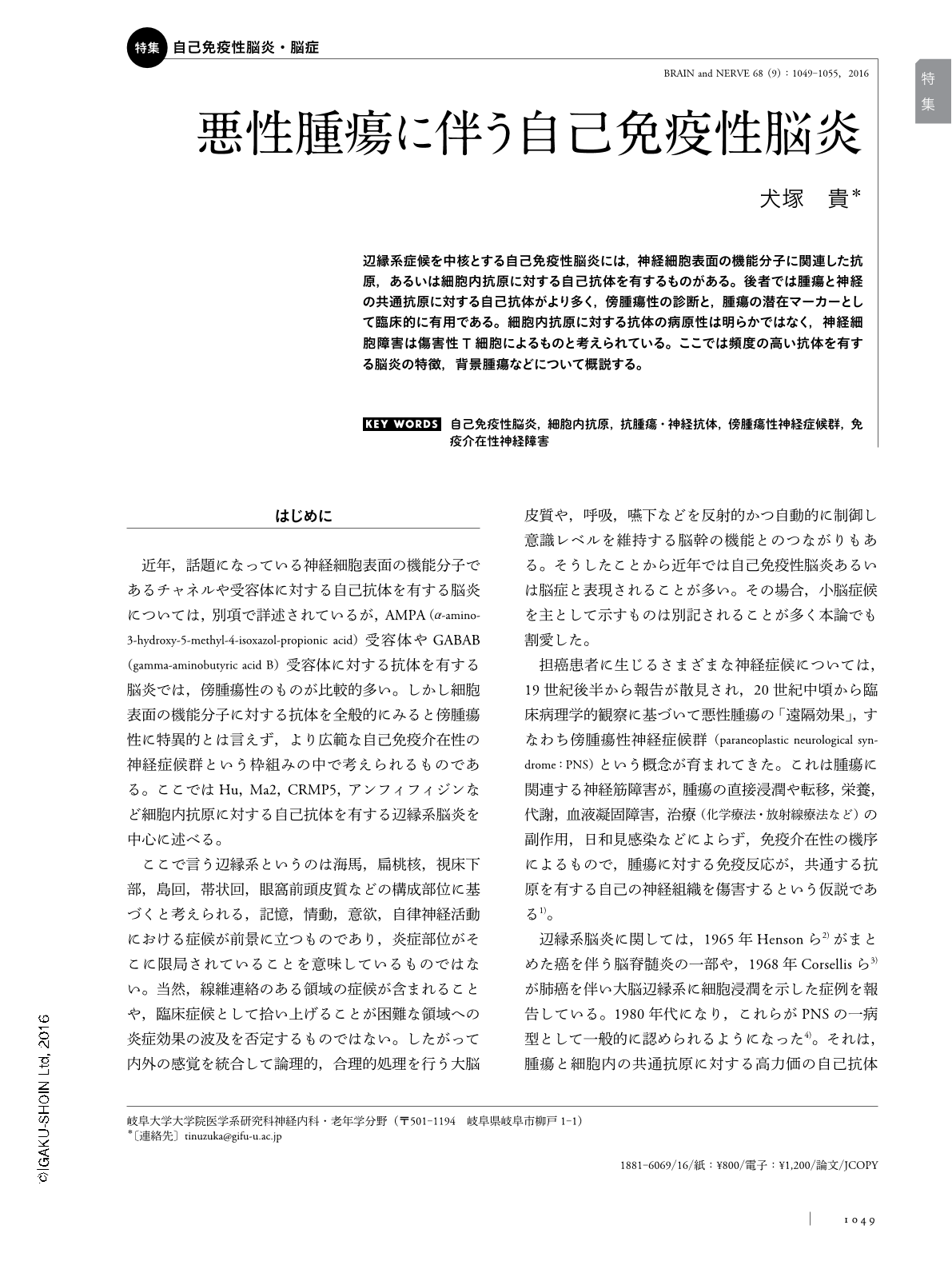
辺縁系症候を中核とする自己免疫性脳炎には,神経細胞表面の機能分子に関連した抗原,あるいは細胞内抗原に対する自己抗体を有するものがある。後者では腫瘍と神経の共通抗原に対する自己抗体がより多く,傍腫瘍性の診断と,腫瘍の潜在マーカーとして臨床的に有用である。細胞内抗原に対する抗体の病原性は明らかではなく,神経細胞障害は傷害性T細胞によるものと考えられている。ここでは頻度の高い抗体を有する脳炎の特徴,背景腫瘍などについて概説する。
Abstract
Autoimmune encephalitis consists of limbic symptoms and signs associated with antibodies against neuronal cell-surface antigens or intracellular antigens. Some cases are known to be associated with anti-channel or anti-receptor-related molecule antibodies. Whether these cases are paraneoplastic depends on the kinds of antigens that the antibodies are produced against. Other cases due to well-characterized onco-neural antibodies are almost always paraneoplastic and are generally resistant to anti-tumor therapy and/or immunotherapy. An exception is anti-Ma2 antibody-positive encephalitis associated with a testicular tumor. Antibodies for intracellular antigens are considered not to be pathogenic. Rather, the T-cell response is thought to be responsible. These antibodies are useful markers for the diagnosis of paraneoplastic disorders and in the search for underlying cancer, as neurological symptoms often precede tumor diagnosis. There is a relationship among onco-neural antibodies, clinical features, tumor types, and response to immunotherapy. Here we describe the characteristics of autoimmune encephalitis cases with antibodies against different intracellular antigens, such as Hu, Ma2, CRMP5, or amphiphysin.
Copyright © 2016, Igaku-Shoin Ltd. All rights reserved.