Japanese
English
- 有料閲覧
PPV購入案内
1,320円 (1,200円+税10%) こちらは、5ページから18ページの文献です。購入には医書.jp本会員登録が必要です。
会員登録完了後に改めて上記「購入サイトへ」を選択してください。
または「購入サイトへ」選択後に「購入ログイン」、「新規会員登録」の順に進んでください。
会員登録について詳しくはをご確認ください。
- Abstract 文献概要
- 1ページ目 Look Inside
- 参考文献 Reference
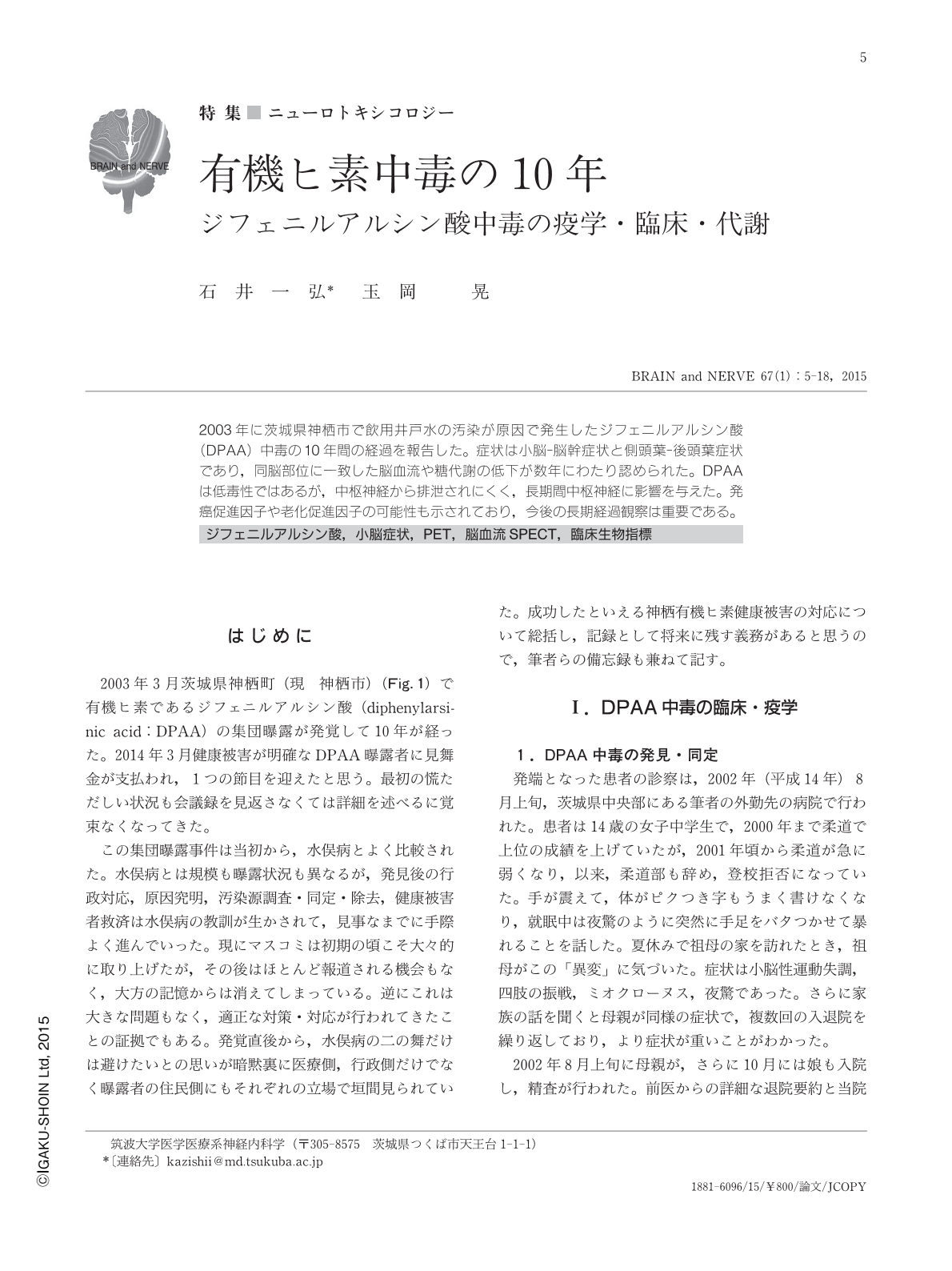
2003年に茨城県神栖市で飲用井戸水の汚染が原因で発生したジフェニルアルシン酸(DPAA)中毒の10年間の経過を報告した。症状は小脳-脳幹症状と側頭葉-後頭葉症状であり,同脳部位に一致した脳血流や糖代謝の低下が数年にわたり認められた。DPAAは低毒性ではあるが,中枢神経から排泄されにくく,長期間中枢神経に影響を与えた。発癌促進因子や老化促進因子の可能性も示されており,今後の長期経過観察は重要である。
Abstract
We report here the symptoms of diphenylarsinic acid (DPAA) poisoning recorded over 10 years since the DPAA contamination of the potable well water was first detected in the Kamisu City, Ibaraki Prefecture, in 2003. The poisoning symptoms associated with the cerebellum and brainstem included nystagmus, tremors, myoclonus, and cerebellar ataxia as well as the symptoms associated with the temporal and occipital lobes such as memory impairment, sleep disorder, and visual disturbance. Some of the affected children exhibited mental retardation. Moreover, reduced blood flow and reduced glucose metabolism in the cerebella, brainstem, and temporal and occipital lobes persisted for several years among the DPAA-exposed persons. Based on the animal studies for DPAA intoxication, the target organs for the DPAA toxicity were determined to be the central nervous system (CNS), liver, and biliary system. In particular, DPAA tends to persist in the brain for a long time, resulting in long-term impacts on the brain. The cerebral blood flow and brain glucose metabolism, which can be measured by positron emission tomography (PET) and single photon emission computed tomography (SPECT), respectively, are useful objective clinical markers to determine the effect of DPAA on CNS. We believe that continuous monitoring of the DPAA-exposed people may promote the effect of carcinogen and accelerate brain aging.
Copyright © 2015, Igaku-Shoin Ltd. All rights reserved.