Japanese
English
- 有料閲覧
- Abstract 文献概要
- 1ページ目 Look Inside
- 参考文献 Reference
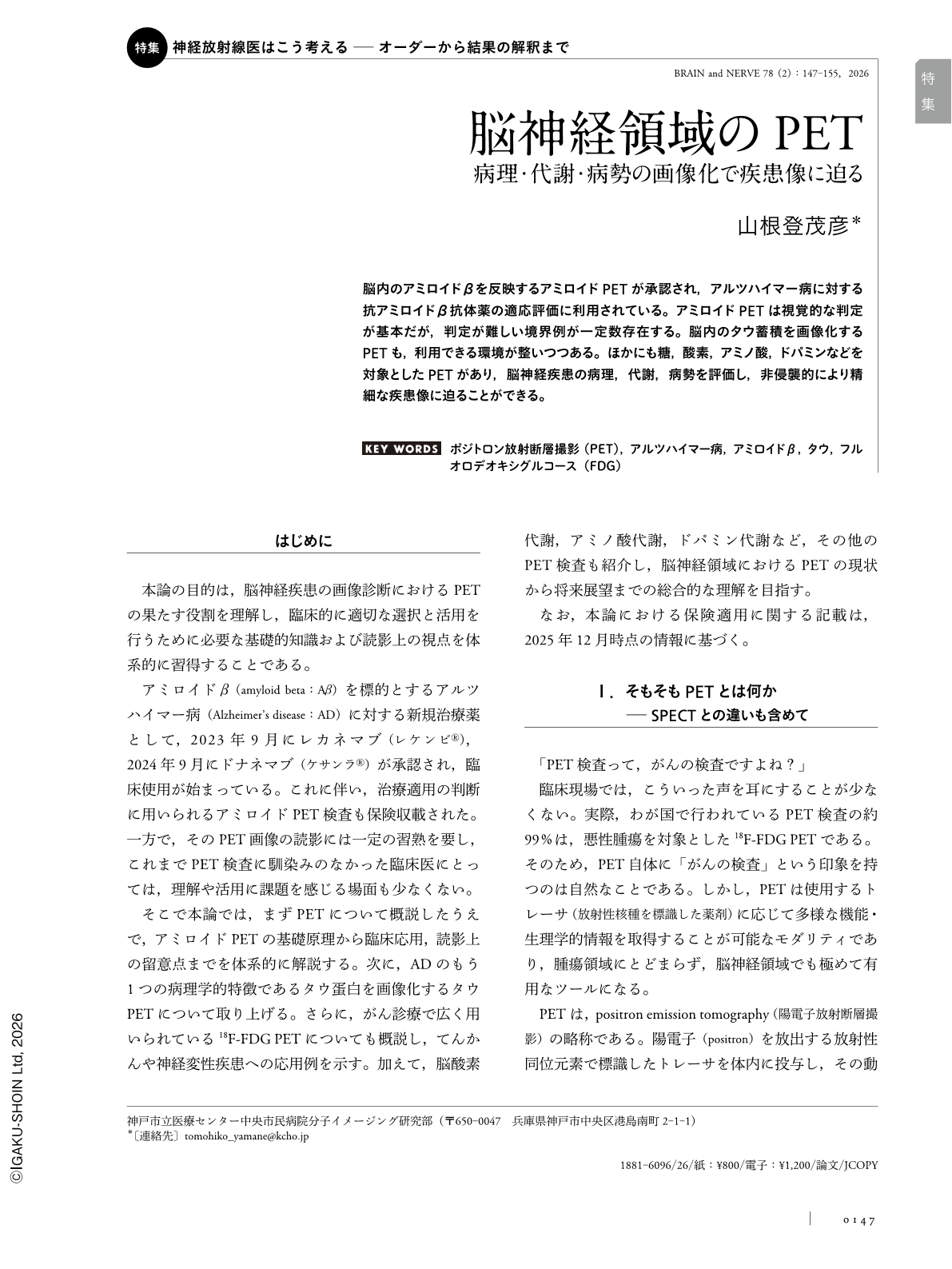
脳内のアミロイドβを反映するアミロイドPETが承認され,アルツハイマー病に対する抗アミロイドβ抗体薬の適応評価に利用されている。アミロイドPETは視覚的な判定が基本だが,判定が難しい境界例が一定数存在する。脳内のタウ蓄積を画像化するPETも,利用できる環境が整いつつある。ほかにも糖,酸素,アミノ酸,ドパミンなどを対象としたPETがあり,脳神経疾患の病理,代謝,病勢を評価し,非侵襲的により精細な疾患像に迫ることができる。
Abstract
Anti-amyloid-β therapies for Alzheimer's disease-lecanemab (Leqembi approved in September 2023) and donanemab (Kisunla®; approved in September 2024)-have been authorized in Japan and are now in clinical use. In parallel, amyloid positron emission tomography (PET) is now reimbursed by the national health insurance for determining treatment eligibility and three amyloid PET radiopharmaceuticals are currently approved. Amyloid PET images interpretation relies primarily on visual reads, which require dedicated training, and clinicians with limited PET imaging experience may find some cases challenging. Although quantitative approaches (e.g., standardized uptake value ratio and Centiloid metrics) are available, their accurate application likewise necessitates appropriate training. Moreover, the availability of tau PET, which images cerebral tau deposition, is also expanding. Additional PET relevant to neurological diseases include those assessing glucose metabolism, oxygen metabolism, amino acid transport, and dopaminergic systems. When used appropriately, these modalities enable a noninvasive, multidimensional assessment of the pathology, metabolism, and disease burden, thereby allowing for a more refined characterization of neurological disorders.
Copyright © 2026, Igaku-Shoin Ltd. All rights reserved.