Japanese
English
- 有料閲覧
PPV購入案内
1,320円 (1,200円+税10%) こちらは、927ページから931ページの文献です。購入には医書.jp本会員登録が必要です。
会員登録完了後に改めて上記「購入サイトへ」を選択してください。
または「購入サイトへ」選択後に「購入ログイン」、「新規会員登録」の順に進んでください。
会員登録について詳しくはをご確認ください。
- Abstract 文献概要
- 1ページ目 Look Inside
- 参考文献 Reference
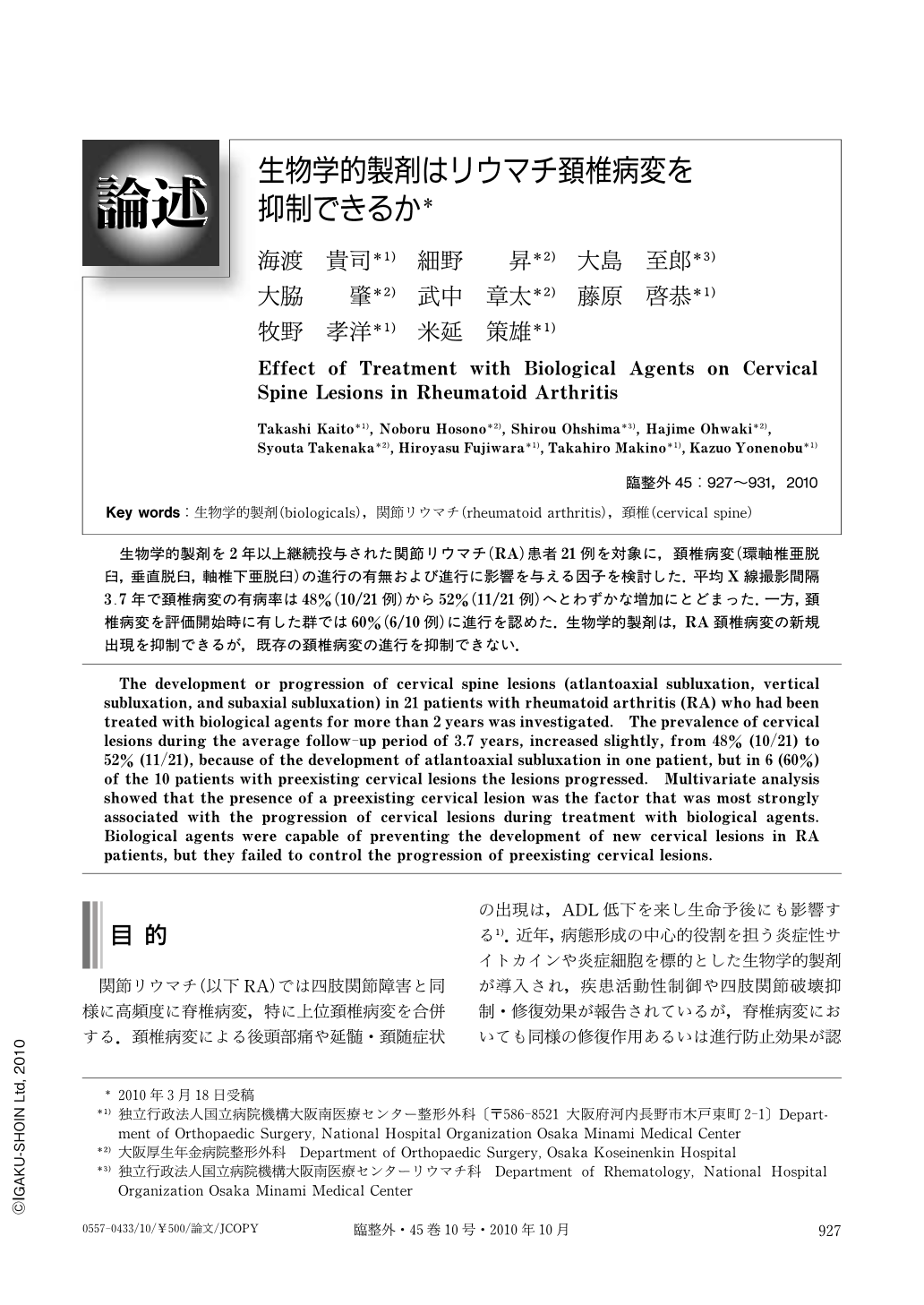
生物学的製剤を2年以上継続投与された関節リウマチ(RA)患者21例を対象に,頚椎病変(環軸椎亜脱臼,垂直脱臼,軸椎下亜脱臼)の進行の有無および進行に影響を与える因子を検討した.平均X線撮影間隔3.7年で頚椎病変の有病率は48%(10/21例)から52%(11/21例)へとわずかな増加にとどまった.一方,頚椎病変を評価開始時に有した群では60%(6/10例)に進行を認めた.生物学的製剤は,RA頚椎病変の新規出現を抑制できるが,既存の頚椎病変の進行を抑制できない.
The development or progression of cervical spine lesions (atlantoaxial subluxation, vertical subluxation, and subaxial subluxation) in 21 patients with rheumatoid arthritis (RA) who had been treated with biological agents for more than 2 years was investigated. The prevalence of cervical lesions during the average follow-up period of 3.7 years, increased slightly, from 48% (10/21) to 52% (11/21), because of the development of atlantoaxial subluxation in one patient, but in 6 (60%) of the 10 patients with preexisting cervical lesions the lesions progressed. Multivariate analysis showed that the presence of a preexisting cervical lesion was the factor that was most strongly associated with the progression of cervical lesions during treatment with biological agents. Biological agents were capable of preventing the development of new cervical lesions in RA patients, but they failed to control the progression of preexisting cervical lesions.
Copyright © 2010, Igaku-Shoin Ltd. All rights reserved.